





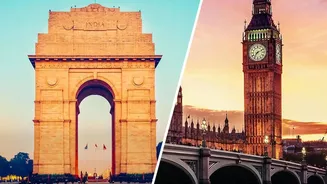

The Familiar Indian Framework
For most working individuals in India, the tax system is a well-understood, if complex, part of life. The country employs a progressive, slab-based structure where the tax rate increases as income rises. Taxpayers can choose between an old regime, which
allows for numerous deductions and exemptions, and a newer, simplified regime with lower rates but fewer deductions. This system is designed to ensure that higher earners contribute a larger share towards national development, funding everything from infrastructure and defence to public health and education. It's a social contract where personal taxation is a direct pillar of the nation's budget.
Monaco: The Great Exception
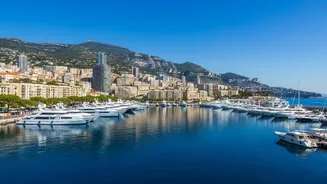
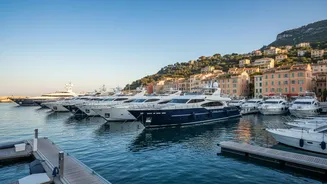
Now, let’s consider Monaco. For its residents, the concept of filing an annual income tax return is entirely foreign. Since 1869, the principality has not levied any personal income tax. This applies to salaries, investment income, capital gains, and dividends for most residents. The rule has one major exception: French nationals, who, due to a 1963 bilateral treaty with France, are still subject to French income tax as if they were living in France. For nearly everyone else who manages to secure residency, their personal income is not directly taxed by the state, creating a powerful lure for the world's wealthy.
If Not Income Tax, Then What?
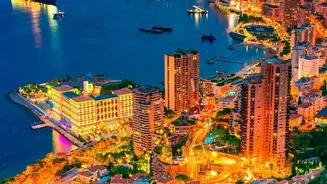
How does a country with high-end public services and impeccable infrastructure run without income tax? The answer lies in a diversified, indirect revenue model. A major source is Value Added Tax (VAT), which is aligned with the French system and has a standard rate of 20%. This consumption tax is highly effective in a place teeming with luxury tourism and high-end shopping. Another key pillar is corporate tax. A 25% tax is levied on the profits of companies that generate more than 25% of their revenue outside of Monaco. Businesses operating primarily within the principality are generally exempt, which encourages local economic activity. The state also brings in significant revenue from its ownership stakes in major enterprises, including the famous Monte Carlo casino, as well as from taxes on real estate transactions and rental agreements.
The Catch: It’s Not for Everyone
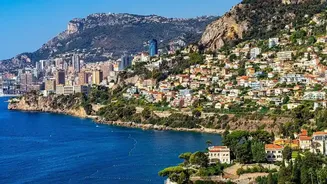
Before you pack your bags, it's important to understand that becoming a resident of Monaco is an exclusive affair. The barrier to entry is deliberately high, designed to attract only high-net-worth individuals. Prospective residents, including those from India, must first secure a long-stay visa from French authorities. The core requirements include proving you have accommodation (by renting or buying property) and demonstrating financial self-sufficiency. This is typically done by depositing a substantial sum—guidelines often point to a minimum of €500,000—into a Monegasque bank account. Applicants must also have a clean criminal record. The immense cost of real estate, the most expensive in the world per square metre, further filters the pool of potential residents.
A Tale of Two Philosophies
The contrast between India's and Monaco's systems reveals two fundamentally different national philosophies. India's model is built on broad-based participation, where a large population contributes directly through taxes to fund vast and diverse public services for over a billion people. It is a system of collective responsibility aimed at national development and social welfare. Monaco, a city-state with a tiny population, has a different goal. Its economic model is based on attracting foreign capital and wealthy residents. Instead of taxing their income, it generates revenue from their consumption, their business activities conducted abroad, and their investments in the local economy. It functions less like a conventional country and more like an exclusive club that funds itself through high membership fees and spending within its walls.