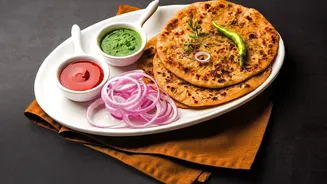




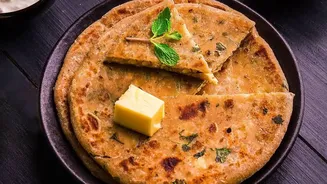
The humble paratha gets a luxurious upgrade with the Vegetable Paneer Reshmi Paratha. This isn't just another stuffed flatbread; it's a culinary experience where a silky, rich filling of paneer and vegetables meets a soft, pliable dough.
What Makes a Paratha ‘Reshmi’?
The word ‘reshmi’
translates to ‘silky’ in Hindi and Urdu, a term that perfectly describes the texture of this dish. While often associated with melt-in-your-mouth kebabs from Mughlai cuisine, the principle applies beautifully to parathas. The secret lies in creating a filling that is exceptionally smooth and rich. This is typically achieved by incorporating ingredients like cream, yogurt, or a fine paste made from soaked cashews. These elements bind the crumbled paneer and finely chopped vegetables into a luscious mixture that feels genuinely silky and decadent with every bite, distinguishing it from standard, drier paratha stuffings.
Crafting the Perfect Soft Dough
The foundation of an excellent stuffed paratha is a dough that is both soft and strong enough to hold the filling without tearing. For a reshmi paratha, the dough itself is often enriched to enhance its tender quality. Start with whole wheat flour (atta) and add a pinch of salt. The key to softness is incorporating a fat like ghee or oil, and often a dairy component like milk or yogurt. Using lukewarm water to knead is another crucial tip. Knead for at least 5-7 minutes until the dough is smooth, pliable, and elastic, but not sticky. Once kneaded, it's vital to let the dough rest, covered with a damp cloth, for at least 20-30 minutes. This rest period allows the gluten to relax, making the dough much easier to roll and contributing to a softer final texture.
The Heart of the Paratha: The Filling
The filling is where the magic happens. Start by crumbling or finely grating fresh paneer into a bowl. For the vegetables, choose ones that can be chopped very finely or grated, such as onions, carrots, bell peppers, and even boiled potatoes. It's important to sauté the vegetables first to cook them through and, crucially, to dry out any excess moisture, which can make the parathas break while rolling. Once the vegetables are cooked and have cooled slightly, mix them with the grated paneer. Now, introduce the 'reshmi' elements—a tablespoon of fresh cream or a smooth paste of soaked cashews. Season generously with spices like garam masala, cumin powder, and a hint of red chilli powder for warmth. Chopped fresh coriander adds a final touch of freshness. Some recipes even blend boiled vegetables and paneer into a smooth paste before mixing it directly into the flour to create the dough, ensuring a uniform silky texture throughout.
Stuffing and Cooking to Golden Perfection
Assembling the paratha requires a gentle hand. Divide the rested dough into equal-sized balls. Take one ball and roll it into a small circle about 4-5 inches in diameter. Place a generous spoonful of the cooled paneer and vegetable mixture in the center, being careful not to overfill. Bring the edges of the dough up and around the filling, pleating as you go, until the stuffing is completely sealed. Gently flatten the stuffed ball and dust it with dry flour. Now, roll it out carefully and evenly into a larger circle. Cook the paratha on a preheated tawa (griddle) over medium heat. Let it cook for about a minute on the first side until small bubbles appear, then flip. Apply ghee or oil to the top surface, flip again, and press gently with a spatula to encourage it to puff up and cook evenly. Continue cooking and flipping until both sides are beautifully golden brown and dotted with crispy spots.