






From Reactive to Proactive
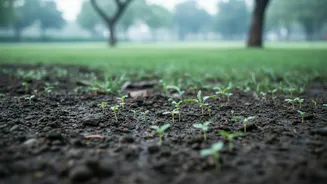
For decades, urban green space management was largely a reactive affair. A tree was pruned when a branch became a hazard, new saplings were planted without a deep understanding of their long-term viability, and park maintenance was often a matter of routine
rather than strategic upkeep. This approach, while functional, often missed the bigger picture: how green infrastructure functions as a living, interconnected system that is crucial for a city’s health. Municipal bodies often lacked the granular information needed to make proactive decisions, leading to inefficient use of resources and green spaces that were vulnerable to climate stress and disease.
The Rise of the Digital Canopy
Enter the “data” half of the new partnership. Today, cities are leveraging a suite of technologies to create a digital twin of their urban forests. Geographic Information Systems (GIS) and satellite imagery help planners identify the most suitable locations for new green spaces and create ecological corridors to connect fragmented habitats. IoT (Internet of Things) sensors embedded in parks can monitor soil moisture, air quality, and even foot traffic in real-time. This allows for smart irrigation that conserves water and provides data on how and when public spaces are used. Some cities are even using AI and predictive analytics to forecast pest infestations or identify trees that are at risk, allowing for preventative care before a problem becomes critical. This data-driven approach helps optimise resources and make management far more efficient.
Why Data Alone Is Not Enough
However, a smart city is not just a collection of sensors and algorithms. Data can tell you a tree is water-stressed, but it can’t tell you it’s the tree under which a neighbourhood gathers for its evening chats. This is where “care” becomes the indispensable other half of the equation. An over-reliance on technology risks creating sterile, top-down management that ignores the deep social, cultural, and emotional connections people have with nature. It also raises challenges around data privacy and ensuring equitable investment in green spaces across all communities, not just data-rich or affluent ones. The most successful models recognise that technology is a tool to empower people, not replace them.
The Human Touch of Urban Greening
The “care” component is about harnessing the power of community. This takes many forms, from volunteer groups that organise planting drives to residents participating in citizen science projects. Mobile apps now allow people to help map and monitor the health of trees in their own locality, providing invaluable hyperlocal data that official surveys might miss. This collaboration between residents and city authorities fosters a sense of collective ownership and stewardship. It also acknowledges the irreplaceable expertise of trained arborists and horticulturalists, whose hands-on knowledge complements the insights generated by technology. This combination ensures that decisions are not only smart, but also wise.
A Partnership for Resilient Cities
When data and care work together, the results are powerful. For instance, data analytics might identify neighbourhoods with the lowest tree canopy and highest vulnerability to heatwaves. Armed with this information, municipal agencies can partner with local community groups to organise targeted tree-planting initiatives, ensuring the right species are planted in the right places based on both ecological data and resident preferences. In India, where rapid urbanisation poses unique challenges, this integrated approach is vital. Tools like the i-Tree suite are already helping cities like New Delhi assess the value of their urban forests in terms of pollution reduction and carbon sequestration, providing a strong case for investment. This partnership model turns citizens from passive recipients of green amenities into active co-creators of their urban environment.