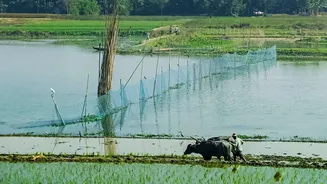









From Field to Floodplain
For many Indian farmers, the rhythm of agriculture is dictated by generations of cultivating staples like rice and wheat. Yet, changing weather patterns and waterlogged fields can turn predictable harvests into a struggle. This was the challenge that
prompted a pivot towards a crop that thrives in the very conditions that hinder others: the lotus. The journey began not with a plow, but with research. The farmer delved into the specifics of lotus cultivation, a practice that modern techniques have moved from natural ponds into managed fields. The initial idea was to turn a persistent problem—waterlogged land—into a productive asset. The study phase involved understanding the plant's life cycle, its ideal growing conditions, and the market for its various parts. It was a departure from familiar ground, requiring a new way of thinking about the land itself.
The Trial Patch: A Calculated Risk
Before committing acres of land, the first step was to establish a small trial patch. This miniature floodplain, often just a corner of the property, became a living laboratory. The process involved creating a controlled environment by levelling the field, filling it with water, and planting germinated seeds or tubers into the prepared mud. This initial stage was fraught with challenges. Maintaining the right water level, typically around one foot, was crucial. The soil, ideally a mix of clay and black soil, needed to hold water effectively while being soft and fertile. Pests like aphids and leafcutters, along with potential diseases, required constant vigilance. The trial was a period of intense learning, observing how the plants responded to the local climate, which should be warm and humid with plenty of sunlight. Every small success and failure in this patch provided the essential data needed before considering a larger investment.
A Harvest of More Than Flowers
After three to four months of careful nurturing, the trial patch yielded its first harvest, proving the concept's viability. The success wasn't just in the beautiful, fragrant flowers, which are highly valued for religious ceremonies and decorative purposes, especially during festivals. It was the discovery of a multi-faceted revenue stream. Every part of the lotus plant is marketable. The stems, known as 'kamal kakdi' or 'bhey', are a popular vegetable and pickling ingredient. The seeds can be processed into 'makhana' (fox nuts), a high-value snack. Even the leaves and roots have culinary and medicinal uses, deeply rooted in Ayurvedic traditions. This diversification is the key to the lotus's economic appeal. A single crop offers multiple products, insulating the farmer from the price volatility of a single commodity.
Expanding the Waters
With a proven model and an understanding of the market, the decision to expand beyond the trial patch was made with confidence. This involved converting larger tracts of land into managed lotus ponds. Farmers who have successfully made this transition report significant returns, with some earning over ₹2 lakh per acre from the stems alone, plus additional income from seeds. Avtar Singh, a farmer in Ferozepur who pioneered lotus cultivation in his waterlogged region, expanded from three acres to 50, building a profitable business. The expansion isn't just about planting more; it's about scaling up the entire operation—from water management and labour for harvesting to establishing supply chains to markets, sometimes sending produce to major cities like Mumbai. Success stories from Kerala to Punjab show that both small-scale terrace gardens and large-field cultivations can be highly remunerative.