



A New Chapter in Cosmic Exploration
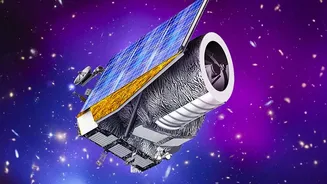
On August 30, 2026, NASA successfully launched its next great observatory, the Nancy Grace Roman Space Telescope. Named after the agency's first chief of astronomy, who was instrumental in bringing the Hubble Space Telescope to life, the Roman telescope
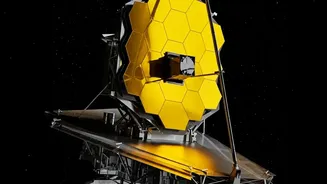
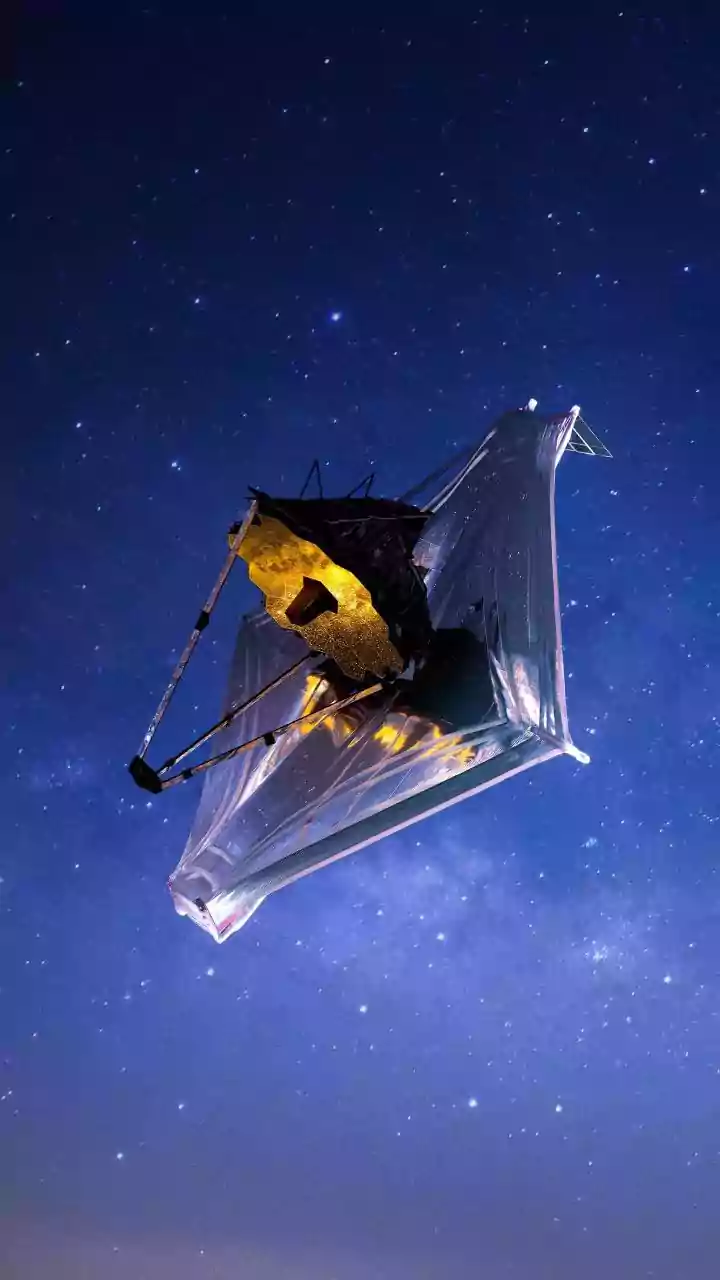
is set to revolutionize our understanding of the universe. While previous telescopes like Hubble and the James Webb Space Telescope (JWST) act like precision tools, zooming in on specific cosmic objects for detailed study, Roman is designed for breadth. Its primary mission is to conduct vast surveys of the sky, capturing enormous patches of the cosmos in a single shot. Think of it as the difference between studying a single, beautiful tree up close and creating a detailed map of the entire forest. This unique capability is what makes Roman a game-changer for astronomy, allowing scientists to tackle some of the biggest questions that exist.
The Power of a Wide-Angle View
The magic behind the Roman telescope is its Wide Field Instrument, or WFI. This instrument uses a primary mirror that is the same size as Hubble's—2.4 meters in diameter—but it provides a field of view that is at least 100 times larger. In the time it takes Hubble to capture an image of a tiny sliver of the sky, Roman can capture a sprawling cosmic vista with the same incredible sharpness. A deep-field image from Hubble might contain a few thousand galaxies; a similar effort from Roman is expected to reveal millions. This efficiency is not just about saving time. It makes entirely new kinds of science possible. To understand the grand structure of the universe and its evolution, astronomers need massive datasets. Roman is built to provide exactly that, creating a new, high-definition atlas of the cosmos.
Hunting for Dark Energy
One of Roman’s primary goals is to shed light on the darkest mysteries of the universe: dark energy and dark matter. Dark energy is the name given to the mysterious force that is causing the expansion of the universe to accelerate, while dark matter is the unseen stuff that provides most of the gravitational scaffolding for galaxies. To study them, Roman will conduct the High-Latitude Wide-Area Survey, mapping the precise locations and shapes of hundreds of millions of galaxies over a huge portion of the sky. By studying how galaxies are clustered together and how their light has been subtly distorted by the gravity of intervening dark matter—a technique called weak gravitational lensing—scientists can trace the influence of these dark components throughout cosmic history. This will provide crucial clues about the true nature of the universe's invisible architecture.
A Galactic Planet Census
Beyond the grand scale of cosmology, Roman will also revolutionize the search for worlds beyond our solar system. While NASA's Kepler and TESS missions have found thousands of exoplanets by watching for the dimming of a star as a planet passes in front, Roman will primarily use a different technique called gravitational microlensing. This method detects the way a planet's gravity can bend and magnify the light from a distant background star. Microlensing is most sensitive to planets that are further from their stars, in orbits similar to those of Earth or Jupiter, and can even detect rogue planets that drift through space without a host star. It is expected that Roman will find thousands of new worlds, completing a statistical census of planetary systems and helping us understand how common planets like our own truly are.
A Data Goldmine for All
The telescope also carries a Coronagraph Instrument, a technology demonstrator designed to block the overwhelming glare of a star to take direct images of the large, Jupiter-like planets orbiting it. But perhaps Roman's most significant legacy will be the sheer volume of data it provides. The telescope is expected to send back about 1.4 terabytes of information every day. Critically, all of the data from Roman's surveys will be made publicly available to the global scientific community with no period of exclusive access. This will create a treasure trove of information that astronomers can mine for decades to come, leading to discoveries that we cannot yet even imagine.