





What Exactly Is Nordic Walking?
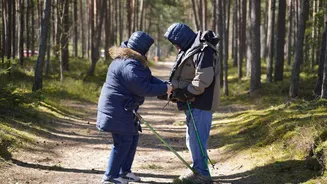
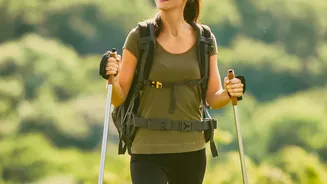
Originating in Finland as a summer training method for cross-country skiers, Nordic Walking is a fitness technique that involves walking with specially designed poles. It transforms a simple walk into a whole-body exercise by actively engaging the upper
body. Unlike regular trekking where poles are often used for stability, in Nordic Walking, the poles are used to propel yourself forward. This action engages the muscles in your arms, shoulders, chest, and back, turning your walk into a more comprehensive workout. Research shows that this method engages up to 90% of your body's muscles, compared to about 50% with regular walking.
The Science Behind The Intensity
The secret to Nordic Walking's effectiveness lies in how it ramps up exercise intensity. By pushing off with the poles, you force your upper body muscles to work alongside your legs. This increased muscle engagement requires your heart to pump more blood, elevating your heart rate and boosting your cardiovascular workout without the feeling of high-exertion. Studies have shown that Nordic Walking can burn significantly more calories than regular walking—with estimates ranging from a 20% to as much as a 46% increase. This makes it an efficient way to improve cardiovascular fitness, aid in weight management, and increase overall endurance.
A Full-Body, Low-Impact Workout
One of the most significant advantages of Nordic Walking is that it’s a low-impact activity. The poles help to distribute your body weight more evenly, reducing the stress placed on your lower body joints like the hips, knees, and ankles. This makes it an excellent choice for a wide range of individuals, including older adults and those with arthritis or joint pain who might find activities like running too jarring. Despite being gentle on the joints, it's still a powerful workout that can improve balance, strengthen bones, and enhance functional fitness. Research has also pointed to benefits like reductions in chronic pain, depression, and anxiety.
More Than Just Walking With Poles
To reap the full benefits of Nordic Walking, proper technique is essential. It’s not as simple as just carrying poles. The correct form involves a coordinated rhythm of opposite arm and leg movement, similar to regular walking but more pronounced. The key is to plant the pole behind you at an angle and push off to propel yourself forward, allowing your arms to swing from the shoulder. A proper technique ensures maximum muscle engagement and calorie burn. Many beginners find it helpful to take a lesson from a certified instructor to master the basics and avoid common mistakes, ensuring their workout is both safe and effective.
Getting Started: The Right Gear
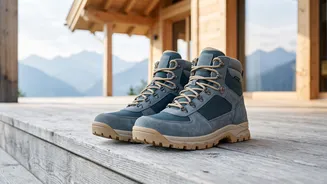
Getting started with Nordic Walking is relatively simple and doesn't require a lot of equipment. The most crucial items are the poles themselves. It's important to choose poles specifically designed for Nordic Walking, not trekking or hiking poles. Nordic Walking poles come with a special glove-like strap system that allows you to perform the push-off technique correctly. The pole length is also important; a general rule is that your elbow should be at a 90-degree angle when you hold the pole vertically. Beyond poles, a pair of comfortable, flexible walking shoes and weather-appropriate sportswear are all you need to head outdoors and get moving.