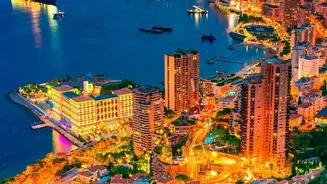








A Land Without Income Tax
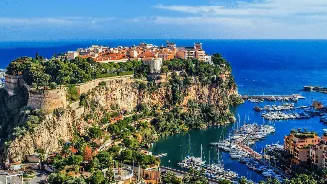
Imagine a country where your salary, investment profits, and capital gains are entirely your own, with no portion going to the government as income tax. For the residents of Monaco, this isn't a fantasy. Since a royal decree in 1869, the principality
has not levied a personal income tax. This policy was originally designed to attract wealthy foreigners after Monaco lost most of its territory and agricultural income. The rule applies to residents of all nationalities, with one major exception: French citizens. Due to a 1963 treaty with France, any French national who moved to Monaco after 1957 is still required to pay French income tax. For everyone else, from sports stars to business tycoons, personal income is tax-free, making it a powerful magnet for the global elite.
If Not Income Tax, Then What?
A state without personal income tax sounds unsustainable, but Monaco has a robust financial model. So, how does it pay for its pristine streets, high security, and public services? The largest source of revenue is a Value Added Tax (VAT). Because Monaco is in a customs union with France, it applies the French VAT system, with a standard rate of 20% on goods and services. The second pillar is corporate tax. While many businesses are exempt, companies that generate more than 25% of their turnover outside Monaco are subject to a 25% tax on their profits. The state also earns significant income from its ownership stake in major enterprises, including the famous Monte Carlo Casino, and from taxes on real estate transactions. Essentially, Monaco taxes consumption and corporate activity, not the personal wealth of its residents.
The Golden Ticket: Becoming a Resident
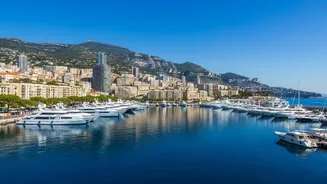
Living this tax-free dream isn't as simple as just moving in. Gaining residency in Monaco is a formidable challenge with a very high financial barrier. Prospective residents must prove they have sufficient funds to support themselves, which typically involves depositing a substantial sum—often starting at €500,000 or more—in a Monegasque bank. Secondly, they must secure accommodation. In the world's most expensive real estate market, this is no small feat. Property prices can exceed €50,000 per square metre, meaning even a modest apartment can cost several million euros. Villas are exceedingly rare and can fetch over €100 million. This combination of a hefty bank deposit and astronomical property costs ensures that only the very wealthy can realistically consider making Monaco their home.
Back to Reality: Why India Needs ITR
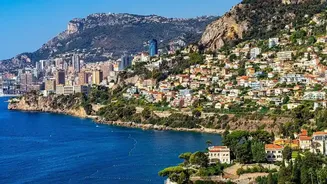
The Monaco model is fascinating, but it's tailored for a tiny, densely populated city-state of just over two square kilometres with around 39,000 residents. India, a vast nation of 1.4 billion people, has entirely different needs. The income tax collected from individuals and corporations is the lifeblood of the country's budget. It funds everything from national defence and infrastructure projects like highways and railways to social welfare schemes, public education, and healthcare. Unlike Monaco, which can fund its operations through consumption taxes on a wealthy population, India relies on a broad base of taxpayers to finance its development and provide essential services to all its citizens. The annual ITR filing, while stressful, is part of a social contract that enables the functioning of a large, complex, and developing economy.