


An Indispensable Eye on the Cosmos
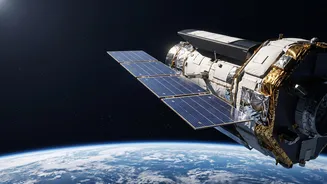
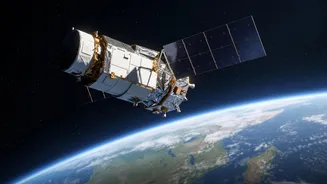
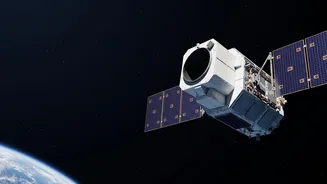
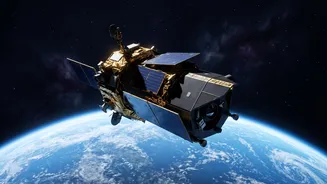
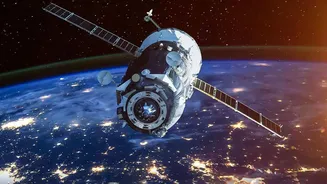
Launched in 2004, the Neil Gehrels Swift Observatory was a game-changer in high-energy astrophysics. Designed for a two-year mission, it far surpassed expectations, spending over two decades as the world's premier hunter of gamma-ray bursts (GRBs)—the
most powerful explosions in the universe. Its unique ability was its speed; it could pivot in minutes to catch the fleeting afterglow of these cataclysmic events, providing crucial data for telescopes worldwide. Swift's discoveries reshaped our understanding of black holes, neutron star collisions, and the origin of heavy elements like gold. But after 22 years, its time was running out. Increased solar activity expanded Earth's upper atmosphere, creating more drag on the satellite and causing its low-Earth orbit to slowly decay. With no onboard propulsion left, it was destined to fall from the sky by late 2026.
A First-of-its-Kind Rescue Attempt
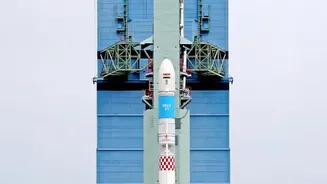
Rather than lose the valuable observatory, NASA embarked on a bold and unprecedented rescue. In 2025, the agency contracted Katalyst Space, an aerospace startup, to build a robotic servicing vehicle named 'LINK' for the Swift Boost Mission. The plan was audacious: for about $30 million, LINK would launch, rendezvous with Swift, grab it with robotic arms, and push it into a higher, more stable orbit. This was no easy task, as Swift was never designed to be serviced or docked with in space. The mission, launched on July 3, 2026, represented a major test for the future of commercial in-orbit servicing—a technology that promises to extend the lives of aging satellites instead of leaving them to become space junk.
What Went Wrong in Orbit
The mission proceeded as planned for several weeks after LINK's launch. However, in late July, the rescue effort hit a catastrophic snag. Katalyst and NASA reported that the LINK spacecraft had entered an uncontrollable spin, suffering an "attitude control issue" that crippled its primary systems. Engineers worked for weeks to stabilize the vehicle, even uploading new software to regain control. But the damage was done. On August 19, NASA announced the difficult decision to call off the boost attempt. While the exact cause of the malfunction has not been detailed, the failure to dock meant the primary goal of saving Swift was no longer achievable. The rescue vehicle itself had failed just short of its historic objective.
What a 'Falling Path' Really Means
The phrase "falling path" conjures dramatic images, but the reality is more gradual. The telescope is not plummeting but is in an uncontrolled orbital decay. Without a boost, atmospheric drag will continue to pull it lower until it re-enters the atmosphere, an event NASA projects will occur around the end of 2026. The risk to anyone on the ground is exceedingly small. Upon re-entry, the intense heat and pressure generated by travelling at thousands of kilometres per hour will cause most of the 1,500 kg satellite to burn up and disintegrate. While some denser components made of materials like titanium or stainless steel can survive, the vast majority of Earth's surface is water or unpopulated, making the odds of debris causing harm miniscule. The re-entry will be uncontrolled, meaning its exact footprint won't be known until the final hours.
The Loss of a Legacy
The true loss is not the hardware, but the science. For two decades, Swift was an essential tool for time-domain astronomy, the study of how the universe changes moment to moment. Its loss leaves a significant gap in humanity's ability to rapidly respond to transient cosmic events. The failure is also a setback for the burgeoning field of in-space servicing. While companies like Northrop Grumman have had success with missions designed for docking, the Swift Boost Mission was a bolder attempt to rescue a legacy satellite not built for it. The failure highlights the immense technical challenges of such complex robotic operations in orbit. It proves that while the dream of repairing and refueling satellites is alive, it remains a difficult and risky frontier.