

A Landmark Lunar Mission
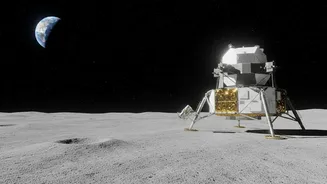
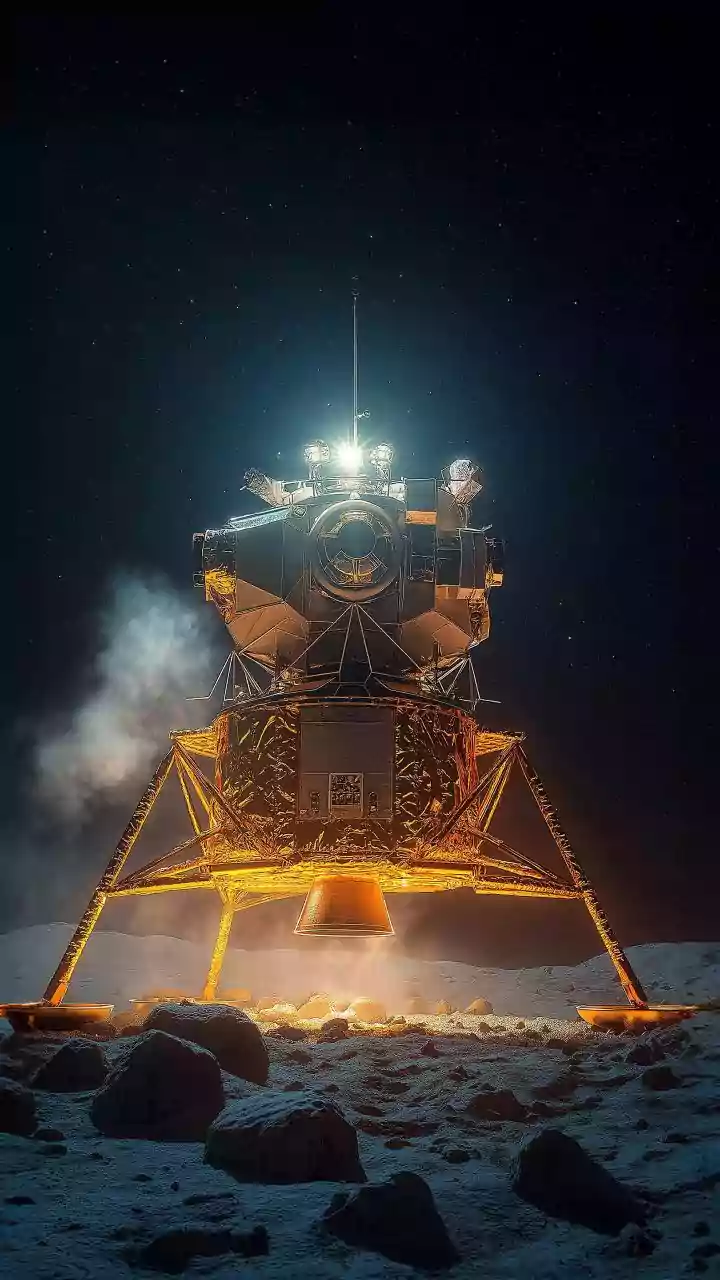
In June 2024, the world watched as China's Chang'e-6 probe successfully touched down in a gigantic, ancient crater on the side of the Moon that never faces Earth. Exploring the far side is incredibly challenging; direct communication is impossible, requiring
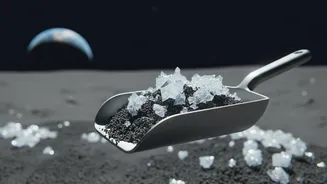
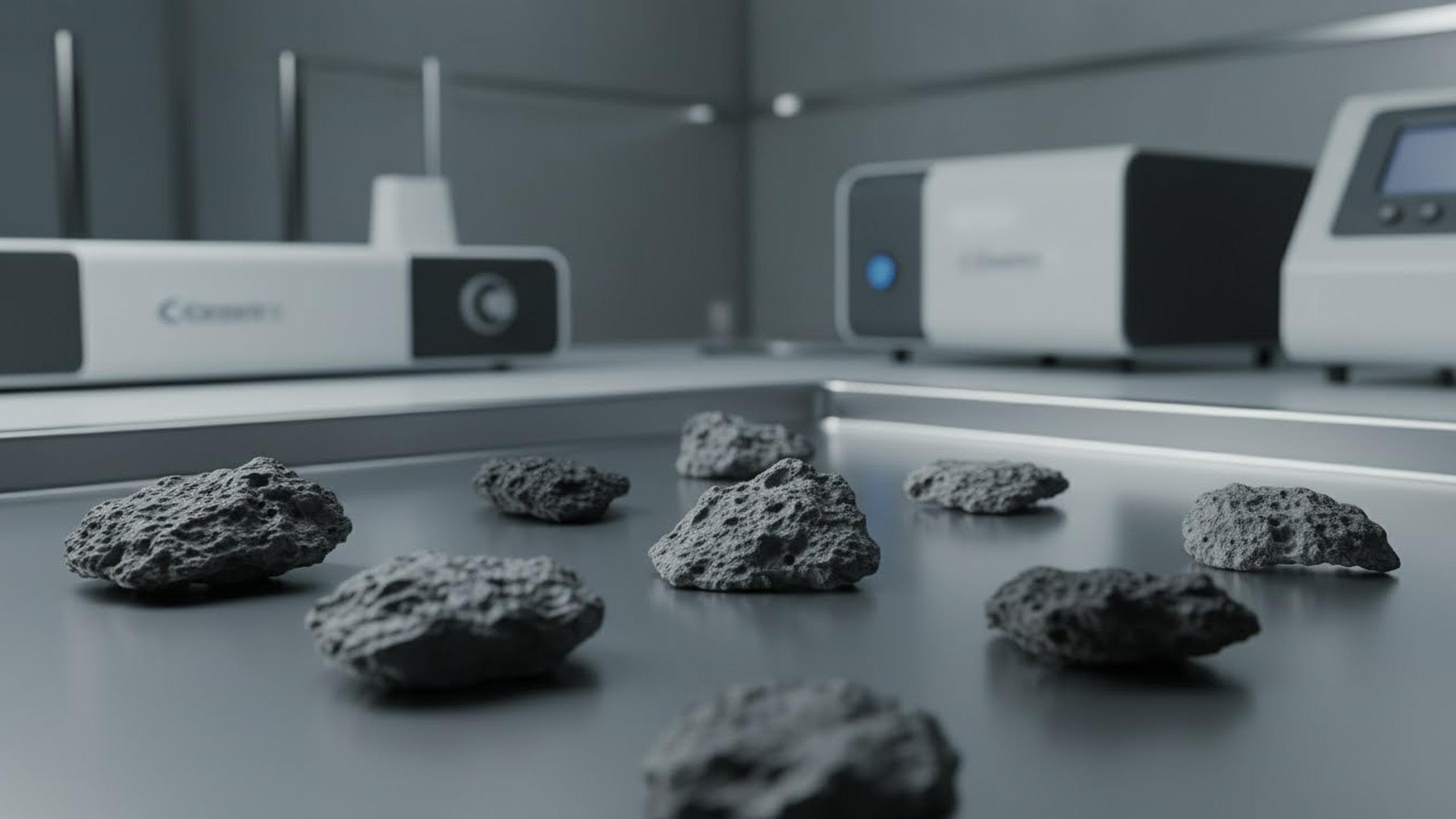
a dedicated relay satellite to pass signals back and forth. The mission's primary goal was audacious: to collect soil and rock samples and return them to Earth, a feat never before accomplished. After successfully drilling and scooping up 1,935.3 grams of lunar material, the probe returned home, delivering its precious cargo to eager scientists. These samples offer a rare opportunity to physically study a part of the Moon that, until now, has only been observed from orbit.
The Mystery of the South Pole-Aitken Basin
Chang'e-6 didn't land just anywhere. Its target was the South Pole-Aitken (SPA) basin, the largest, deepest, and oldest known impact crater on the Moon—and one of the largest in the entire solar system. Stretching over 2,500 kilometres, this basin was formed by a cataclysmic impact billions of years ago. Scientists have long debated its precise age, with estimates ranging from 4.2 to 4.3 billion years. Pinning down this date is crucial. Because the far side's crust is so different and less understood than the near side we see, the age of this massive basin serves as a vital anchor point for the timeline of impacts across the early solar system. The samples from Chang'e-6 are the first ground truth to test decades of theories.
Reading a Cosmic Clock
This is where argon dating comes in. Think of it as reading a rock’s geological birth certificate. The specific method, called Argon-Argon (Ar-Ar) dating, is an advanced version of Potassium-Argon dating. Many rocks contain the element potassium, including a naturally radioactive version called Potassium-40. Over vast timescales, Potassium-40 steadily decays into Argon-40, a stable gas. When a volcanic rock first forms and cools, it's a closed system. Any Argon-40 gas created from that point forward gets trapped inside the rock’s crystal structure. By measuring the ratio of Potassium-40 to the trapped Argon-40, scientists can calculate with remarkable precision how much time has passed since the rock solidified. This method is especially useful for tiny or rare samples, like meteorite fragments or lunar rocks.
Why These Fragments Are Key
The headline's mention of 28 rock fragments isn't just a random number; it highlights the focused nature of this science. While initial reports on the Chang'e-6 samples have covered various findings, a key focus for geochronologists is dating specific basalt fragments—volcanic rocks—found within the soil. By performing Argon-Argon dating on these pieces, scientists can determine when lava flowed in this part of the Moon. One early analysis of basalt fragments showed that while most were around 2.8 billion years old, one surprisingly dated back to 4.2 billion years. Other studies focusing on specific fragments from the SPA basin have helped scientists pinpoint the age of the basin-forming impact itself to around 4.25 billion years ago. Each dated fragment helps build a clearer picture of the region's volcanic and impact history.
Rewriting Solar System History
The importance of accurately dating these far-side rocks extends far beyond the Moon. For decades, scientists have used the ages of Apollo mission samples from the near side to create a model for dating the surfaces of other planets like Mars and Mercury. Getting a precise age for the enormous South Pole-Aitken basin provides a new, much older anchor point for this timeline. It helps refine our understanding of the 'Late Heavy Bombardment,' a theorised period of intense asteroid impacts that shaped the early inner solar system. Confirming that the SPA basin formed 4.25 billion years ago, for example, helps calibrate the clock for the entire neighbourhood, including the early history of Earth itself. These few grams of rock, analysed with a powerful dating technique, could fundamentally alter our timeline of how the planets came to be.