


An Unscheduled Arrival
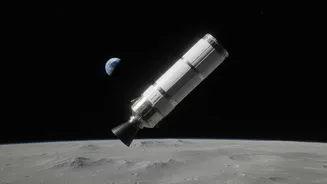
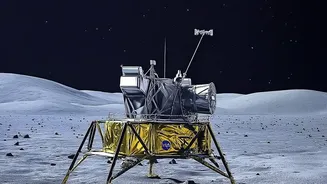
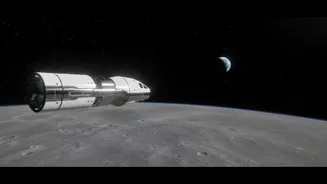
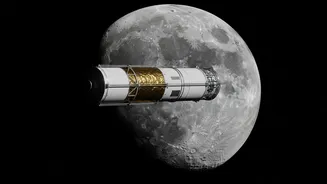
On August 5, 2026, the upper stage of a Falcon 9 rocket is predicted to slam into the lunar surface at a staggering speed of nearly 8,700 kilometres per hour. The component is a leftover from a January 2025 mission that successfully delivered two commercial
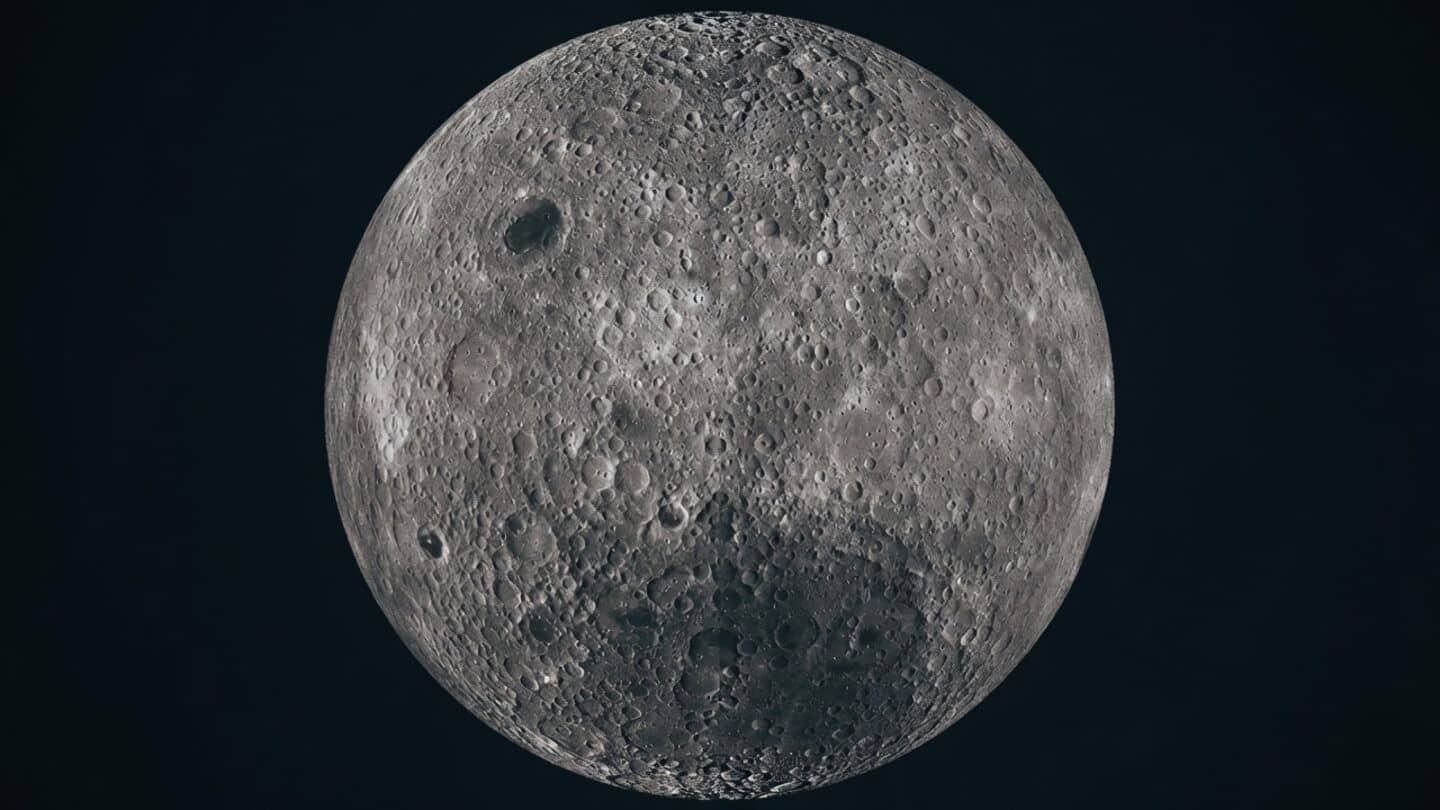
landers toward the Moon. After completing its primary task, the rocket stage lacked the necessary fuel to either return to Earth or propel itself into deep space. Instead, it was captured in an unstable orbit, where gravitational forces have been slowly guiding it toward its final destination: a crash site near the Moon's vast Einstein Crater. The 4,000-kilogram object, measuring about 12 meters in length, is not the first piece of human technology to strike the Moon, but its impending arrival is being treated as a significant scientific event.
A Controlled Experiment by Accident
When asteroids and meteoroids hit the Moon, they provide valuable data, but they come with many unknowns. Scientists rarely know their exact mass, composition, or angle of approach. The upcoming SpaceX impact changes that. Because astronomers have tracked this rocket stage extensively, they know its dimensions, mass, trajectory, and speed with a high degree of certainty. This transforms an accidental crash into an almost-perfectly controlled experiment. It provides a rare chance to calibrate the complex computer models used to simulate lunar impacts. By comparing the predicted crater with the actual one, researchers can fine-tune their understanding of how the lunar surface reacts to such collisions. This is not just an academic exercise; it has practical implications for designing future lunar bases and infrastructure for programs like Artemis, which need to withstand the harsh lunar environment.
What Scientists Hope to Uncover
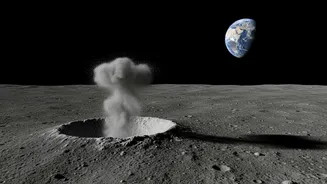
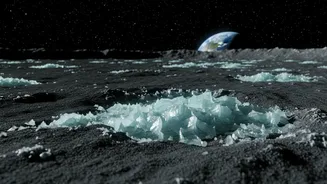
The primary goal is to study the resulting crater, which is expected to be 20 to 30 meters wide. Observing its formation will offer insights into the properties of the lunar regolith, the layer of loose dust and rock covering the surface. Another key point of interest is the ejecta plume—the massive cloud of debris that will be kicked up by the impact. Scientific models predict this plume could reach an altitude of 75 to 100 kilometers. Studying how this material spreads is crucial for understanding the behaviour of lunar dust, which is a significant hazard for astronauts and equipment. The impact will also excavate material from beneath the surface, giving scientists a fresh look at the Moon's geology. There's even a small possibility that the impact flash or the sunlit dust plume might be visible to powerful telescopes from Earth, which would be a major observational victory.
A Legacy of Lunar Impacts
Intentionally crashing objects into the Moon for science is a technique with a long history. During the Apollo program, NASA deliberately crashed the massive S-IVB third stages of the Saturn V rockets onto the surface. These impacts, weighing around 14,000 kilograms, created artificial moonquakes that were measured by seismometers left by the astronauts, helping to reveal the structure of the lunar crust and mantle. More recently, in 2009, NASA's LCROSS mission slammed a Centaur rocket stage into a permanently shadowed crater near the Moon's south pole. The resulting plume confirmed the presence of water ice, a discovery with profound implications for future long-term human settlement. This accidental SpaceX impact follows in that tradition, promising to yield valuable data without the cost of a dedicated mission.
A Question of Debris and Decorum
While scientists are eager for the data this crash will provide, the event also highlights a growing issue: the lack of clear regulations for deep-space debris. As more nations and private companies like SpaceX set their sights on the Moon, the lunar environment is becoming increasingly crowded. This impact is happening in a relatively isolated area, but future incidents could pose risks to active missions or sites of historical importance, like the Apollo landing footprints. The crash serves as a timely reminder that as humanity expands its presence, establishing a framework for coordinating activity and managing debris around the Moon is becoming more critical than ever.