


The Rise of Experience-Based Status
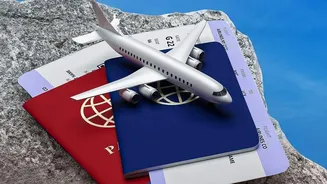
A fundamental shift is underway in the Indian consumer mindset. For a growing number of people, particularly younger generations, the ultimate status symbol is no longer a luxury car or designer handbag, but a well-stamped passport. A recent report highlights
that spending on experiences like travel and leisure is projected to outgrow spending on physical goods by 2030. This trend is heavily amplified by social media, where platforms like Instagram and YouTube serve as powerful sources of travel inspiration. Destinations are increasingly chosen for their 'Instagrammability,' turning travel into a public declaration of a life rich with experiences, a narrative many are willing to pay a premium for.
The Long Echo of 'Revenge Travel'
The post-pandemic phenomenon dubbed 'revenge travel'—the urge to make up for time lost to lockdowns—has not faded. Instead, it has evolved into a more permanent re-evaluation of life's priorities. Having endured long periods of confinement, many Indians now place a higher value on freedom, exploration, and creating memories with loved ones. This sentiment has proven remarkably resilient. Reports from mid-2026 show that despite concerns about personal finances, a majority of Indians still plan to travel, underscoring a deep-seated desire that budget constraints alone cannot extinguish. The feeling is that the opportunity cost of not travelling is now perceived as being too high.
An Engine of Aspiration and Adaptation
While sticker shock is real—long-haul tickets to Europe and North America have surged by over 20% in just a few months—the story is not one of declining demand, but of adaptation. Instead of cancelling trips, Indian travellers are getting smarter. Many are shifting their focus from expensive Western destinations to more affordable, short-haul international spots like Vietnam, Sri Lanka, and Uzbekistan. There is also a renewed focus on domestic travel, with searches for destinations like Kashmir and Ladakh spiking when international routes become too expensive or volatile. Travellers are also becoming more strategic, cutting down on non-essential spending to save for trips and booking during shoulder seasons to find deals.
The Hard Numbers: High Costs and Resilient Demand
The high fares aren't just a perception; they are a reality driven by a perfect storm of factors. Geopolitical tensions have forced airlines to take longer, more expensive routes. Rising jet fuel prices, a weaker rupee, and aircraft supply chain issues further inflate operating costs for airlines, who pass these on to consumers. Several carriers have even reduced flight frequencies on key international and domestic routes to manage these costs, which in turn constrains supply and pushes prices higher. Yet, demand continues to prove its resilience. International passenger traffic from India showed continued growth in the first half of 2026, demonstrating that for now, the powerful motivation to travel is outmatching the significant financial hurdles.