







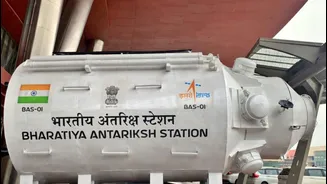
Decoding BAS-01
BAS-01 is the foundational first module of the Bharatiya Antariksh Station (BAS), India's planned indigenous space station. Think of it as the cornerstone of a new home in low-Earth orbit, an outpost that will orbit at an altitude of about 400 kilometres.
This initial module is a multitasking workhorse; it's designed to serve as a testbed for crucial technologies like life support systems, power distribution, and crew quarters. With a planned launch in 2028 aboard an LVM3 rocket, BAS-01 represents the first concrete piece of a much larger five-module station that is expected to be fully assembled by 2035. Its development is a critical next step after the Gaganyaan program, transitioning India from short-duration human spaceflight to long-term presence.
The All-Important Architecture Review
Before a single piece of metal is cut for such a complex project, it must pass a series of exhaustive reviews. The 'core system architecture review' is one of the most critical. This isn't just about double-checking the math; it's a comprehensive examination of the module's entire blueprint. Engineers and scientists from across ISRO scrutinise every detail, from the structural integrity of the module to the software that will run its systems, and how all the different components will interact. This process, known as a Critical Design Review in engineering circles, ensures the design is robust, reliable, and, most importantly, safe for the astronauts who will one day call it home. Passing this review is like a final exam for the design phase, giving the green light for manufacturing to begin.
A Green Light for Progress
The term 'advances' in the headline signifies that the BAS-01 project has successfully cleared this vital architecture review. This milestone moves the project from the drawing board to the factory floor. It unlocks the next phase of the program, which involves procuring materials and engaging with industrial partners to start building the actual flight hardware. ISRO's Vikram Sarabhai Space Centre has already invited Indian companies to participate in fabricating the structure of BAS-01, signaling a shift toward greater private industry involvement in the nation's space endeavors. This step is crucial for keeping the ambitious timeline on track and ensures that the practical, hands-on work of building India's space station can now proceed with confidence.
Why the Bharatiya Antariksh Station Matters
A national space station is a game-changer, elevating a country into an elite group of space powers. The BAS will serve as an orbital laboratory, allowing Indian scientists to conduct long-duration experiments in microgravity—a unique environment impossible to replicate on Earth. This research can lead to breakthroughs in medicine, materials science, and fluid physics. Strategically, it provides India with an independent platform for human spaceflight, reducing reliance on international partners. It’s a symbol of technological sovereignty and a powerful inspiration for future generations of scientists and engineers, cementing India's role as a leader in space exploration.
The Road Ahead for ISRO
The successful review of BAS-01 is a critical link in ISRO's long-term vision. The technologies and procedures developed for the Gaganyaan program, which aims to send Indian astronauts into space, are direct building blocks for the space station. The experience gained from building and operating the BAS will, in turn, be invaluable for even more ambitious future missions, such as sending astronauts to the Moon. While launches like Chandrayaan and Mangalyaan capture the public's imagination, it is these meticulous, behind-the-scenes engineering and review processes that form the true backbone of India's steady and calculated climb toward becoming a major spacefaring nation with a permanent presence beyond Earth.