



A Cosmic Neighbour in Decline
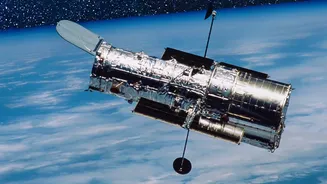
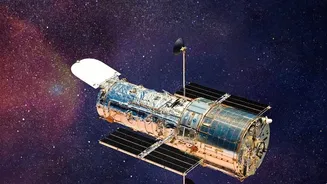
In a major discovery, astronomers using NASA's Hubble Space Telescope have found that star formation in the Andromeda galaxy is winding down. The new study reveals a steady decline over the last 500 million years, with the process falling off even more
sharply in the last 40 million years. Think of it as a bustling city where new construction projects are becoming rarer and rarer. About 500 million years ago, Andromeda was forming stars at a rate of about one solar mass per year. Today, that rate has plummeted to just one-fifth of a solar mass annually. This slowdown marks a significant transition for the galaxy, signaling its evolution from an active, star-forming spiral into a more quiescent, or quiet, state.
Meet the Andromeda Galaxy
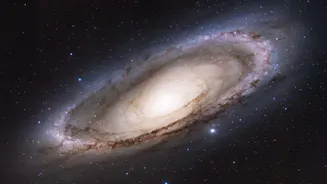
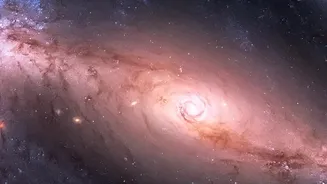
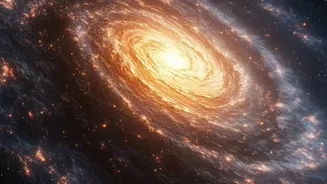
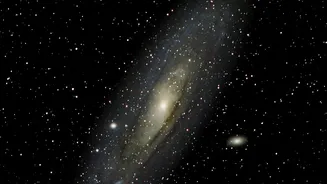
The "galactic neighbour" in question is none other than the Andromeda Galaxy, also known as Messier 31 (M31). Located about 2.5 million light-years away, it's our closest large spiral galaxy and the biggest member of our Local Group of galaxies. On a clear, dark night, it is visible to the naked eye as a faint, fuzzy patch in the sky. Andromeda is a true heavyweight, containing an estimated one trillion stars, compared to the Milky Way's 200 to 400 billion. Its sheer size and relative proximity make it a perfect laboratory for astronomers to study galactic processes in detail, offering insights that are difficult to obtain from more distant galaxies.
Reading the Fossil Record of Stars
So how did scientists figure this out? They essentially created a 'fossil record' of Andromeda's history. The team used data from two massive Hubble surveys that together mapped two-thirds of the galaxy's sprawling disk, cataloging around 200 million individual stars. The key was in the starlight. Massive, young stars burn hot and appear blue, but they have short lifespans. Less massive, older stars are cooler and appear redder, and they live for much longer. By analyzing the colours of stars in thousands of different regions across the galaxy, astronomers could determine the age of stellar populations and reconstruct a detailed timeline of when and where stars formed. This gave them an unprecedentedly clear view of the galaxy’s star-birthing activity over hundreds of millions of years.
Why is the Star Factory Slowing Down?
The slowdown doesn't seem to be happening because Andromeda is running out of fuel. It still has vast reserves of gas and dust needed to create new stars. Instead, researchers believe the galaxy is naturally winding down after a period of intense activity. About two billion years ago, Andromeda likely experienced a major burst of star formation, possibly triggered by an interaction with another galaxy. What we are seeing now is the calm after the storm. As one scientist described it, it's like a runner taking a breather after a marathon. There is also evidence that its small satellite galaxy, M32, may have punched through Andromeda's disk in the past, disrupting gas clouds and creating a 'dead zone' with less recent star birth, further contributing to the overall decline.
A Preview of Our Own Galaxy's Future
Studying Andromeda's cosmic middle age is about more than just understanding another galaxy; it offers a glimpse into the potential future of our own Milky Way. Like Andromeda, our galaxy is a spiral that is still actively forming stars. However, all galaxies have a life cycle, and eventually, the vigorous star formation of their youth gives way to a quieter, more settled existence. By observing this process happening next door, we can better understand the forces that drive galactic evolution and predict the long-term fate of our own corner of the universe. Andromeda is essentially showing us what the Milky Way might look like billions of years from now, long after its own star-forming fires have begun to die down.