


The Uncooked Showdown: A Tale of Two Grains
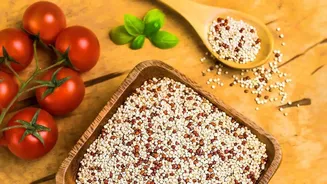
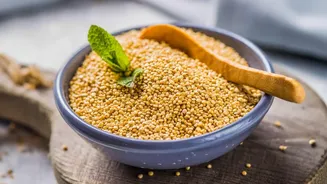
On paper, comparing 100 grams of uncooked ragi (finger millet) and uncooked quinoa reveals distinct advantages for each. Quinoa, the South American seed, is a protein powerhouse, offering about 13-14 grams of complete protein, meaning it contains all
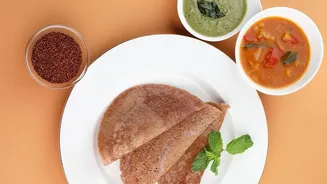
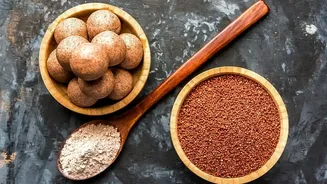
nine essential amino acids. It also leads in healthy fats and certain vitamins like folate. Ragi, a staple grown in India for millennia, presents a different profile. While its protein content is lower at around 7 grams, it boasts an incredible amount of calcium. At approximately 344-364 mg per 100g, ragi's calcium content is one of the highest among all cereals, dwarfing quinoa's. Ragi also holds its own with significant dietary fibre and iron. Based on this dry comparison, your choice would seem simple: quinoa for protein, ragi for calcium. But this is only half the story.
The Cooking Transformation: Just Add Water
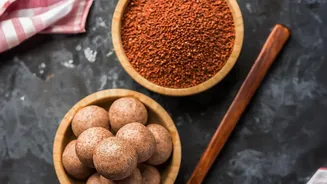
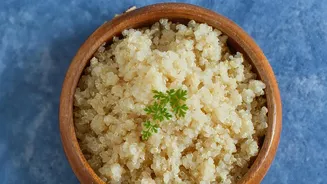
The real game-changer is what happens during cooking. Both grains absorb a significant amount of water, which alters their volume and, consequently, their nutrient density per cooked serving. Quinoa is known to expand, typically tripling in volume. This means one cup of dry quinoa becomes about three cups when cooked. Ragi is most commonly consumed as a flour, cooked into a porridge (kanji), a thick dough (mudde), or flatbreads (roti). When ragi flour is cooked into a porridge, it also expands significantly as it absorbs water, but its final density is very different from the fluffy, separate grains of cooked quinoa. This expansion is critical because we don't eat dry grains; we eat cooked portions. A cup of cooked quinoa and a cup of cooked ragi porridge started from very different amounts of dry grain, which completely changes the nutritional maths.
A Cup-for-Cup Comparison: The Cooked Reality
When you compare a cooked cup of each, the numbers shift dramatically. A cup of cooked quinoa (about 185g) contains around 8 grams of protein and 120 calories. A cup of cooked ragi porridge (about 250g) might have around 120-150 calories but a lower protein content of 3-4 grams. In a volume-to-volume comparison, cooked quinoa delivers more protein. However, the story flips again for calcium. That same cup of ragi porridge still provides a substantial amount of calcium, whereas quinoa's contribution remains modest. For fibre, both are excellent sources, promoting satiety and good digestive health. The key takeaway is that because quinoa is less dense when cooked, you get more protein in a single cup. Ragi, often prepared as a denser porridge or ball, remains the undisputed champion for calcium delivery in a standard serving.
Beyond the Numbers: Cost, Culture, and Climate
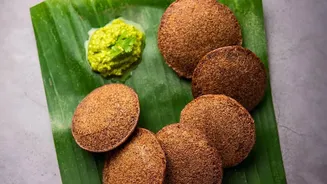
Nutrition isn't the only factor. For most Indian households, price and accessibility are crucial. Ragi is a locally grown crop, making it incredibly affordable and widely available. You can find ragi flour in almost any local market for a fraction of the price of quinoa. Quinoa, on the other hand, is largely imported from South America, which significantly drives up its cost, often making it five to eight times more expensive than ragi. Culturally, ragi is woven into the fabric of Indian cuisine, from ragi mudde in Karnataka to nachni rotis in Maharashtra. This familiarity makes it easy to incorporate into daily meals. Quinoa, while versatile, often fits more into salads and modern recipes, which may not align with traditional eating habits.
So, Which One Should You Choose?
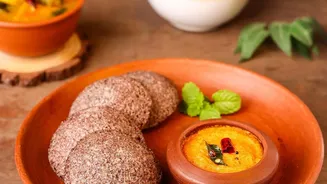
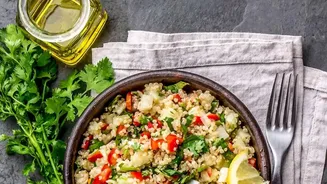
The best choice truly depends on your personal health goals and priorities. If your primary aim is to maximise protein intake from a plant-based source, and budget is not a constraint, quinoa is an excellent option, especially per cooked cup. Its complete amino acid profile is a significant bonus for vegetarians and vegans. However, if you are focused on bone health, looking for an affordable and sustainable source of calcium and fibre, ragi is the undeniable winner. It is particularly beneficial for children, older adults, and women. For many, the ideal solution isn't to choose one over the other but to incorporate both. Use quinoa in salads and pulao when you want a light, high-protein meal. Turn to ragi for comforting porridges, hearty rotis, and dosas to boost your calcium and fibre intake without breaking the bank.