





The Engine: A Relentless Rise in Temperature
The root of Nepal’s intensifying flood crisis can be traced to a single, overarching factor: rising global temperatures. The Hindu Kush Himalaya region is warming at a rate significantly faster than the global average. According to scientific reports,
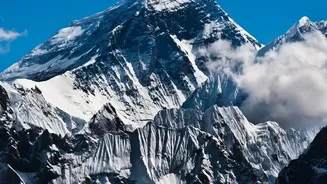
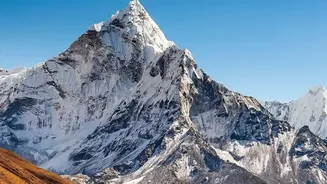
temperatures in the Himalayas have been steadily increasing, accelerating the rate of glacier melt. Studies show that the rate of ice loss from Himalayan glaciers has doubled since the year 2000. This isn't just a gradual warming; the region has experienced record-breaking heat. July and August of 2026, for instance, were the warmest ever recorded locally, with temperatures soaring 5°C above the 30-year average in the days preceding some catastrophic events. This sustained and intense heat is the primary driver destabilising the entire mountain ecosystem from the top down.
The Cascade: From Melting Ice to Ticking Time Bombs
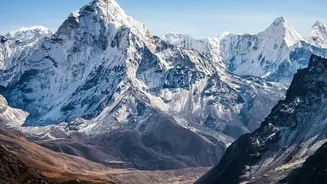
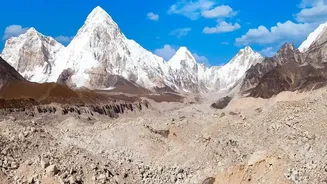
As temperatures climb, the 'Third Pole'—the vast store of ice in the Himalayas—is shrinking at an alarming pace. Glaciers have been thinning by an average of half a metre each year since 2000. This accelerated melting does two dangerous things. Firstly, it creates and expands glacial lakes, which are often held back only by unstable natural dams of rock and debris known as moraines. These lakes can become ticking time bombs. A sudden influx of water from heavy rain or a landslide can cause the moraine dam to breach, unleashing a Glacial Lake Outburst Flood (GLOF), a torrent of water and debris that rushes downstream with catastrophic force. Events in 2024 in the Thame Valley, where the outburst of one lake triggered another in a cascading failure, highlight this growing threat.
The Foundation: When the Mountains Themselves Weaken
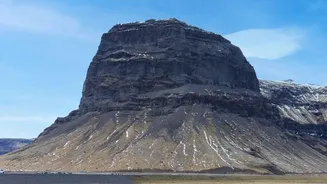
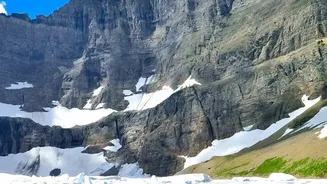
Perhaps the most insidious impact of rising heat is on the stability of the mountains themselves. Higher temperatures are causing high-altitude permafrost—the permanently frozen ground that acts like a natural glue holding steep, rocky slopes together—to thaw. This thawing weakens the structural integrity of the mountainside. Scientific analysis shows the freezing line in the Himalayas has been rising by about 100 metres per decade, exposing more rock to freeze-thaw cycles that further fracture it. As glaciers retreat, they also stop acting as a buttress, removing the immense pressure that once helped support adjoining rock walls. This combination of thawing permafrost and retreating glacial support leaves mountain slopes dangerously unstable and prone to massive rock and ice avalanches, as seen in the devastating Langtang Lirung collapse in August 2026.
The Perfect Storm: A Compound Crisis
The true danger lies not in any single factor, but in their interaction. Recent disasters are now understood as 'compound crises' or 'cascading hazards'. A heatwave accelerates glacier melt, swelling a glacial lake. Simultaneously, the same heat thaws the permafrost on the mountain above, making a landslide more likely. This landslide then crashes into the swollen lake, triggering a GLOF. In other cases, a massive section of rock and glacier, destabilised by decades of warming and thawing, collapses. The friction from this avalanche can be so intense it melts the falling ice, creating a torrent of water, rock, and mud that travels at incredible speeds—sometimes over 170 kilometres per hour—obliterating everything in its path. This is not just a flood; it is a complex chain reaction where climate change is the clear destabilising force.
The Human Cost: Life on the Frontline
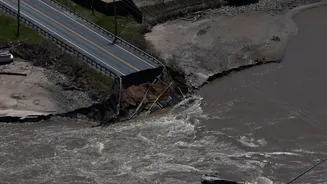
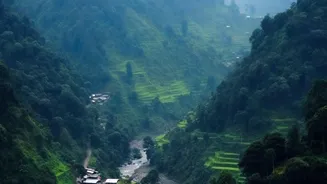
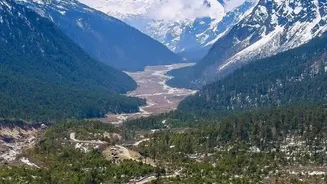
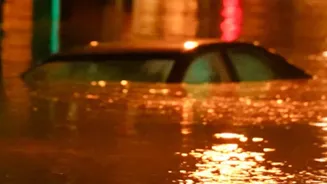
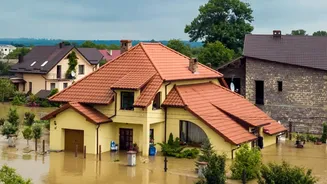
For the millions of people living in the narrow river valleys of Nepal, this new reality is a constant threat. Communities, vital infrastructure like roads and bridges, and crucial hydropower projects are all concentrated along rivers, directly in the path of these potential disasters. The August 2026 floods, triggered by a massive rock and glacier collapse, resulted in over 1,300 deaths, with thousands more missing, and caused billions of dollars in damage. The disaster swept through communities with little to no warning, highlighting the limits of existing early-warning systems when faced with such rapid and complex events. Homes, schools, and health posts have been destroyed in recent events, displacing entire communities and demonstrating the profound vulnerability of those living on the frontlines of a crisis largely driven by global emissions.