




A Discovery in the 'Roof of the World'
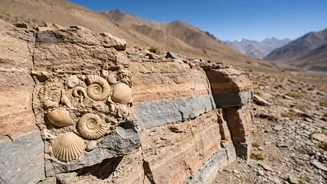
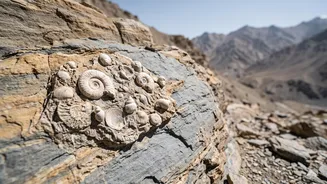
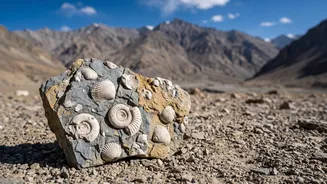
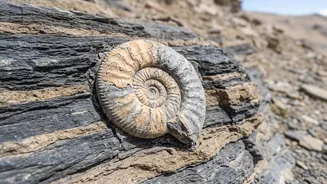
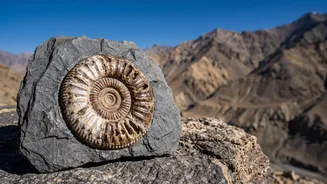
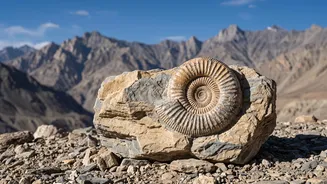
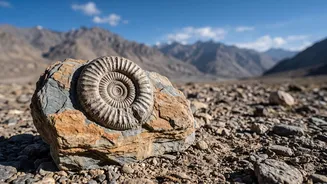
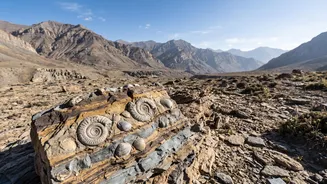
In the remote Changthang region of Nyoma, Ladakh, geologist Dr. Ritesh Arya has unearthed a remarkable collection of marine fossils. The find includes gastropods (snail-like creatures), bivalves, and oyster-like forms. This isn't the first time such relics
have been found in the Himalayas, but the sheer quantity and preservation of this collection provide a significant new window into a forgotten era. Dr. Arya, founder of the Tethys Fossil Museum, noted the fossils' striking resemblance to those from the well-studied Subathu formation in Himachal Pradesh, which gave him the first clue about their potential age and origin.
The Ghost of an Ancient Ocean
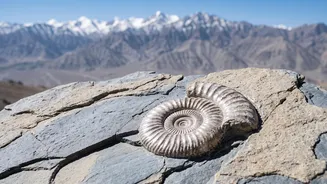
So, how did sea creatures end up thousands of metres above sea level? The answer lies in plate tectonics. Millions of years ago, the landmass we now know as India was an island continent moving northwards across the Tethys Ocean. Around 50 million years ago, it collided with the Eurasian plate. This colossal, slow-motion impact crumpled the land, giving birth to the Himalayan mountain range. The rocks that once formed the seabed of the Tethys, along with the remains of the creatures that lived there, were thrust upwards to form the highest peaks on Earth. These fossils are, therefore, direct evidence of this ancient sea that once separated the continents.
The First Clues: Preliminary Dating
Announcing a fossil is 38 million years old is a bold claim, but it starts with educated comparison. The initial age estimate for the Ladakh fossils comes from a process called biostratigraphic comparison. Scientists compare the newly found fossils with well-documented ones from other locations. In this case, the Ladakh fossils look very similar to those in the Subathu formation, which are firmly dated to the Eocene epoch (roughly 34-56 million years ago). This provides a strong, but preliminary, age range. It’s like recognising a car model from the 1980s based on its distinctive design, even before checking its registration papers.
The Path to Confirmation: More Than a First Look
A preliminary finding is just the beginning of a rigorous scientific journey. For the discovery to be officially confirmed and accepted by the global scientific community, several critical steps must be taken. The first is detailed analysis. The discovered material will now undergo systematic taxonomic, stratigraphic, and geochemical analysis to pinpoint its exact identity and position in the geological record. This involves meticulous study of the fossils' physical characteristics (morphology) to classify the exact species. This process helps confirm if they truly match the Subathu fossils or represent something new.
Peer Review and Publication
Perhaps the most crucial step is peer review. Dr. Arya and his colleagues will document their findings, methodology, and conclusions in a scientific paper. This paper is then submitted to a reputable scientific journal. The journal's editors send the paper to other independent experts in palaeontology and geology. These anonymous reviewers scrutinise the evidence, challenge the interpretations, and look for any potential errors or weaknesses in the research. Only if the paper withstands this intense scrutiny will it be published. Publication makes the finding an official part of the scientific record, open for all other scientists to examine and build upon. This process ensures that scientific claims are backed by robust evidence and sound reasoning.
Why This Rigour Matters
This painstaking process of confirmation is what separates scientific discovery from mere speculation. It ensures that our understanding of the planet's history is built on a foundation of verifiable facts. This particular find in Ladakh could have significant implications, potentially showing that the ancient Tethys Sea extended further east than previously thought. If confirmed, it will help redraw the palaeogeographic maps of the Eocene epoch. Each fossil, once verified, becomes another piece in the grand puzzle of Earth's history, helping us understand the immense geological forces that shaped the Indian subcontinent and gave rise to the majestic Himalayas.