








The Ghost in the Steel
It sounds like science fiction, but it’s a tangible legacy of the 20th century. Every piece of steel manufactured after July 16, 1945—the date of the first atomic bomb test—contains tiny amounts of radioactive isotopes that weren’t present before. This
is because modern steel production, whether using the historic Bessemer process or the current basic oxygen method, involves forcing atmospheric gases through molten iron. Since the dawn of the atomic age, our atmosphere has been seasoned with radionuclides like cobalt-60 from thousands of nuclear detonations. While this trace radiation is harmless in our daily lives, for highly sensitive scientific instruments, it's like a constant hum of static, obscuring the faint signals they are designed to detect.
What Is Low-Background Steel?
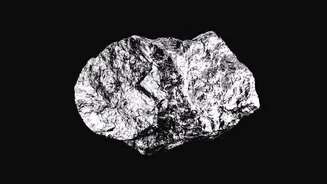
This contaminated material has an opposite: low-background steel. It's the industry term for any steel produced before the first atomic bombs were detonated. Free from the fallout of the nuclear era, this metal is essential for building devices that require near-perfect radiological silence to function correctly. Think of it as a perfectly quiet room needed to hear a pin drop. Instruments that measure faint radiation, from medical scanners to deep-space probes, need to be built from materials that don’t have their own internal radiation signature. A detector made from modern steel would be trying to listen for faint cosmic whispers while its own components are shouting.
The Hunt for Sunken Treasure
Since we can't produce new steel untouched by atmospheric radiation without extreme expense, scientists and engineers have had to become historical scavengers. The most significant source of low-background steel is found on the ocean floor, within the hulls of warships and other vessels sunk during World War I and World War II. Shielded by water from decades of atmospheric fallout, this metal remains as clean as the day it was forged. Fleets of scuttled German warships at Scapa Flow in Scotland, for instance, have been a primary source. However, this has created a gray market, with illegal salvagers targeting historic wrecks—many of which are considered war graves—to plunder this valuable steel, leading to significant controversy and the destruction of heritage sites.
Critical for Modern Science
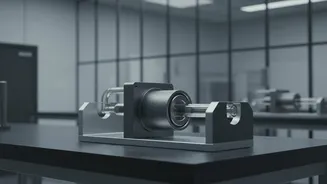
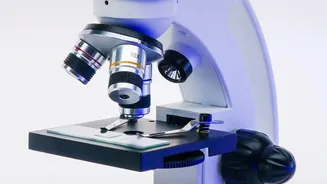
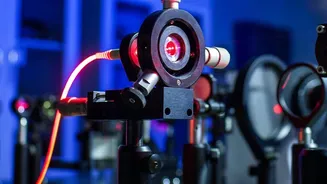
The applications for this vintage metal are at the forefront of science and medicine. Low-background steel is critical for building whole-body counters that measure radiation in humans, advanced medical imaging devices, and equipment for particle physics experiments searching for things like neutrinos and dark matter. Geiger counters, atmospheric sensors, and probes sent into space also rely on this material to ensure their measurements are accurate and not skewed by their own construction. In these fields, precision is everything, and low-background steel provides a baseline of purity that modern materials struggle to match.
The Future of 'Clean' Materials
The supply of pre-war steel is finite and rapidly dwindling. So, what comes next? Fortunately, the urgency has lessened for some applications. Since the Partial Nuclear Test Ban Treaty of 1963, atmospheric radiation levels have dropped significantly. Steel produced today is far less radioactive than it was in the mid-20th century, making it suitable for many, but not all, uses. For the most sensitive experiments, researchers are exploring alternatives. This includes developing new, costly methods to produce ultra-pure steel or using different materials altogether, such as oxygen-free copper or even ancient lead salvaged from Roman shipwrecks, which offers superior shielding properties for specific tasks.