






From Bomb to Laboratory
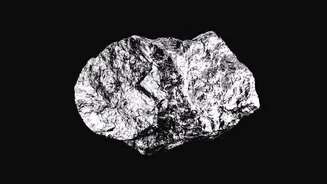
On July 16, 1945, the first detonation of a nuclear device, codenamed the Trinity test, vaporized a 30-meter steel tower, its copper wiring, and the surrounding New Mexico desert sand. As this superheated plasma cooled, it fused these elements into a green,
glassy substance known as trinitite. For decades, this material was primarily a historical curiosity, a grim souvenir of a new era. Today, however, scientists view these samples as something more: a natural laboratory. The blast created conditions of extreme heat and pressure that are incredibly difficult to replicate, forging materials in a fraction of a second. These historic samples provide a unique window into the behavior of matter under the most violent conditions imaginable.
Seeing the Unseen
What has changed is our ability to look. Using advanced tools like scanning electron microscopy and X-ray diffraction, researchers are now able to probe the atomic structure of trinitite with unprecedented precision. These modern techniques allow scientists to analyze microscopic metallic droplets trapped within the glass, some just microns in size. Inside these tiny spheres, they are finding atomic arrangements that were once purely theoretical or thought impossible to create on Earth. A particularly interesting variant is red trinitite, which gets its color from the high concentration of vaporized copper wires mixed into the fused sand. This unique composition has proven to be a treasure trove of exotic materials.
Forbidden Structures in Fused Glass
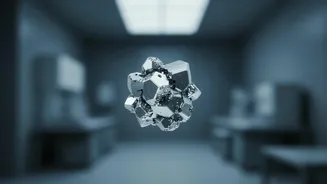
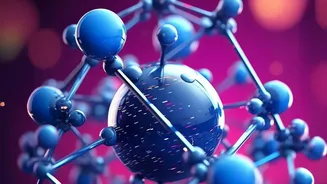
The most stunning discovery has been the identification of a quasicrystal — a material with an ordered, but never-repeating, atomic structure. For a long time, such a structure was considered a violation of the rules of crystallography. This specific quasicrystal, the oldest known to be created by humans, is a complex alloy of silicon, copper, calcium, and iron. It could only have formed in the momentary, intense pressure and temperature of the nuclear blast. Alongside quasicrystals, researchers have also identified other novel structures, like clathrates, which feature cage-like atomic lattices that trap other atoms. These materials are microscopic snapshots, preserving the exact physical conditions of the explosion and revealing how matter organizes itself when pushed far from equilibrium.
From Fallout to Future Tech
So, what does this mean for materials science? The discovery of these exotic materials is more than a scientific curiosity; it is a roadmap. By understanding how these incredibly stable structures form under rapid and extreme conditions, scientists can work backward to develop new manufacturing processes. Quasicrystals, for example, have potential applications in thermal insulation, bone repair, and converting heat to electricity. The study of how different elements behave in a cooling fireball helps improve models for everything from nuclear waste containment to creating advanced alloys. Simulating these conditions in labs allows researchers to test how materials might perform in extreme environments, like the inside of next-generation nuclear reactors. Essentially, the destructive force of a nuclear bomb accidentally created blueprints for new, highly resilient materials that we are only now learning to read.