






More Than Just a Big Factory
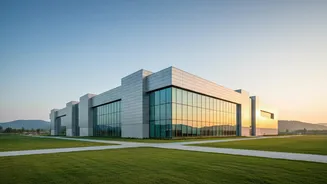
The term 'gigafactory' itself is a bit of a misnomer, or at least an understatement. These aren't just scaled-up versions of old car plants. A modern battery gigafactory, like those being built by companies such as Northvolt, Verkor, and ACC across Europe,
are temples of high technology. To produce millions of battery cells with the required precision, consistency, and safety, these facilities are packed with thousands of sensors, robotic arms, and automated quality control systems. Every step of the complex manufacturing process, from mixing chemical slurries to final cell assembly, is monitored in real-time. This creates an environment that is less like a traditional factory and more like a massive, interconnected data-generating machine.
The Data Deluge of Modern Manufacturing
The sheer volume of information produced by a single gigafactory is staggering. We're talking about petabytes of data—the equivalent of millions of gigabytes—generated from countless data points every single day. This data captures tiny variations in temperature, pressure, material composition, and machine performance. On its own, this torrent of information is too vast and complex for human teams to analyse effectively. Buried within it, however, are the secrets to higher efficiency, better quality, and fewer defects. Finding those secrets is not a human-scale problem; it is a task for artificial intelligence.
Enter the Digital Twin
This is where the concept of a 'digital twin' comes in. Before a single physical brick is laid, companies build a complete virtual replica of the entire factory in a computer. This digital twin is not just a 3D model; it's a dynamic simulation that understands the physics, chemistry, and logistics of the entire production line. As the real factory is built and begins to operate, it is constantly feeding its live sensor data back to the digital twin. AI algorithms then analyse this data, comparing the real-world performance against the ideal virtual model. They can predict when a machine will need maintenance before it breaks down, identify a batch of materials that is slightly off-spec, and simulate changes to the production line to find ways to improve output without risking costly real-world errors.
From Factory Floor to AI Powerhouse
Herein lies Europe's new route to AI capacity. By procuring and operating these advanced gigafactories, Europe is, by necessity, building a world-class industrial AI ecosystem. It's not just about the AI models; it's about the entire stack. This includes the talent—the data scientists and engineers who can build and manage these complex systems. It includes the software platforms from companies like Siemens and Dassault Systèmes that run the digital twins. And it includes the high-performance computing infrastructure needed to process all the data. This creates a form of AI capacity that is deeply embedded in high-value, critical industry, rather than being concentrated in consumer-facing apps and search engines dominated by US tech firms.
A Strategic Play for Europe
This development aligns perfectly with Europe's broader strategic goal of achieving 'technological sovereignty'. For years, the continent has worried about its dependence on foreign technology, particularly in critical areas like cloud computing and AI processors. Recent EU initiatives, including a €10 billion fund for dedicated 'AI Gigafactories' designed for model training, show a clear ambition to build domestic capabilities. While these state-backed AI centres are a direct approach, the industrial-led path through battery manufacturing is a powerful, parallel effort. It ensures that Europe's AI talent and infrastructure are solving real-world industrial problems, strengthening the continent's manufacturing base while simultaneously building a defensible and highly valuable form of AI expertise.