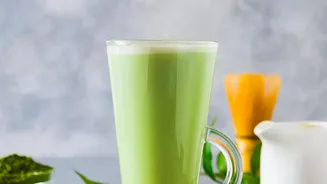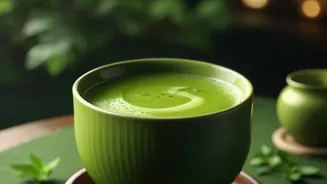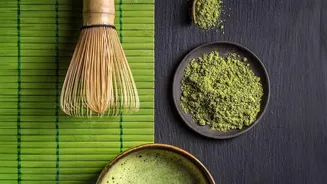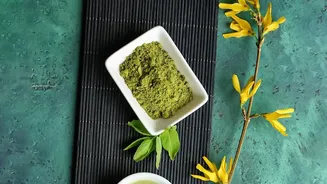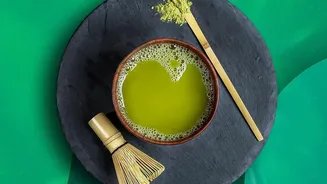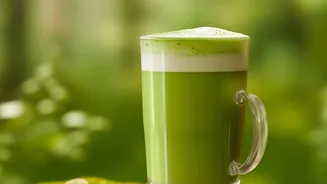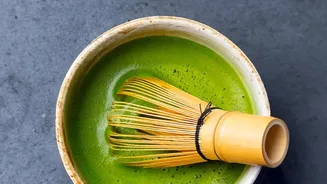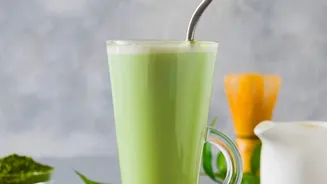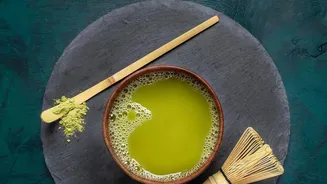






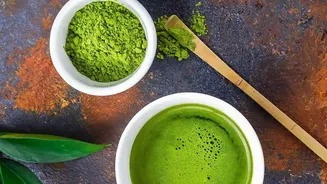
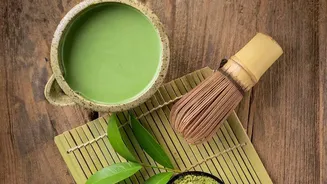
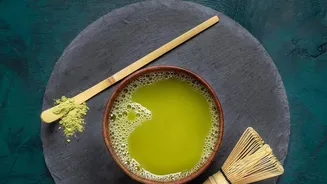
What Exactly Is Matcha?
Before it was a latte, matcha was a cornerstone of Japanese tea ceremonies. It comes from the same plant as green tea, Camellia sinensis, but its production is far more specific. The tea leaves are shade-grown for several weeks, a process that boosts
chlorophyll and amino acid content, resulting in its signature bright green colour and a complex, umami flavour. Unlike regular green tea where leaves are steeped and discarded, with matcha you consume the entire, finely ground leaf. This means you get a more potent concentration of the leaf's nutrients, caffeine, and antioxidants.
From Niche Trend to Mainstream Craze
Matcha's journey in India has been rapid. A few years ago, it was a rare find, confined to specialty Japanese restaurants or high-end hotels. Today, it’s a fixture on the menus of third-wave coffee shops in Mumbai, Bangalore, and Delhi. Its visual appeal made it an instant star on social media, where its vibrant colour stands out in a sea of brown coffees and teas. This online visibility, driven by wellness influencers and food bloggers, created a powerful feedback loop, driving curiosity and demand among urban millennials and Gen Z consumers. They are the primary audience treating beverages not just as a drink, but as a wellness choice and part of their personal identity.
The Data Behind the Demand
The social media buzz is backed by hard data. According to Google Trends from late 2026, searches in India for 'how to make matcha' skyrocketed by 1,300% over the past year. This signals a significant shift in consumer behaviour. Indians aren't just ordering matcha lattes; they're bringing the ritual home. Searches for 'matcha kit,' 'matcha whisk,' and 'matcha bowl' have also seen breakout growth. The interest is geographically widespread, with Delhi leading searches for 'matcha near me', followed closely by Goa, Chandigarh, and Karnataka.
A Quest for Wellness
Beyond its photogenic quality, much of matcha's appeal lies in its health halo. Search interest for 'matcha health' and 'matcha protein' has soared by 1,000% and 2,500% respectively. Matcha is packed with antioxidants, particularly catechins like EGCG, which are linked to various health benefits, including supporting heart health and reducing inflammation. It also contains L-theanine, an amino acid that can promote a state of calm alertness, providing a gentle energy lift without the jitteriness sometimes associated with coffee. This has made 'matcha vs coffee' a breakout search query as consumers look for healthier caffeinated alternatives.
India Adds Its Own Flavour
As matcha becomes more embedded in Indian culture, consumers are adapting it to local tastes. While traditional preparations are gaining ground, so are creative new fusions. Google reported a 200% rise in searches for 'mango matcha' and a 400% increase for 'strawberry matcha'. During the monsoon, 'dirty matcha' (a mix of matcha and coffee) and 'coconut matcha' also saw breakout interest. This experimentation shows that Indians are making the trend their own, blending the Japanese tea with familiar, beloved flavours.