



From Five to Many: A Bloc Reimagined
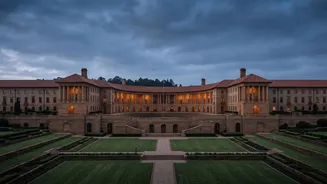
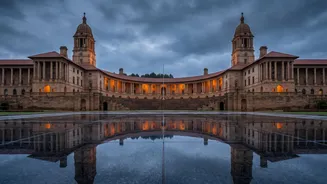
Before 2023, BRICS was an acronym representing five major emerging economies: Brazil, Russia, India, China, and South Africa. Formed in 2009 and expanded in 2010 to include South Africa, the group's primary purpose was to enhance cooperation and amplify
the voice of the Global South in a world dominated by Western-led institutions. For over a decade, its membership remained static. However, heading into the Johannesburg summit, momentum for expansion was significant, with over 20 countries having formally applied to join. The central debate was no longer if the bloc should expand, but how and how quickly.
The New Members Enter the Fray
The summit concluded with invitations extended to six nations: Argentina, Egypt, Ethiopia, Iran, Saudi Arabia, and the United Arab Emirates (UAE). While Argentina's new government later withdrew its application, the other five officially joined in January 2024, creating what is now often called BRICS+. The inclusion of energy powerhouses like Saudi Arabia and the UAE, regional influencers like Egypt and Iran, and a demographically significant nation like Ethiopia, was historic. This move significantly increased the bloc’s geopolitical footprint, especially in the Middle East and Africa.
The Competing Visions of India and China
The expansion was not without internal friction, primarily exposing the differing strategic visions of China and India. Beijing, along with Moscow, was a vocal proponent of a rapid and broad expansion. For China, a larger BRICS serves as a powerful platform to build a coalition of Global South countries, creating a more substantial counterweight to the G7 and other Western-led forums. India, conversely, approached expansion with caution. New Delhi’s concern was that a rapid influx of members, particularly those closely aligned with Beijing, could dilute India's own influence and transform the bloc into a more explicitly anti-Western vehicle. To manage this, India successfully pushed for establishing clear criteria and principles for new members, ensuring a consensus-based process rather than an open-door policy.
A Shift in Economic Gravity
The numbers speak for themselves. With the new members, the expanded BRICS now represents about 36% of global GDP at purchasing power parity (overtaking the G7's share) and nearly half of the world's population. The inclusion of Saudi Arabia, the UAE, and Iran also means the bloc now includes some of the world's largest oil producers. This combined economic heft has reinvigorated discussions about promoting the use of local currencies in trade among member states, a key step in the long-term goal of reducing dependence on the U.S. dollar. However, the economic reality is that China alone accounts for the vast majority of the bloc's total GDP, a fact that remains a central point of imbalance.
More Members, More Challenges
While the expansion has undeniably increased the group's scale, it has also introduced greater complexity. A larger, more diverse group may find it harder to reach the consensus required for major decisions. The bloc now includes countries with their own historical rivalries, such as Iran and Saudi Arabia, or Egypt and Ethiopia. Furthermore, many of the new members, like the UAE and Saudi Arabia, maintain strong economic and security ties with the United States and the West, making them unlikely to support a purely confrontational stance. This diversity means the bloc is less a monolithic anti-Western alliance and more a complicated forum for countries seeking to navigate a multipolar world.