




The Darjeeling Himalayan Railway, West Bengal
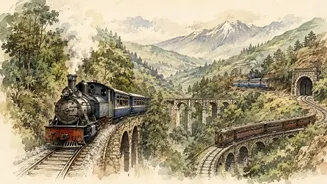
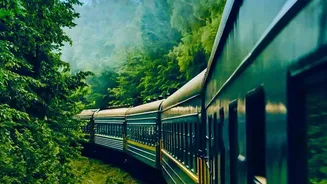
Affectionately known as the 'Toy Train', the Darjeeling Himalayan Railway is arguably the most iconic of India's mountain railways. Operational since 1881, this narrow-gauge line is a marvel of 19th-century engineering, climbing from New Jalpaiguri in the plains
to the hill station of Darjeeling. The 88-kilometre journey is a slow, rhythmic chug through bustling market towns, dense forests, and fragrant tea plantations that carpet the hillsides. UNESCO has praised these railways as 'outstanding examples of bold, ingenious engineering solutions' for traversing such difficult terrain. The train uses a series of loops and 'Z' reverses to navigate the steep gradients, including the famous Batasia Loop, which offers a breathtaking 360-degree view of Darjeeling with the majestic Kanchenjunga peak in the background. The highest point on the line is at Ghoom station, which at an elevation of 2,258 metres, is India's highest railway station. This journey isn't just about the destination; it’s a trip back in time on a piece of living history.
The Nilgiri Mountain Railway, Tamil Nadu
Journeying through the 'Blue Mountains' of Tamil Nadu, the Nilgiri Mountain Railway connects Mettupalayam with the popular hill station of Udagamandalam, better known as Ooty. Added to the UNESCO list in 2005, this railway is a unique feat of engineering in its own right. It is the only railway in India that uses a rack and pinion system to climb the steepest parts of its track, a necessity for the sharp inclines of the Nilgiri hills. The 46-kilometre journey takes passengers through rocky terrain, verdant forests, and numerous tunnels and bridges. The scenery transforms from the lush jungles of the lower elevations to the manicured tea estates that surround Coonoor and Ooty. The train itself, often powered by a classic steam locomotive on certain stretches, adds to the vintage charm. The journey became a part of Bollywood folklore as the setting for the famous song 'Chaiyya Chaiyya'. For many travellers, this ride offers the most picturesque views as it passes over bridges and through 16 tunnels, making it an unforgettable experience.
The Kalka-Shimla Railway, Himachal Pradesh
Built to connect the plains with Shimla, the former summer capital of British India, the Kalka-Shimla Railway is an epic journey through the Shivalik Hills. This narrow-gauge line, completed in 1903 and granted UNESCO status in 2008, is a testament to engineering grit. Over its 96-kilometre route, the train navigates a staggering 919 curves, crosses over 850 bridges, and passes through 102 tunnels, offering ever-changing vistas of pine forests and mist-covered valleys. The journey begins at Kalka in Haryana and gradually climbs over 1,400 metres to reach Shimla. Each station along the way, with its quaint colonial-era architecture, feels like a step back in time. The longest tunnel on the route, at Barog, is over a kilometre long and has its own share of local legends. The rhythmic sound of the train on the tracks, combined with the panoramic views of the Himalayas, makes this five-hour journey a serene and deeply memorable experience for anyone looking to witness the grandeur of the mountains at a leisurely pace.