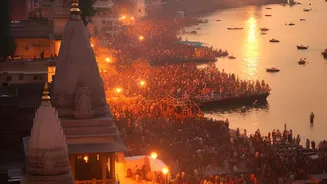







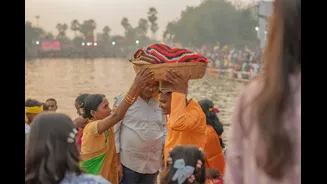
Before the world awakens, a quiet devotion blankets the riverbanks of Bihar. Thousands stand waist-deep in the cool water, their faces turned eastward, waiting. This is the serene culmination of Chhath Puja: the Usha Arghya, a final offering to the rising
sun.
The Final Offering at Dawn
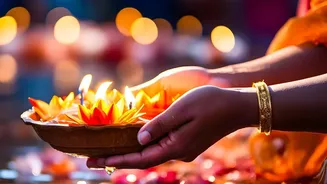
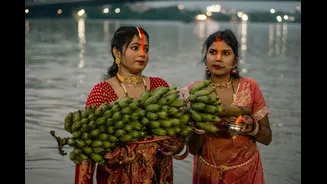
As the first golden rays of the sun slice through the morning mist, a collective prayer unfolds across the ghats. This is Usha Arghya, the 'morning offering', which marks the conclusion of the arduous Chhath festival. Devotees, known as 'vratis', who have been fasting for 36 hours without even a drop of water, raise their offerings. Bamboo trays, called 'soops', are laden with 'thekua' (a traditional sweet cookie), fresh fruits, sugarcane, and other seasonal produce. Facing the dawn, they pour milk or water as a gesture of gratitude to Surya, the Sun God, and his sister, Chhathi Maiya, for sustaining life on earth. After this final prayer, the long fast is broken with a small bite of prasad, a moment of quiet relief and profound spiritual fulfillment.
A Four-Day Test of Devotion
Usha Arghya is the final act in a demanding four-day observance that emphasizes purity and discipline. The festival begins with 'Nahay Khay', where vratis take a holy dip and eat a single pure, simple meal. This is followed by 'Kharna', a day-long fast that ends after sunset with a special prasad of rice pudding (kheer) and rotis. This evening meal marks the start of the 36-hour 'nirjala' fast that extends through the next day. The third day, 'Sandhya Arghya', is when devotees offer prayers to the setting sun, a unique ritual acknowledging the sun's entire cycle. The vigil continues through the night until the final morning offering, making Chhath one of the most rigorous fasts in Hinduism.
Bihar's Cultural Heartbeat
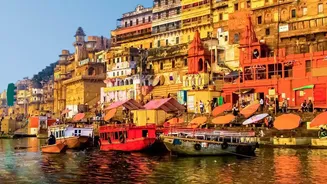
While celebrated across the country and by the diaspora globally, Chhath Puja holds its deepest roots in Bihar. For these four days, the state’s rhythm shifts. Over a crore people, including migrant workers and their families, are estimated to return home, filling trains and buses. The festival is a great leveller; people from all walks of life gather at the same riverbanks, sharing a common purpose. The government prepares thousands of public ghats along rivers and ponds, with the Ganga in Patna being a major centre of activity. Folk songs praising the Sun God and Chhathi Maiya echo through the evenings, weaving a rich tapestry of sound and devotion that defines Bihar's cultural and spiritual identity.
A Festival Connected to Nature
At its core, Chhath is an eco-friendly festival that venerates nature itself. Unlike many other Hindu festivals, it involves no idol worship. The focus is on the direct worship of the sun, the ultimate source of energy, and water bodies like rivers and ponds. Purity is paramount, extending to the environment. Communities often engage in cleaning the ghats and their surroundings before the rituals begin. The offerings themselves are natural and seasonal, using items like bamboo baskets, sugarcane, and fresh produce. This deep-rooted connection to the elements serves as a powerful reminder of humanity's dependence on nature and the importance of living in harmony with it.