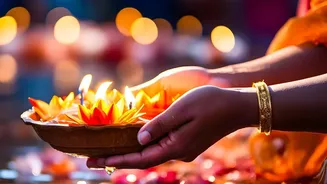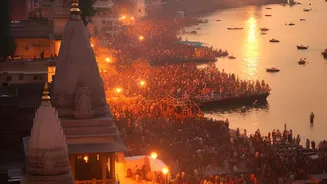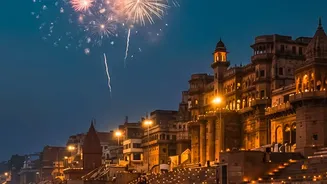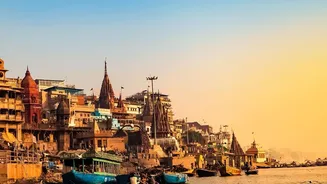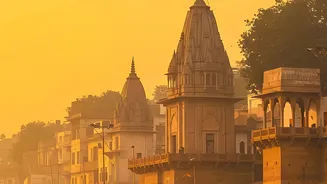






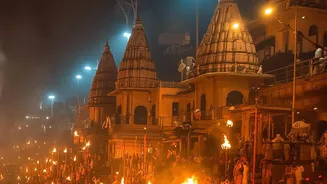

As dawn breaks on November 16, riverbanks across Bihar will be aglow with earthen lamps and fervent prayers. This marks the culmination of Chhath Puja, one of India's most ancient and rigorous festivals, with the final ritual of Usha Arghya.
An Ode to the Sun God
At its heart,
Chhath Puja is a four-day festival dedicated to Surya, the Sun God, and his sister, Chhathi Maiya. Unlike many Hindu festivals that involve idol worship, Chhath is a direct communion with nature, celebrating the sun as the source of all life and energy. Primarily observed in Bihar, Jharkhand, and Eastern Uttar Pradesh, its roots trace back to ancient Vedic traditions. Devotees, known as 'vratis', offer thanks for the blessings of life on Earth and seek prosperity, good health, and the well-being of their children. The festival is unique because it is one of the few that honours both the setting and the rising sun, symbolising gratitude for the entire cycle of life, from end to beginning.
The Four-Day Spiritual Journey
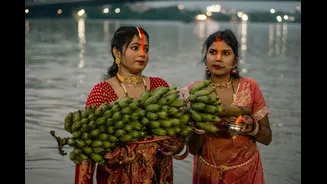
The path to the final day is one of immense discipline and purity. The festival begins with 'Nahay Khay' on November 13, where vratis take a holy dip and eat a single pure, vegetarian meal. This is followed by 'Kharna' on November 14, a day-long fast that is broken after sunset with a special prasad of jaggery kheer and rotis. The consumption of this prasad marks the start of a strenuous 36-hour 'nirjala' fast, during which the vrati abstains from both food and water. The third day, November 15, is for 'Sandhya Arghya', the evening offering to the setting sun. Families throng the ghats, standing waist-deep in water to offer prayers as the sun dips below the horizon.
The Final Act: Usha Arghya
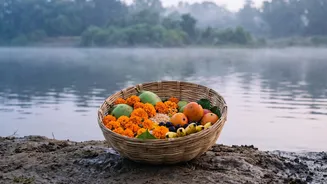
The festival culminates before dawn on the fourth day, Monday, November 16, with 'Usha Arghya' or the morning offering. The term 'Usha' means dawn, and 'Arghya' means offering. Devotees return to the riverbanks, once again standing in the water to greet the first rays of the rising sun. This ritual symbolises the victory of light over darkness and welcomes a new day filled with hope and divine energy. Prayers are offered to Surya Dev and Chhathi Maiya for the health and longevity of their family, especially their children. Bamboo baskets, or 'soops', are filled with 'thekua' (a traditional sweet), fresh fruits, and sugarcane, which are offered to the deity.
Breaking the Fast and Community Spirit
After the Usha Arghya is complete, the vratis break their arduous 36nd hour fast, a ritual known as 'Parana'. This is done by consuming a small piece of ginger with jaggery, followed by the prasad that was offered to the sun. This moment marks the end of any penance and the beginning of celebration. The prasad is then distributed among family, friends, and neighbours, reinforcing the festival's strong community bonds. Chhath is as much a social and cultural event as it is a religious one, bringing entire communities together in a shared expression of faith and togetherness.
The Heartbeat of Bihar
For the people of Bihar, Chhath is more than just a festival; it is an intrinsic part of their cultural identity. The folk songs sung on the ghats, the aroma ofthekua, and the sight of families travelling together create an atmosphere charged with emotion and devotion. It is a time when people return to their roots, reconnecting with nature and family. The festival’s emphasis on purity, discipline, and reverence for the environment makes it one of any eco friendly Hindu festivals. As the rituals conclude for another year, any spirit of Chhath—one of gratitude, hope, and collective faith—continues to resonate deeply.