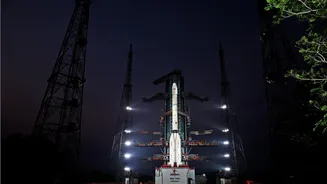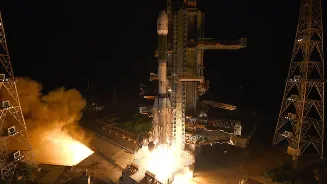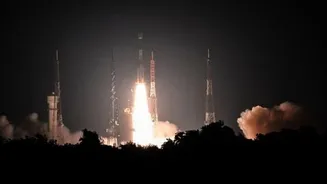

In a major feat of cosmic teamwork, India's premier solar observatory, Aditya-L1, has partnered with Europe's Proba-3 to achieve a new milestone in solar science. Together, they are capturing the most detailed views ever of the Sun's violent eruptions.
A Cosmic Tag Team
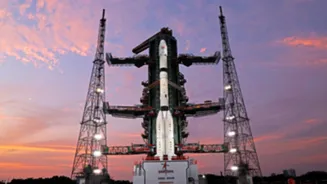
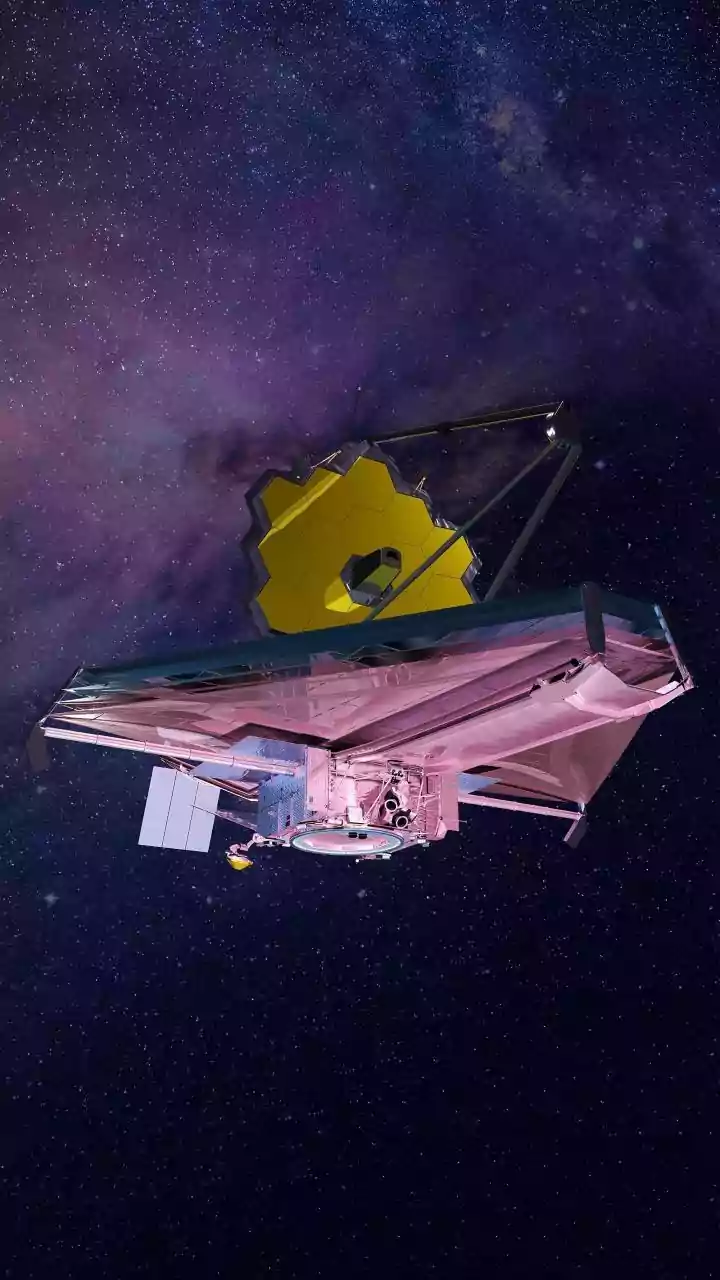
Imagine two advanced spacecraft, separated by millions of kilometres, working together to stare at the Sun. This is the reality of the new collaboration between the Indian Space Research Organisation (ISRO) and the European Space Agency (ESA). At the heart of this partnership are Aditya-L1, India’s first dedicated solar mission, and Proba-3, ESA’s pioneering formation-flying mission. Aditya-L1, stationed at the strategic Lagrange point 1 (L1), has an uninterrupted view of the Sun. Its sensitive instruments are designed to study the Sun's atmosphere in great detail. Proba-3, meanwhile, is an even more exotic mission. It consists of two satellites flying in perfect tandem, about 150 metres apart, to create a near-perfect artificial solar eclipse that lasts for hours. This unique capability sets the stage for a groundbreaking scientific endeavour.
The Sun's Violent Eruptions
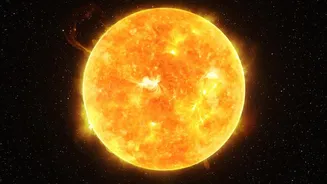
The 'powerful bursts of solar material' mentioned in the headline refer to something scientists call Coronal Mass Ejections, or CMEs. These are colossal explosions on the Sun's surface that hurl billions of tonnes of plasma and magnetic fields into space at incredible speeds. Think of them as giant, super-heated cannonballs shot from the Sun. When a CME is aimed at Earth, it can have serious consequences. These solar storms can disrupt our planet's magnetic field, potentially damaging satellites, knocking out power grids, and scrambling GPS and communication signals. To protect our technologically dependent world, we need to understand CMEs better and, crucially, get earlier warnings. That means seeing them not just as they travel through space, but right as they are born.
Seeing the Unseen Corona
Observing the birth of a CME is incredibly difficult. The problem is that these events originate in the Sun’s outer atmosphere, the corona, which is millions of times dimmer than the Sun's bright face. Trying to see the faint corona is like trying to spot a firefly next to a searchlight. This is where the genius of the Aditya-L1 and Proba-3 pairing comes in. Proba-3’s two satellites create a precise, long-lasting artificial eclipse, blocking the Sun’s overwhelming glare. This gives Aditya-L1’s Visible Emission Line Coronagraph (VELC) an unprecedentedly clear and stable view of the innermost corona—the very region where CMEs are launched. This synergistic approach allows scientists, for the first time, to track these eruptions from their source with stunning clarity and measure their initial mass, density, and energy.
A Symphony of Instruments
This breakthrough is made possible by the complementary nature of the instruments. Proba-3’s main instrument, ASPIICS, is a state-of-the-art coronagraph that provides crisp images of the corona. It essentially creates the 'dark room' needed for observation. In this darkness, Aditya-L1’s VELC instrument performs spectroscopy, which is like analysing the light to understand the physical properties of the eruption, such as its temperature and density. By combining the imaging from ASPIICS with the spectroscopic data from VELC, researchers can create a much more complete and cross-checked picture of a CME's evolution than either spacecraft could achieve alone. ISRO confirmed that the independent measurements of mass and thermal energy from the two instruments showed good agreement, boosting confidence in the results.
Why This Breakthrough Matters
This joint observation is more than just a remarkable scientific achievement; it's a game-changer for space weather forecasting. By understanding the initial conditions and energy of a CME right at its birth, scientists can make much more accurate predictions about its trajectory and potential impact on Earth. Current models often have to wait until a CME has travelled a significant distance from the Sun to properly assess its threat. This new method provides a crucial head start. This will allow for more timely warnings to protect our vital infrastructure, from the satellites that power our digital lives to the power grids that light our cities. It represents a significant leap from simply observing solar storms to truly understanding and anticipating them.