


The Sweet in Question: An Introduction to Wagashi
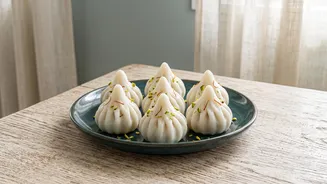
The confection causing this stir is a type of 'wagashi', the all-encompassing term for traditional Japanese sweets. Specifically, the pleated, sculpted forms often compared to modak belong to a category known as 'nerikiri' or 'joyo manju'. These are intricate,
artistic creations, often made from a base of sweetened white bean paste ('shiro-an') and rice flour, which gives them a smooth, pliable texture perfect for detailed shaping. Wagashi are far more than just desserts in Japan; they are an art form. Deeply tied to the seasons, they are designed to reflect the beauty of nature, from the cherry blossoms of spring to the crisp leaves of autumn. Their history is long, with origins tracing back to simple fruit and nut preparations centuries ago.
A Tradition Steeped in Art and Ceremony
The evolution of wagashi into its modern, elegant form truly flourished during Japan's Edo period (1603-1868). This era saw advancements in sugar refining and a prolonged period of peace, allowing culture and arts to thrive. Wagashi became inextricably linked with the Japanese tea ceremony ('chanoyu'), where they are served to complement the bitter taste of matcha green tea. The aesthetics of wagashi are just as important as their taste. Craftsmen train for years to master the techniques needed to create these miniature sculptures, which are not only delicious but are considered pieces of art. The primary filling is 'anko', a sweet paste most commonly made from adzuki red beans, though white bean paste is also widely used, especially for lighter-coloured sweets.
Modak: A Divine and Ancient Offering
On the other side of this comparison is the modak, a sweet with deep roots in Indian spirituality and culinary history. The modak is famously known as the favourite food of Lord Ganesha, earning him the name 'Modakapriya' (one who loves modak). Mentions of modak can be found in ancient texts dating back to around 200 BCE, including the Ramayana and Mahabharata. Traditionally offered during Ganesh Chaturthi, the sweet dumpling is a symbol of bliss, wisdom, and the rewards of a spiritual life. The classic steamed version, known as 'ukadiche modak', features an outer shell made from rice flour, encasing a sweet, aromatic filling of freshly grated coconut and jaggery, often spiced with cardamom.
A Tale of Two Separate Histories
Despite the striking visual similarity, the evidence strongly suggests that the modak and wagashi developed entirely independently. Their histories, ingredients, and cultural contexts are fundamentally different. Modak's story is ancient and deeply embedded in Hindu religious practice for millennia. Its ingredients—rice, coconut, and jaggery—are native to the Indian subcontinent and have been staples for centuries. Wagashi's history, while also old, was heavily shaped by different influences, including confections introduced from Tang dynasty China and later, the arrival of sugar via Portuguese traders. Its core filling, sweet bean paste, is a cornerstone of East Asian cuisine, whereas the coconut-jaggery filling of the modak is quintessentially Indian. The resemblance is a fascinating case of culinary convergent evolution, where two distinct cultures independently arrived at a similar pleated dumpling form to encase a sweet filling.
A Direct Link Does Exist, But Not How You Think
While the popular forms of wagashi did not evolve from the modak, there is a specific, lesser-known Japanese sweet that does have a direct connection. Known as 'kangidan', this sweet is offered to Kangiten, a Japanese Buddhist deity who originated from the Hindu god Ganesha. Kangidan are deep-fried buns made from a dough of parched flour and filled with a mixture of curds, honey, and red bean paste. This offers a clear example of cultural and religious syncretism, where a specific tradition was adapted. However, kangidan are visually and texturally very different from the steamed, pleated wagashi that most people compare to modak. This nuance shows that while a Ganesha-related sweet does exist in Japan, it is separate from the more famous wagashi that happens to look like a modak.