



A Sweet Discovery in Cosmic Messengers
Scientists have long found intriguing organic molecules in meteorites, the rocky messengers from our solar system’s infancy. They've identified amino acids (the components of proteins) and nucleobases (the letters of the genetic code), but one key ingredient
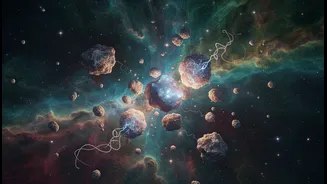
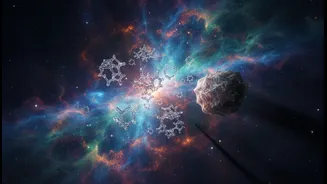
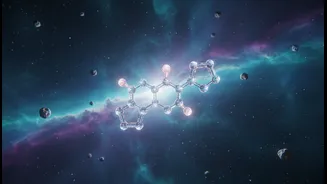
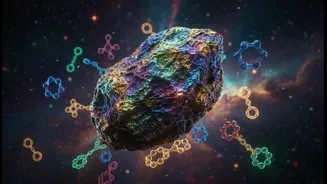
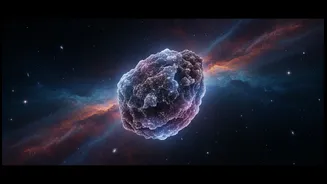
remained missing: sugar. That changed when an international team of researchers analyzed samples from carbon-rich meteorites, including the famous Murchison meteorite that landed in Australia. Inside, they found the crucial prize: ribose, a five-carbon sugar that is the structural backbone of RNA (ribonucleic acid). This discovery was a landmark moment, as it confirmed that the primary components of life weren’t just theoretical possibilities in space, but were physically present in materials that bombarded the early Earth. Subsequent analysis of pristine samples returned from the asteroid Bennu by NASA’s OSIRIS-REx mission further confirmed the presence of not only ribose but also glucose, a key energy source for life as we know it.
The Undeniable Space Signature
A major challenge in analyzing meteorites is proving that the molecules found within are truly extraterrestrial and not just contamination from their landing on Earth. To solve this, scientists look for a distinct “space signature” using a technique called isotope analysis. Life on Earth has a distinct preference for a lighter version of carbon, known as Carbon-12. However, the ribose and other sugars extracted from the meteorites showed a significant enrichment in a heavier version, Carbon-13. This isotopic fingerprint is inconsistent with terrestrial biology and serves as definitive proof that the sugars formed in space and traveled to Earth aboard their rocky vessel. This confirmation moves the needle from speculation to evidence, establishing that nature has a way of creating and preserving these delicate, life-critical molecules in the harsh environment of space.
Fuel for an 'RNA World'
The discovery of extraterrestrial ribose provides powerful support for a leading theory on the origin of life: the “RNA World” hypothesis. In modern life, DNA holds the genetic blueprint while RNA acts as a messenger, translating that blueprint into proteins. However, RNA is a more versatile molecule; it can both store information and act as an enzyme to drive chemical reactions. Many scientists believe RNA came first, serving as the all-in-one genetic molecule for the earliest life forms, with DNA evolving later. The meteorite findings dramatically bolster this idea. While researchers found ribose (RNA’s sugar), they did not detect 2-deoxyribose, the sugar that forms the backbone of DNA. This suggests there may have been a cosmic delivery bias, showering the young Earth with the ingredients for RNA but not DNA, thereby setting the stage for an RNA-first form of life to emerge.
Solving the Mystery of 'Handedness'
Another deep mystery of life is its specific “handedness” or chirality. Many organic molecules, including sugars and amino acids, exist in two mirror-image forms, like a left and a right hand. While non-biological chemistry produces a 50/50 mix, life on Earth exclusively uses left-handed amino acids and right-handed sugars. For years, no one knew why. The meteorite evidence provides a compelling clue. Studies of sugar derivatives found in these space rocks have revealed a noticeable excess of the right-handed versions. This suggests that the preference for right-handed sugars wasn't a random choice made on Earth, but a bias that was already present in the building blocks delivered from space. The cause may be circularly polarized light in the early solar system, which could have preferentially destroyed one “handed” version of the molecules over the other, leaving an excess that seeded life’s ultimate preference.
From Our Solar System to the Stars
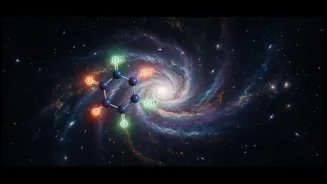
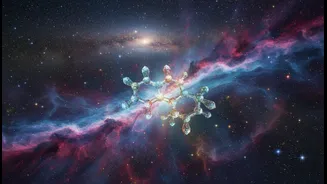
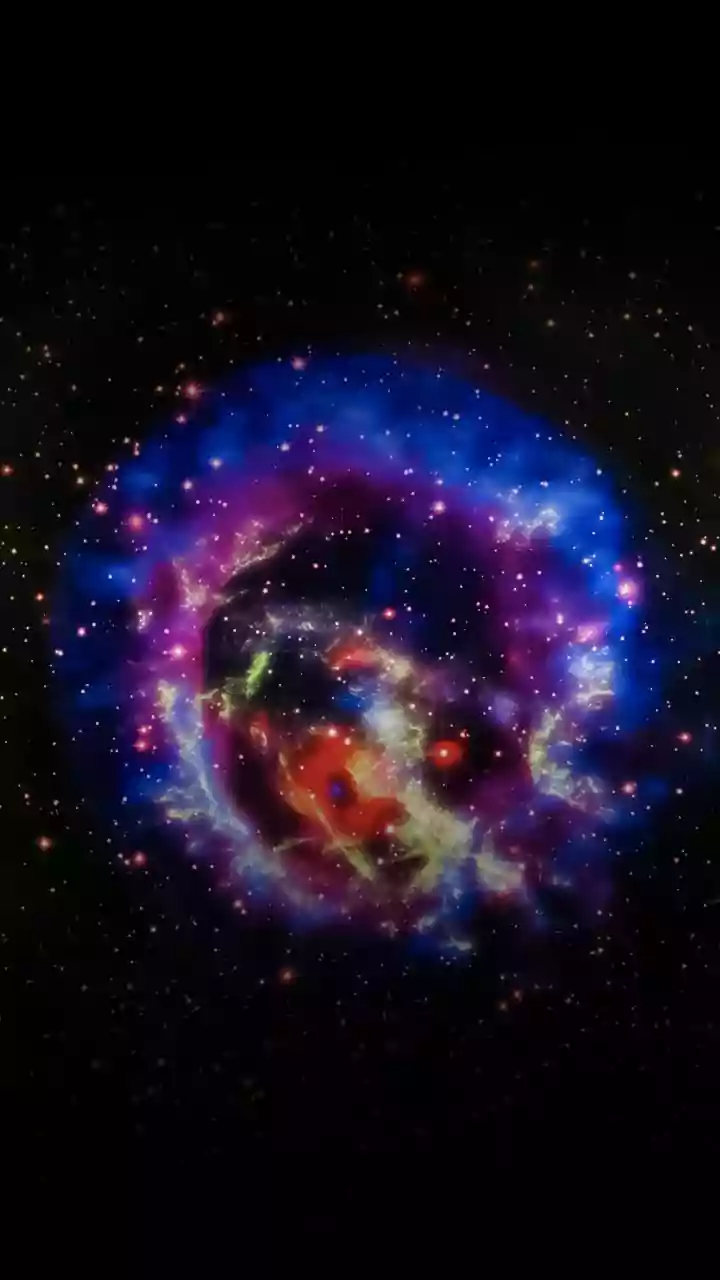
For a long time, this research focused on asteroids and meteorites within our own solar system. But very recent discoveries have expanded the search into the vastness of interstellar space. Using powerful radio telescopes, scientists have now detected a four-carbon sugar called erythrulose in a giant molecular cloud of gas and dust near the center of the Milky Way. These clouds are the stellar nurseries where stars and their planets are born. The discovery implies that the chemical processes that create life’s ingredients are not confined to asteroids orbiting a star; they are happening in the cold, dark void between stars. This means that the building blocks of life, including complex sugars, were likely present in the cloud of material that eventually formed our own solar system, and are likely present in countless other systems across the galaxy.