





A Song's Humble Beginnings
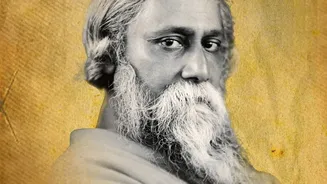
Long before it became the anthem for a billion people, 'Jana Gana Mana' was a poem and a hymn. Composed by the polymath and Nobel laureate Rabindranath Tagore, the words were first written on December 11, 1911. It was penned in a heavily Sanskritised
form of Bengali called 'Sadhubhasa' as part of a five-stanza hymn titled 'Bharoto Bhagyo Bidhata'. The song was first performed publicly not by Tagore himself, but by his niece, Sarala Devi Chowdhurani, and a group of students at the Calcutta Session of the Indian National Congress on December 27, 1911. In its early days, it was a Brahmo hymn, largely known only within the circles of the Brahmo Samaj and readers of its journal, the Tattwabodhini Patrika, where it was published in 1912.
The Journey to National Consciousness
The song's journey from a niche hymn to a national symbol was gradual but steady. Its profile grew significantly when, during a visit to the Besant Theosophical College in Madanapalle, Andhra Pradesh, in 1919, Tagore translated the song into English, titling it 'The Morning Song of India'. But it was Subhas Chandra Bose who championed its use as a national anthem. While in Germany, he selected a Hindi-Urdu version of the song, titled 'Subh Sukh Chain', as the anthem for his Indian National Army (INA). On September 11, 1942, the Hamburg Radio Symphony Orchestra played it, marking its first performance as a prospective anthem for India on an international stage. Back home, it was sung unanimously as the session closed at the historic meeting of the Constituent Assembly on the midnight of August 14, 1947, heralding India's freedom.
The Anthem Debate: A Tale of Two Songs
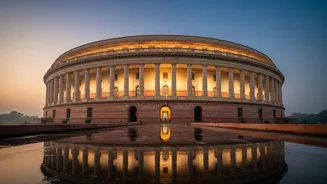
Despite its growing popularity, the choice of a national anthem was not immediate. When India became independent in 1947, it did so without an officially designated anthem. For over two years, the nation navigated this symbolic void. The Constituent Assembly, tasked with framing the Constitution, had to make a sensitive choice between two powerful contenders: Tagore's 'Jana Gana Mana' and Bankim Chandra Chattopadhyay's 'Vande Mataram'. 'Vande Mataram' was a potent symbol of the freedom struggle, a rallying cry for activists for decades. However, there were debates around its suitability for orchestral music and concerns from some communities regarding its origins in the novel 'Anandamath'. 'Jana Gana Mana', on the other hand, was seen as a more inclusive and harmonious composition that celebrated India's pluralism. The decision required careful consideration to honour both songs' historical significance.
A Decision Is Made
The final decision came on January 24, 1950, just two days before India became a republic. In the final session of the Constituent Assembly, its president, Dr. Rajendra Prasad, made a formal statement rather than putting it to a vote. He announced that 'Jana Gana Mana' would be India's national anthem. Crucially, he also declared that 'Vande Mataram', which had played a historic part in the struggle for Indian freedom, would be honoured equally and have the same status. This elegant solution elevated one song to the status of 'national anthem' while giving the other the revered title of 'national song', ensuring both had their rightful place in the nation's heart. The first stanza of 'Bharoto Bhagyo Bidhata' officially became the anthem of a newly sovereign republic.