



Meet Your Microbial Workforce
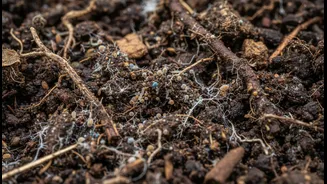
At the heart of every successful compost pile is a thriving, invisible workforce of microorganisms. Bacteria, fungi, and other microbes are the engines of decomposition, breaking down your kitchen scraps and yard waste into nutrient-rich humus. Think
of them as microscopic employees. For them to do their job effectively, they need a healthy work environment. This includes food (the organic matter you add), air (oxygen), and, most critically, the right amount of water. These microbes live and work in the thin films of water that coat every particle in your compost pile.
The Goldilocks Principle for Water
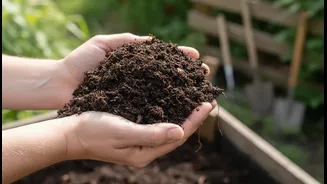
Compost moisture isn't about soaking; it's about balance. The ideal moisture content is between 40% and 60%. A simple way to check this is the 'squeeze test': a handful of compost should feel like a well-wrung-out sponge, releasing only a drop or two of water when squeezed tightly. If the pile is too dry, microbial activity slows down or stops completely. The beneficial bacteria can't move around or digest materials, and your pile will just sit there, inert and cool. Conversely, if the pile becomes too wet—above 65% moisture—the problems get much worse, and they start to affect more than just your compost.
Why Your Neighbours Start to Care
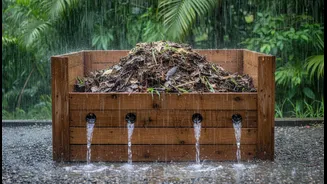
When a compost pile gets too wet, water fills up the air pockets that aerobic (oxygen-loving) bacteria need to breathe. This suffocates the good microbes, and a different team takes over: anaerobic bacteria. These organisms thrive without oxygen, and as they work, they release smelly byproducts. The most notorious of these is hydrogen sulfide, which produces a powerful rotten-egg odour. Other compounds can create ammonia or sour vinegar smells. These foul odours can travel, turning your well-intentioned recycling effort into a neighbourhood nuisance and potentially attracting pests.
How to Diagnose and Fix Your Pile
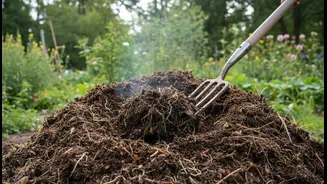
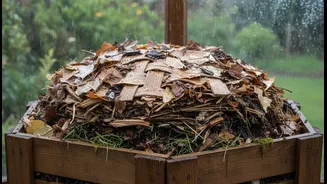
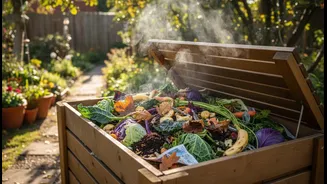
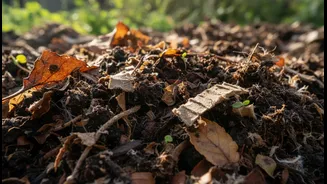
Regularly checking your pile is key. If it looks dry, isn't generating heat, and decomposition has stalled, it needs water. The fix is simple: use a watering can to moisten the materials, turning the pile with a garden fork as you go to distribute the water evenly. If your pile is slimy, compacted, and smells bad, it's too wet. The solution is to add 'brown' materials to soak up the excess moisture and create air pockets. Turn the pile thoroughly while mixing in dry, carbon-rich ingredients like shredded cardboard, dry leaves, sawdust, or straw. This provides food for the microbes and restores the balance needed for pleasant, efficient composting.