






The Trap of the AI-First Mindset
In the race for productivity, it is tempting to hand over the initial, often difficult, work of thinking to an AI. Why struggle with a new concept or a complex proposal when a simple prompt can generate a structured outline in seconds? While AI tools
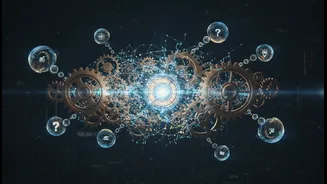
are remarkably efficient, this reliance comes with a hidden cost. Studies have shown that over-reliance on generative AI can lead to what some call 'cognitive offloading'. This is where we disengage our critical thinking skills, effectively outsourcing the cognitive work that builds expertise and leads to novel ideas. When we let AI take the first step, we often end up with polished but predictable outputs that lack a unique human perspective. We risk becoming editors of mediocrity rather than authors of original thought. Businesses that lean too heavily on an 'AI-first' model risk losing their authentic voice and creating work that is generic and disconnected from their audience.
Reclaiming the Power of Human-Led Ideation
The most valuable ideas are born from human creativity, intuition, and experience. The 'human-first' approach to AI is not about rejecting technology, but about defining its proper place. It positions AI as a powerful assistant that enhances human skills, not a replacement for them. The initial phase of any project—the brainstorming, the outlining, the wrestling with core assumptions—is where true innovation happens. This is where your unique context, your ethical judgment, and your creative spark are irreplaceable. By doing the initial thinking yourself, you ensure the foundation of the work is solid and original. This approach keeps humans in control of strategy, creativity, and the final decision-making, which is where accountability ultimately rests. The goal is to use AI to augment your intelligence, not to substitute for it.
Using AI as Your Personal 'Red Team'
Once you have a well-formed idea, proposal, or draft, AI's true power can be unleashed. Instead of asking it to create, ask it to critique. Treat the AI as a 'red team'—a dedicated group whose purpose is to find flaws and test defenses. This is what it means to stress-test your logic. You can instruct the AI to adopt a specific persona, such as a skeptical investor, a detail-oriented engineer, or a confused customer, to challenge your work from different angles. This process helps you uncover blind spots, question your own assumptions, and anticipate counterarguments before they arise in the real world. It’s a powerful method for turning a good idea into a robust, pressure-tested strategy.
A Practical Workflow for Stress-Testing
Integrating this into your workflow is straightforward. First, develop your concept, write your document, or create your presentation. Once you have this human-generated foundation, turn to your AI tool with specific, challenging prompts. Instead of asking, 'Is this a good idea?', which often invites validation, ask problem-oriented questions. Try prompts like: 'What are the three strongest arguments against this proposal?' or 'What critical assumptions am I making here? Which one is the weakest?'. You can also ask the AI to 'steel man' the opposition by constructing the best possible argument against your position. Another powerful technique is the 'pre-mortem,' where you ask the AI to imagine the project has failed and to explain what went wrong. These methods force you out of your own biases and help you see your work with fresh, critical eyes, significantly strengthening the final product.
Beyond Logic to Tone and Impact
Stress-testing isn't just about logic; it's also about impact. AI can be a useful sounding board for how your message might be received. After drafting an important email or announcement, you can ask the AI to analyze its tone. For example: 'Read this email. How might a recipient who is feeling anxious about recent changes interpret it? Suggest ways to make it more reassuring without losing clarity.' This allows you to check for unintended interpretations and refine your communication for a specific audience. By simulating different perspectives, you can ensure your message lands as intended, building trust and avoiding miscommunication. This shifts the AI from a simple content generator to a sophisticated partner in communication strategy.