





The Moon's Treacherous Surface
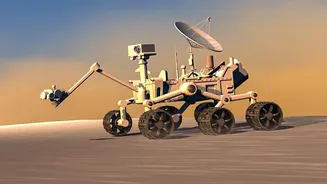
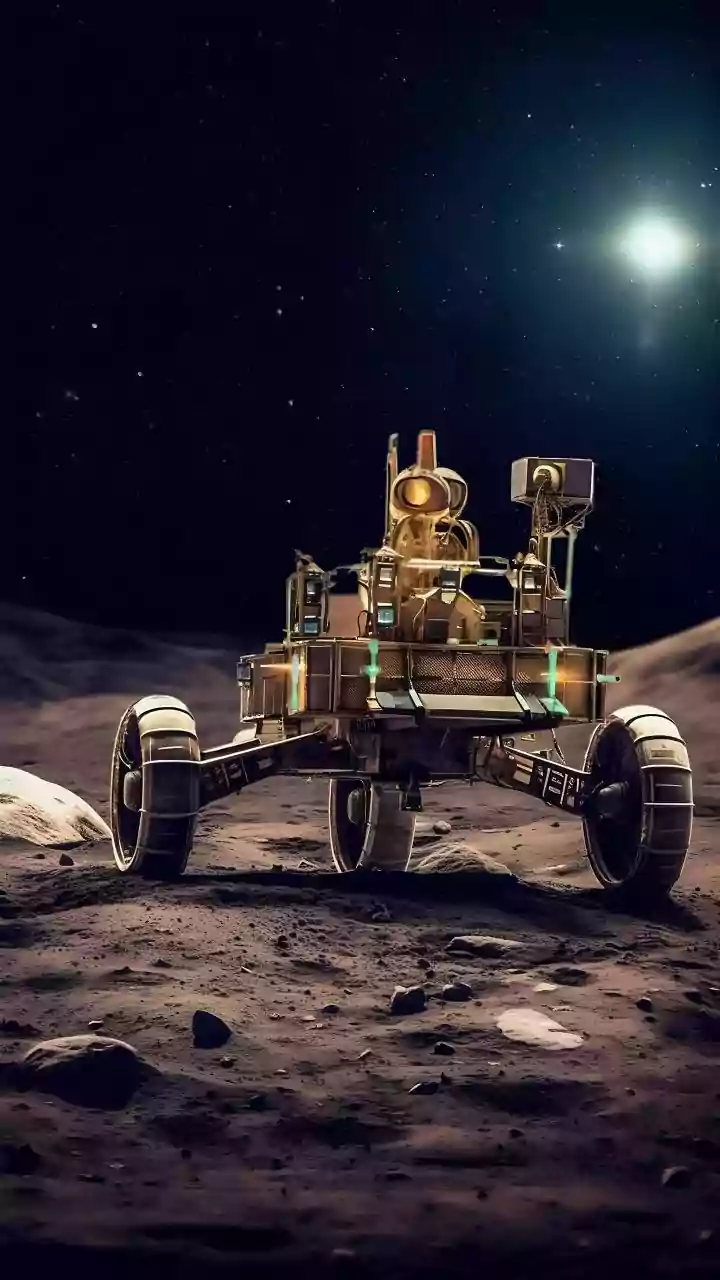
Exploring the Moon isn't as simple as driving across a desert. The lunar surface is a minefield of engineering challenges. It is covered in a layer of fine, abrasive dust called regolith that clogs joints and wears down materials. The terrain is also
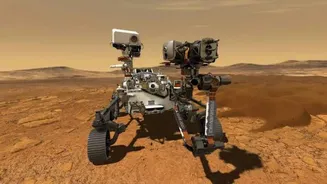
punctuated by steep craters and deep pits, some of which lead to vast underground lava tubes. These tubes are scientifically fascinating and seen as ideal locations for future human habitats because they offer natural protection from cosmic radiation and extreme temperature swings. However, their steep entrances are impassable for conventional rovers with small, rigid wheels. A single stuck rover can jeopardize an entire multi-billion dollar mission, a risk that has pushed engineers to seek more resilient and adaptable solutions.
An Origami-Inspired Solution
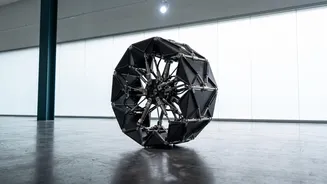
A research team from KAIST, led by Professor Dae-Young Lee, has developed a radical new solution: a transformable, airless wheel inspired by the ancient art of origami. Developed in collaboration with the private space robotics company Unmanned Exploration Laboratory (UEL), the wheel is designed to change its size and shape to conquer obstacles. Instead of using complex hinges or gears, which can fail in the dusty, vacuum environment of space, the design uses woven metal plates with inherent flexibility. This approach draws inspiration from the structural principles of a 'Da Vinci bridge', using the material's own properties to allow for transformation. The result is a lightweight yet durable wheel that can be packed compactly for launch and then deployed to its full size on the lunar surface.
How the Expandable Wheel Works
The genius of the KAIST wheel lies in its simplicity and strength. It is built from high-carbon or elastic steel strips woven into a crossed-helical pattern. This structure allows the wheel to be both flexible and incredibly strong. In its compact, stowed state, the wheel has a diameter of just 9 inches (230 mm), small enough to fit on a lightweight rover packed into a lander. Once on the Moon, it can expand to a diameter of nearly 20 inches (500 mm) by twisting its hubs in opposite directions. This size-changing ability allows a rover to increase its ground clearance on the fly, enabling it to climb over rocks and navigate the steep slopes leading into lunar pits. This eliminates the need for complex deployment systems like cranes or tethers for exploring subsurface caves.
Built for Survival and Success
The KAIST team has put the wheel through a battery of punishing tests to simulate the harsh lunar environment. The airless design means there is no risk of a puncture, a critical advantage for mission reliability. The wheel has demonstrated superior traction on loose, sandy slopes mimicking lunar regolith. It can withstand the extreme temperature swings found on the Moon, which can vary by hundreds of degrees. Most impressively, it has proven its structural integrity by surviving drop tests equivalent to falling 100 meters under the Moon's lower gravity. This high impact resistance is crucial, as it suggests a rover equipped with these wheels could potentially be dropped directly into a lunar pit to begin its exploration, a high-risk, high-reward maneuver that is impossible with current technology.
From the Lab to the Lunar Surface
While the origami-inspired wheel has proven its capabilities in lab settings and on Earth-based test sites like the volcanic caves of Jeju Island, the next step is to integrate it into a fully autonomous rover. The research team plans to incorporate artificial intelligence and reinforcement learning to optimize the rover's navigation skills, teaching it how to best use its shape-shifting wheels to assess and traverse difficult terrain. The ultimate goal is to see this technology adopted for future lunar missions. Professor Lee has expressed hope that the unique design will position the team as leaders in the global push to explore the Moon's most challenging and scientifically valuable regions. The project stands as a prime example of collaboration between university researchers and private industry to solve critical challenges in space exploration.