




A Landmark Moment for Railways
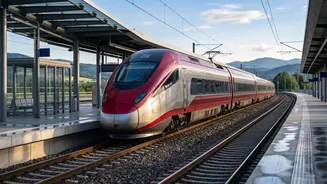
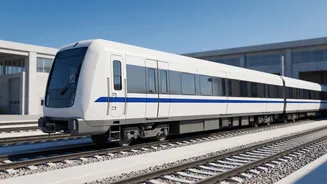
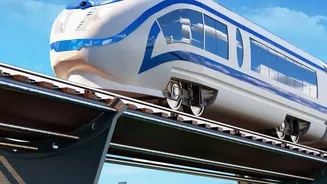
On September 27, 2026, India's first train capable of running on Liquefied Natural Gas (LNG) was flagged off from Sabarmati station in Gujarat. This launch doesn't involve a brand-new locomotive but rather a modified Diesel-Electric Multiple Unit (DEMU)
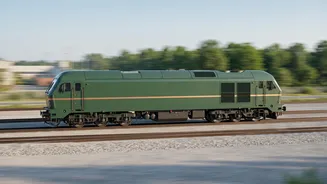
train, an eight-coach, self-propelled trainset common on non-electrified routes. The innovation lies in the train's 'Driving Power Cars' (DPCs), the coaches at each end that house the engine. These 1,400-horsepower DPCs have been retrofitted to operate on a combination of LNG and diesel, marking a first for Indian Railways in its quest for alternative fuels. The inaugural run took place between Sabarmati and Mahesana Junction, following over 2,000 kilometres of successful field trials.
Understanding the Fuel of the Future
So, what exactly is LNG? It's natural gas that has been cooled to a liquid state, making it much more compact and transportable. Its primary advantage over conventional diesel is that it burns more cleanly. Using LNG is expected to significantly reduce harmful emissions, including carbon dioxide (CO2), nitrogen oxides (NOx), and particulate matter. This makes it a key tool in Indian Railways’ broader mission to reduce its carbon footprint and dependency on imported diesel. Beyond the environmental benefits, LNG is often cheaper than diesel, presenting a powerful economic incentive. Preliminary estimates suggest the new system could save around Rs 23.9 lakh annually for a single eight-coach train.
The Pragmatic Power of a Hybrid System
The headline's mention of a "dual-fuel" system is crucial. This isn't a train running purely on LNG; it's a hybrid. The retrofitted engines are designed to substitute about 40% of their diesel consumption with LNG. This approach is a masterclass in pragmatism. Instead of investing in an entirely new fleet of LNG-only engines—a costly and time-consuming process—Indian Railways can modify its existing diesel assets. This conversion, costing about Rs 1.86 crore per train, allows for a faster and more economical rollout. Furthermore, the dual-fuel system provides vital operational flexibility. If LNG is unavailable in a particular area, the train can simply switch back to running entirely on diesel, ensuring service is never disrupted.
Why Not Just Use Electric Trains?
With Indian Railways having electrified nearly its entire broad-gauge network, a logical question arises: why invest in LNG at all? The answer lies in the specific type of train being used. DEMU trains are self-propelled and their design doesn't allow for a separate electric locomotive to be attached. They were introduced for non-electrified routes and branch lines. While most of the network is electric, these DEMU units are still in service and have remaining operational life. Scrapping them would be wasteful. Therefore, converting them to a dual-fuel LNG system is a clever way to reduce emissions from these specific assets that cannot otherwise tap into the electric grid. It makes existing infrastructure cleaner without replacing it entirely.
Hurdles on the Path to Greener Rail
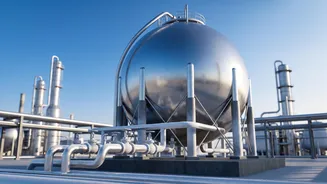
While promising, the widespread adoption of LNG faces challenges. The biggest hurdle is infrastructure. LNG requires specialised cryogenic storage tanks to keep it in a liquid state, and establishing a reliable supply chain to railway depots across the country is a massive logistical undertaking. Safety is another consideration; handling a cryogenic fuel requires specific protocols and staff training. This pilot project in Gujarat is a crucial test case to see how these challenges can be managed at scale. The success of this DEMU train will inform how and where Indian Railways decides to expand its LNG program in the future.
The Journey Doesn't End Here
This LNG-powered train is a key part of Indian Railways' ambitious plan to become a 'Net Zero' carbon emitter by 2030. It's one of several green initiatives being explored, alongside near-total electrification and the recent launch of a hydrogen-powered train. While hydrogen fuel-cell trains produce only water as a byproduct and are technologically more advanced, LNG is seen as a practical, transitional technology. It leverages existing engine architecture to deliver immediate benefits in cost and emissions. By pursuing multiple strategies, Indian Railways is building a resilient and diversified approach to sustainable transportation, ensuring it remains the nation's green lifeline for decades to come.