



What is the Gaganyaan Mission?
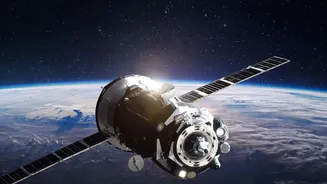
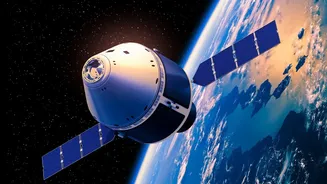
At its core, the Gaganyaan programme is India's ambitious endeavour to demonstrate human spaceflight capability. The ultimate goal is to launch a crew of three Indian astronauts into a Low Earth Orbit of about 400 kilometres. They would spend approximately
three days in space before returning safely to Earth, splashing down in the Indian Ocean. This mission will make India the fourth country in the world to independently send humans to space, after the United States, Russia, and China. The project is being spearheaded by the Indian Space Research Organisation (ISRO) and involves extensive collaboration with Indian industry, academia, and various national agencies to develop the necessary critical technologies.
The Crucial 2026 Uncrewed Launch
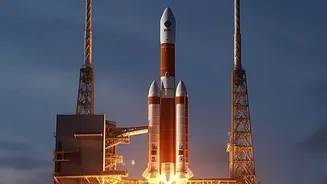
Before astronauts, known as 'Gaganyatris', can embark on their journey, every system must be rigorously tested. The first uncrewed mission, designated G1 and targeted for the latter half of 2026, is the most comprehensive of these tests. It is designed to validate the performance and safety of all key systems in a real space environment. This includes the human-rated LVM3 rocket (HLVM3), the crew module's life support systems, and the complex procedures for re-entry and recovery from the sea. ISRO Chairman V Narayanan has confirmed the 2026 target, highlighting the “vigorous, systematic work” underway for the G1 mission. This flight will serve as a full dress rehearsal, ensuring every component functions flawlessly before a human crew is on board.
Meet Vyommitra: The Humanoid Pioneer
The G1 mission won't have an empty crew cabin. Its passenger will be Vyommitra, a sophisticated humanoid robot developed by ISRO. The name is a combination of the Sanskrit words 'Vyom' (space) and 'Mitra' (friend). This female-presenting robot is designed to simulate human functions, allowing ISRO to gather vital data on how the spacecraft's environment affects a person. Vyommitra can monitor module parameters, operate switch panels, and interact with the ground control systems in both Hindi and English. By using a humanoid for this flight, ISRO can test the crew interface and life support systems under actual space conditions without risking human life, paving the way for the crewed flights that will follow.
The Roadmap to Manned Flight
The 2026 uncrewed launch is the first of several precursor missions. Following the G1 flight, ISRO has planned at least two more uncrewed test flights, G2 and G3, to further refine and certify the systems. These subsequent tests will build on the data from the first flight, allowing engineers to perfect the technology and operational procedures. Human safety is the paramount concern, and ISRO is following a strategy of proving all systems through these unmanned missions first. Only after the successful completion of this rigorous testing phase will the first crewed mission, H1, be greenlit, which is currently anticipated for 2027.
Why Gaganyaan Matters for India
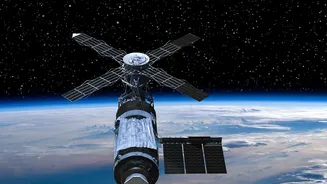
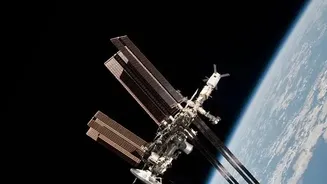
The Gaganyaan mission is far more than just a technological demonstration; it's a statement of national ambition and capability. Success will cement India's status as a major global space power and a key player in the space industry. The programme is expected to provide a significant boost to Indian industries, with estimates suggesting nearly 60% of the equipment will be sourced from the private sector. Furthermore, it is projected to create thousands of new employment opportunities and inspire a new generation of students to pursue careers in science, technology, engineering, and mathematics (STEM). In the long term, Gaganyaan lays the groundwork for more advanced space exploration, including a potential Indian space station and crewed missions to the Moon.