









What Exactly Is the Starlink V5?
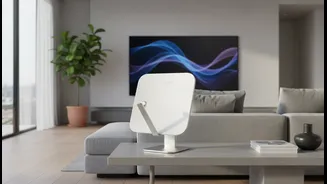
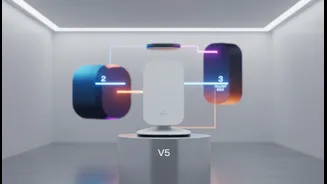
Announced in mid-July 2026, the Starlink V5 is the latest version of the company's standard residential satellite dish. It boasts some impressive improvements over its predecessor, the V4. The V5 is significantly smaller and lighter, weighing just 1.1
kg (2.4 lbs) compared to the V4's 2.9 kg (6.4 lbs). This makes it much easier to handle and install. Furthermore, its power consumption has been nearly halved, dropping from an average of 75-100 watts to a more manageable 35-50 watts. This lower power draw is a major plus for anyone running their setup on a battery or solar power, as is common in off-grid situations. Despite these upgrades, the V5 is intended as a cost-effective residential unit, not a dedicated mobile solution.
The Dealbreaker: Not for In-Motion Use
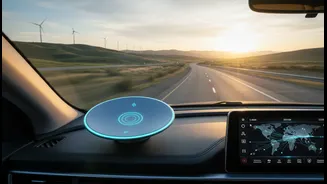
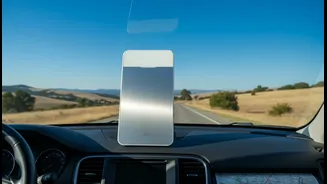
Here's the most critical point for anyone with a van, RV, or boat: Starlink has explicitly stated the V5 dish is not intended for in-motion use. This means it's designed to work only when you are stationary. For road-trippers who need connectivity while driving for navigation, passenger entertainment, or work, this is a significant limitation. While you can certainly pack it up and set it up at each campsite, you cannot mount it to your roof and expect a stable connection on the highway. This positions the V5 firmly as a product for fixed locations, like a home or a temporary, stationary basecamp, rather than for a life in constant transit.
Power and Portability: A Mixed Bag
While the V5's lower power draw and lighter weight seem perfect for travel, the reality is more complicated. Its reduced energy needs make it much friendlier for off-grid power systems, which is a genuine benefit for campers. However, its design as a residential dish means it still requires an external router and a specific power supply, unlike the more integrated Starlink Mini. The Mini, for instance, has a built-in Wi-Fi router, making it a more compact, all-in-one solution for those who prioritize portability above all else. The V5, while lighter than the V4, is still a piece of hardware designed to be installed and left in one place, complete with a separate router and cables.
Understanding Starlink’s Product Tiers
The V5's positioning highlights Starlink's strategy of creating distinct products for different users. The V5 appears to be a new, more efficient, and potentially cheaper-to-produce option for its standard Residential plan. For mobility, Starlink offers other solutions. The Starlink Roam service plans are designed specifically for travellers and can be paired with hardware that supports in-motion use, though this often comes at a higher price. For example, the Starlink Mini and the high-performance dishes are built for portability and on-the-go connectivity, with plans that officially support use while moving at speeds under 160 km/h (100 mph). These are the products true road-trippers should be looking at, not the residential V5.
So, What Should a Road-Tripper Do?
If you need internet while actively driving, the Starlink V5 is not the answer. Your focus should be on the Starlink Roam plans paired with either the Starlink Mini or the pricier Flat High-Performance dish, both of which are approved for mobile use. The Starlink Mini, in particular, is designed for maximum portability, fitting into a backpack and running on low DC power. While the V5 brings welcome improvements in efficiency and weight for home users, it's a step sideways, not forward, for the mobile community. The dream of a single, perfect, do-it-all dish remains just that—a dream. For now, choosing the right Starlink depends entirely on whether your journey involves staying connected while parked or while in motion.