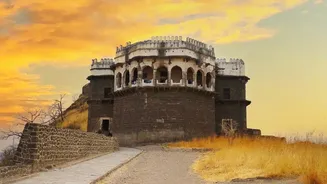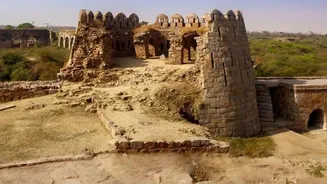





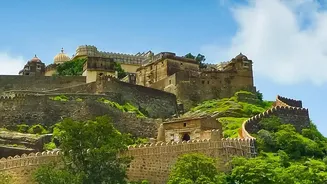
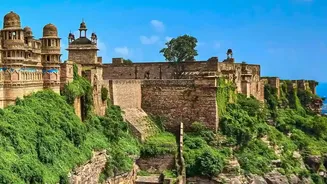
Mehrangarh Fort: The Citadel on the Cliff
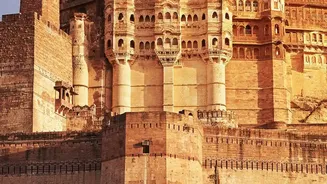
Dominating the Jodhpur skyline, Mehrangarh Fort is a colossal structure perched on a 400-foot perpendicular cliff. Founded in 1459 by Rao Jodha, its very presence is a spectacle of power and permanence. The fort's massive, burnished red sandstone walls
seem to grow organically from the rock itself, creating an intimidating yet beautiful sight. Author Rudyard Kipling famously called it “the work of giants,” and standing beneath its towering gates, you understand why. Inside, a world of intricate palaces with delicate latticed windows and sprawling courtyards awaits. From its ramparts, the panoramic view of Jodhpur’s famous “Blue City” against the stark desert landscape is a sight that remains etched in memory, blending natural might with architectural genius.
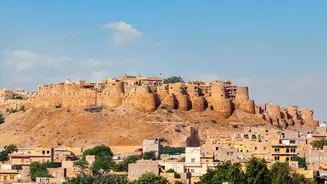
Jaisalmer Fort: The Golden Mirage in the Desert
Rising from the heart of the Thar Desert, Jaisalmer Fort appears like a dream made of golden sand. Unlike any other fort, it is a “living fort,” with thousands of people still residing within its ancient walls, their homes and shops lining the narrow, winding alleys. Built in 1156 AD from yellow sandstone, the fort blends seamlessly with the surrounding desert. It glows with a lion-like tawny hue during the day, which softens to a honey-gold as the sun sets, earning it the beloved nickname 'Sonar Quila' or the Golden Fort. Its 99 bastions and three layers of walls were designed for defence, but today they enclose a vibrant community, making a visit feel like stepping back in time.
Chittorgarh Fort: A Sprawling Saga on the Plains
As the largest fort in India, Chittorgarh is less a single fortress and more a vast, fortified city spread across a 180-metre-high hill overlooking the plains. A UNESCO World Heritage Site, this fort is a symbol of Rajput bravery, sacrifice, and resistance. Its history is filled with legendary tales, including the tragic story of Rani Padmini. The sprawling complex contains over 65 historic structures, including grand palaces, ancient temples, and imposing victory towers. Unlike forts built on steep, inaccessible peaks, Chittorgarh's power comes from its sheer scale on the plateau, a formidable statement of sovereignty that has witnessed some of the most pivotal moments in Indian history. Its location above the plains of the Berach River valley gave its defenders a crucial strategic advantage for centuries.
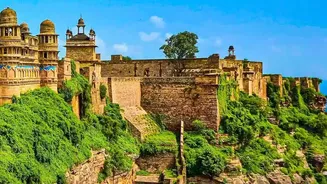
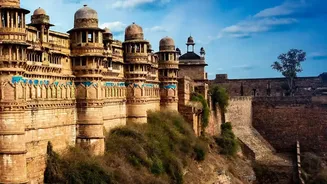
Gwalior Fort: The Pearl Amongst Fortresses
Mughal Emperor Babur once described Gwalior Fort as “the pearl amongst the fortresses of Hind,” and its grandeur lives up to the praise. Standing on a steep, isolated sandstone hill, the fort has dominated the city of Gwalior for over a thousand years. Its history is a patchwork of different dynasties, including the Tomars, Mughals, and Marathas, each leaving their mark on its architecture. The fort's most iconic structure is the Man Mandir Palace, its exterior adorned with vibrant blue ceramic tiles that still dazzle centuries later. The fort's high, formidable walls made it nearly invincible, earning it the nickname the “Gibraltar of India.” Walking along its ramparts provides a stunning view of the surrounding city and landscape.
Golconda Fort: The Diamond of the Deccan
Originally a mud fort, Golconda was transformed into a massive granite fortress by the Qutb Shahi dynasty and became the capital of a flourishing kingdom. Located on a granite hill, this fort is renowned not just for its impressive military architecture but for its storied past as a major diamond trading centre, where legendary gems like the Koh-i-Noor were once stored. Golconda is also an engineering marvel, famous for its incredible acoustic system; a clap at the main gate can supposedly be heard at the fort's highest point, almost a kilometre away. Its strategic placement on a hill in the Deccan plains and its sophisticated design made it a formidable stronghold and a hub of immense wealth and culture.