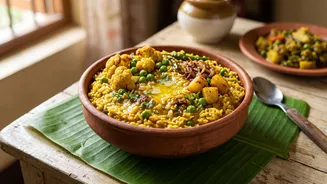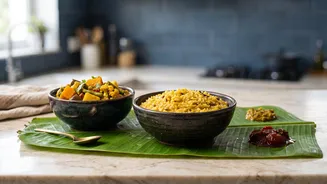





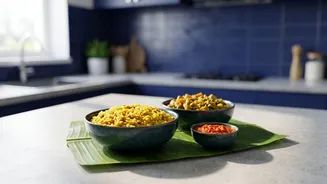
More than just a meal, Bhoger Khichuri is an emotion, deeply woven into the fabric of Bengali culture. This aromatic, one-pot dish of rice and lentils isn't just food; it's a sacred offering, a taste of nostalgia, and the heart of festivals.
An Offering of Love and Devotion
The word 'Bhog'
literally translates to an offering made to a deity. Bhoger Khichuri is the special version of khichuri prepared for religious festivals like Durga Puja, Saraswati Puja, and Lakshmi Puja. What sets it apart is its 'niramish' or sattvic nature—it is strictly vegetarian and cooked without any onions or garlic, making it pure enough for the gods. Served hot from large cauldrons at community pandals, this dish symbolizes unity, devotion, and the spirit of celebration. Its taste is considered divine, a blessing from the goddess herself, shared among devotees as 'prasad'.
The Soul of the Dish: Key Ingredients
The magic of Bhoger Khichuri lies in its specific, high-quality ingredients that work in perfect harmony. The most crucial are Gobindobhog rice, a short-grain, aromatic variety from Bengal, and Sona Moong dal. Unlike regular khichuri, the moong dal is dry-roasted before cooking, which imparts a unique nutty aroma and rich flavour that is the signature of this dish. The cooking medium is traditionally mustard oil for frying the vegetables and spices, with a generous amount of ghee added towards the end for its distinctive richness and fragrance. A medley of seasonal vegetables like potatoes, cauliflower, and green peas adds texture and substance.
Gather Your Ingredients
This recipe serves approximately 4-6 people. For the Khichuri: - Gobindobhog Rice: 1 cup - Sona Moong Dal (Yellow Split Lentils): 1 cup - Potatoes: 2 medium, cubed - Cauliflower: 1 small head, cut into large florets - Green Peas: ½ cup - Tomatoes: 1 large, chopped - Ginger: 1.5-inch piece, grated - Green Chillies: 2-3, slit - Water: About 8 cups, hot For Tempering and Spices: - Ghee: 3-4 tablespoons - Mustard Oil: 3 tablespoons - Bay Leaves: 2 - Dried Red Chillies: 2 - Cinnamon Stick: 1 inch - Green Cardamom: 3-4 - Cloves: 4-5 - Cumin Seeds: 1 teaspoon - Turmeric Powder: 1 teaspoon - Cumin Powder: 1 teaspoon - Bengali Garam Masala Powder: ½ teaspoon - Sugar: 1-2 teaspoons - Salt: To taste - Optional: Cashews and raisins for garnish
A Step-by-Step Guide to Perfection
1. Prepare the Dal and Rice: In a heavy-bottomed pan, dry roast the moong dal on low to medium heat until it turns a light golden brown and releases a nutty fragrance. Be careful not to burn it. Remove from heat, wash it once, and drain. Wash the rice separately and keep it aside. 2. Fry the Vegetables: Heat the mustard oil in a large, deep pot (handi). Add the cubed potatoes and cauliflower florets, sprinkled with a little salt and turmeric. Fry until they are golden brown on the edges, then remove and set them aside. 3. Temper the Spices: In the same pot, add the ghee. Once warm, add the bay leaves, dried red chillies, cinnamon, cardamom, cloves, and cumin seeds. Let them sizzle for about 30 seconds until they become aromatic. 4. Sauté and Combine: Add the grated ginger and chopped tomatoes to the pot. Sauté for a couple of minutes until the tomatoes soften. Now, add the washed rice and roasted dal, along with turmeric powder, cumin powder, and slit green chillies. Stir everything together for about two minutes to coat the grains with the spices. 5. Cook the Khichuri: Pour in about 6-7 cups of hot water, add salt and sugar, and bring the mixture to a boil. Once boiling, lower the heat, cover the pot, and let it simmer. When the rice and dal are about halfway cooked (after 10-15 minutes), add the fried potatoes, cauliflower, and green peas. 6. The Finishing Touches: Continue to cook until the rice, dal, and vegetables are completely soft and have melded together. The consistency should be thick and porridge-like, but still fall easily from a spoon. Add more hot water if it becomes too thick. Finally, stir in the Bengali garam masala powder and another tablespoon of ghee. Let it rest, covered, for 10 minutes before serving.