



A Continent's Icy Shield Is Thinning
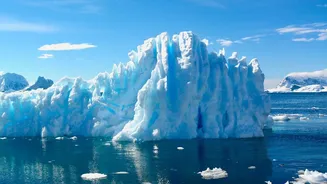
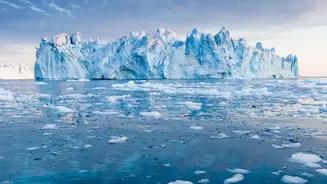
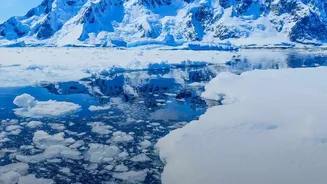
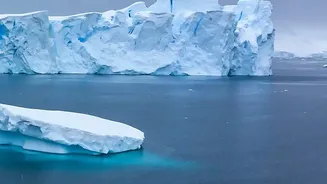
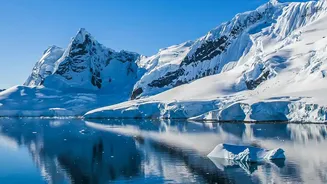
For decades, Antarctic sea ice seemed surprisingly stable, but that has changed dramatically. Scientists have confirmed that the continent's winter sea ice has been hitting near-record lows. In September 2026, the ice peaked at an estimated 17.59 million
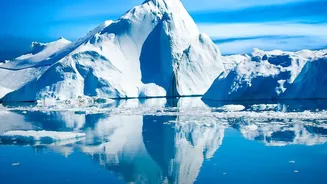
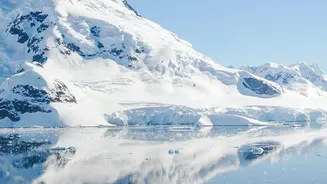
square kilometres, falling about a million square kilometres short of the long-term average—an area roughly twice the size of Spain. This isn't a one-off event; the four lowest winter sea ice maximums in the 45-year satellite record have all occurred in the last four years. This rapid decline is raising alarms that a critical component of the planet's climate system has fundamentally changed, moving from a stable state to one of persistent loss.
Emperor Penguins on Shaky Ground
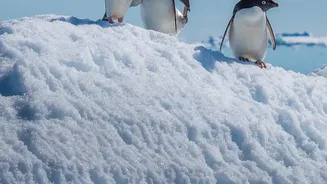
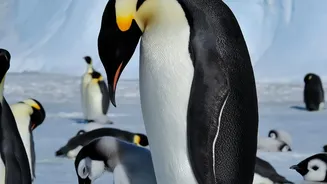
Perhaps no species is more synonymous with Antarctica than the emperor penguin, and none is more vulnerable to the loss of sea ice. These penguins are entirely dependent on stable, land-fast ice for breeding and raising their young. When this ice breaks up too early in the season, it can lead to catastrophic breeding failures. Chicks that have not yet grown their waterproof feathers can drown or freeze, and scientists have already observed this happening in multiple colonies. In 2022, for instance, four out of five known colonies in the Bellingshausen Sea region likely saw no chicks survive due to total ice loss. Projections are grim: if warming trends continue, more than 90% of emperor penguin colonies could be quasi-extinct by the end of the century.
The Food Web's Foundation Is Cracking
The crisis extends far beneath the surface, to the very foundation of the Antarctic food web: krill. These tiny, shrimp-like crustaceans are the primary food source for almost everything in the region, from penguins and seals to the largest whales on Earth. Sea ice plays a dual role for krill, providing both a nursery for their larvae and a feeding ground of algae that grows on its underside. With less ice, krill populations are under immense pressure. Some studies have noted declines of up to 80% since the 1970s in key areas like the Southwest Atlantic, forcing krill to retreat southward. This shift creates a massive problem for the predators that depend on them.
A Domino Effect on Whales and Seals
The scarcity of krill has a direct and cascading impact on larger marine mammals. Humpback whales, which undertake epic migrations to Antarctic waters to feed, are finding it harder to locate their food. Research has shown a direct link between poor krill availability and lower pregnancy rates in female humpbacks. When krill were abundant in one study year, 86% of sampled female humpbacks were pregnant; in a year following a krill shortage, that number dropped to just 29%. Other ice-dependent species, such as crabeater, Weddell, and leopard seals, also rely on the ice as a platform for resting, breeding, and hunting. As their frozen habitat disappears, they too face an uncertain future.
A Warning for the Entire Planet
What happens in Antarctica does not stay in Antarctica. The massive white sheet of sea ice acts as a giant reflector, bouncing the sun's energy back into space and helping to regulate the planet's temperature. As the ice vanishes, it exposes the darker ocean beneath, which absorbs more heat, creating a feedback loop that accelerates warming. While melting sea ice doesn't directly raise sea levels because it's already floating, its absence can destabilise the massive land-based ice shelves that fringe the continent. These shelves act as a brake on glaciers; without them, land ice can flow faster into the ocean, contributing to global sea-level rise and threatening coastal communities worldwide.