






The End of a Glorious Era
For decades, the heart of a Bentley has been its magnificent internal combustion engine, most notably the iconic 6.0-litre twin-turbocharged W12. After more than 100,000 units were hand-built in Crewe, England, production of the legendary engine officially
ceased. This was more than just a mechanical change; it was the end of an era. The W12 engine provided what Bentley called a “wave of torque”—a seemingly endless surge of power that defined the brand’s driving experience of effortless performance. Its deep, resonant sound was the car's voice. Now, as part of its Beyond100 strategy for a more sustainable future, Bentley is making the monumental pivot to electrification. The first chapter in this new story is the Torcal, a vehicle that carries the immense pressure of proving a Bentley can still be a Bentley without its signature roar.
What We Know About the Torcal
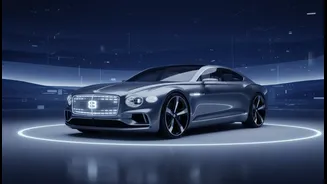
Set for a global debut on September 23, 2026, the Torcal is Bentley's fourth model line and its very first fully electric vehicle. Named after the unique limestone rock formations in Andalusia, Spain, the name also cleverly references the Latin word 'torquere' (to twist), the root of 'torque'—a core strength of electric motors. The Torcal will be a luxury SUV, reportedly smaller than the current Bentayga, and is expected to be built on the Volkswagen Group’s advanced Premium Platform Electric (PPE) architecture. While performance figures are not final, this platform supports blistering acceleration and ultra-fast charging, with the company noting the car may be able to add 100 miles of range in about seven minutes. Bentley, however, insists the goal isn't just raw speed but crafting a complete luxury experience.
The Challenge of Defining Electric Character
This brings us to the central question: what is “electric character?” For a brand like Bentley, character was a multi-sensory experience—the subtle vibration at idle, the crescendo of the engine under acceleration, the mechanical feel of immense power being barely contained. Electric vehicles, with their silent operation and instantaneous power delivery, offer a completely different canvas. Bentley executives have stated they will not resort to faking engine noises. Instead, they are exploring how to translate the feeling of “effortless performance” into a new context. This could involve meticulously curating the car's soundscape to communicate power and status, engineering a unique throttle response that mimics the W12's wave of torque, or using advanced haptic feedback to create a visceral connection between the driver, the car, and the road. The goal is to replace the old sensory inputs with new ones that feel equally authentic and luxurious.
A Make-or-Break Moment for Luxury
Bentley is not alone in facing this existential challenge. The entire ultra-luxury segment is grappling with how to preserve brand identity in an electric world. Rolls-Royce has its Spectre, but many brands worry that EVs can feel like interchangeable, fast-aging tech gadgets rather than timeless, handcrafted heirlooms. For these brands, luxury is built on heritage, craftsmanship, and a unique emotional connection—all things historically tied to the internal combustion engine. The Torcal must therefore do more than just be a good electric car. It has to be a definitive statement, proving that electrification doesn't mean sterilisation. It must convince lifelong loyalists who cherish the W12's soul while also attracting a new generation of buyers who value technology and sustainability as much as they do prestige.