

A Unifying Global Ritual
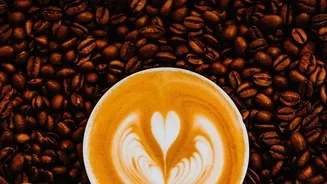
Coffee is one of the most powerful social connectors in the world. From the coffee houses of the Ottoman Empire to modern community hubs, the act of sharing a cup has always fostered conversation and community. Historically, coffee’s journey began in Ethiopia
and spread through the Arabian Peninsula, where it became integral to social life. Today, with over two billion cups consumed daily worldwide, it’s a shared language. Yet, within this global unity lies a vast and wonderful diversity. The ‘divide’ isn’t about which coffee is better, but how each culture has woven this simple bean into its unique social fabric.
The Italian Mandate of Espresso
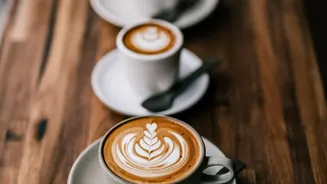
In Italy, coffee is a love affair with strict, albeit unwritten, rules. The culture is built around the espresso: a quick, concentrated shot of coffee, often downed while standing at a bar ('al banco'). This isn’t just about speed; it's an efficient and democratic social moment, a brief pause in the day that is both personal and communal. Tourists might get a pass, but for Italians, milky coffees like cappuccino are strictly a morning affair, considered too heavy for digestion after 11 a.m. To order one after lunch is to commit a cultural faux pas. The Italian way prioritizes quality over quantity, treating coffee as a precise, potent pleasure rather than a large-volume fuel source.
Slow Sips and Social Ceremony
In stark contrast to Italy's rapid-fire espresso shots are the slow, deliberate coffee traditions of Ethiopia and Turkey. In Ethiopia, the birthplace of coffee, the daily coffee ceremony is a cornerstone of hospitality and community. Led by a woman, the ritual involves roasting green beans, grinding them by hand, and brewing them in a traditional clay pot called a 'jebena'. Guests are served three rounds—Abol, Tona, and Baraka—with each cup symbolising a step in a spiritual and social journey. Similarly, Turkish coffee culture, recognised by UNESCO as an Intangible Cultural Heritage, is steeped in ritual. The finely ground coffee is boiled in a 'cezve,' creating a strong, thick brew served in small cups. It's a symbol of friendship and hospitality, and is even central to social customs like marriage proposals.
South India’s Filter Kaapi Tradition
In India, particularly in the South, the day doesn't truly begin without filter kaapi. This beloved beverage is more than just coffee; it's a cultural icon. Made from a decoction of finely ground, dark-roasted coffee beans (often blended with chicory) brewed in a traditional metal filter, it’s mixed with hot, frothy milk and sugar. The drink is famously cooled and aerated by being 'pulled'—poured back and forth between a tumbler and a 'dabara' (a small bowl) in long, artful arcs. Popularised by the Indian Coffee Houses in the mid-20th century, filter kaapi became a staple in households and 'darshinis' (quick-service restaurants), breaking down class divides and establishing itself as a comforting daily ritual.
From Convenience to Craft
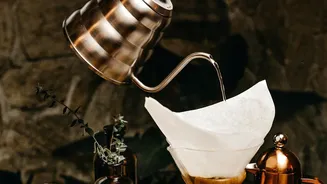
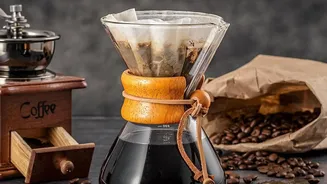
American coffee culture historically prioritized convenience—think large pots of drip coffee and the rise of to-go cups. But in recent decades, a significant shift has occurred with the 'third wave' coffee movement. This movement reframes coffee as an artisanal product, much like wine or craft beer. It emphasizes transparency, single-origin beans, and the unique flavour profiles unlocked by specific growing regions and processing methods. Brewing methods that require precision and patience, like pour-overs and AeroPress, have become popular. This focus on craft and quality has spread globally, creating a new kind of coffee connoisseur who is as interested in the bean’s origin story as its caffeine content.