



Living Museums on Steel Tracks
Three of India's mountain railways—the Darjeeling Himalayan Railway, the Nilgiri Mountain Railway, and the Kalka-Shimla Railway—are collectively designated as a UNESCO World Heritage Site. This isn't just for their scenic beauty, but because they are hailed
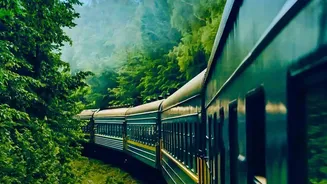
as "outstanding examples of bold, ingenious engineering solutions" for connecting remote mountain regions. Built during the British Raj, these railways were pioneering projects that overcame incredible geographical challenges. Today, they are not merely relics but continue to operate, serving both tourists seeking a nostalgic experience and local communities who depend on them for daily commutes, making them true living heritage.
The Grande Dame: Darjeeling Himalayan Railway
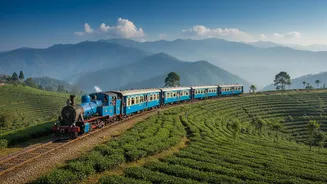
The first to be built and the first to gain UNESCO status in 1999, the Darjeeling Himalayan Railway (DHR) is perhaps the most famous. Fondly called the 'Toy Train', this narrow-gauge line, completed in 1881, travels 88 kilometres from New Jalpaiguri to Darjeeling, climbing over 2,000 metres. Its engineers devised brilliant solutions for the steep gradients, including ingenious 'Z-reverses' and loops, like the famous Batasia Loop, which allows the train to spiral up the hillside while offering panoramic views of Kanchenjunga. Originally built to transport tea and open up the hills, it remains a vital artery for the region.
The Rack-and-Pinion Marvel: Nilgiri Mountain Railway
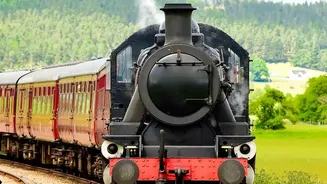
Down south in Tamil Nadu, the Nilgiri Mountain Railway (NMR) boasts a unique piece of technology found nowhere else in India. To conquer the steepest slopes of the Nilgiri Hills, the section between Mettupalayam and Coonoor uses a rack-and-pinion system. This special toothed track, laid between the main rails, allows the steam locomotive's cogwheels to grip and push the train up gradients as steep as 1 in 12. This Abt system, as it's known, is a rare engineering marvel. The journey, which was completed in 1908, takes passengers through 16 tunnels, over 250 bridges, and past verdant tea estates on its way to the hill station of Udhagamandalam (Ooty).
The Tunnel King: Kalka-Shimla Railway
Connecting Kalka to the former summer capital of British India, Shimla, this railway is a testament to perseverance. Opened in 1903, the 96-kilometre route navigates the rugged Shivalik foothills through an astonishing number of tunnels and bridges. The line features over 850 bridges and originally had 107 tunnels, with 102 still in use today. The longest of these is the Barog Tunnel, which stretches over a kilometre. Each station along the way retains its quaint, colonial-era charm. The sheer number of curves—over 900—and the multi-arched gallery bridges make this journey an immersive experience of 19th-century engineering prowess blended with stunning Himalayan scenery.
More Than a Tourist Attraction
While these trains are a major draw for tourists from around the world, their importance to local populations cannot be overstated. They are a daily mode of transport for residents, connecting villages and towns along the route. For many, the train is the most reliable and affordable way to travel to work, school, or market. Indian Railways has been working to preserve this heritage while ensuring their continued functionality, introducing features like Vistadome coaches for enhanced viewing and maintaining the vintage steam locomotives that are a key part of the charm. These railways are more than just a ride; they are a slow-paced, scenic, and essential part of life in the Indian mountains.