



A New Eye on the Cosmos
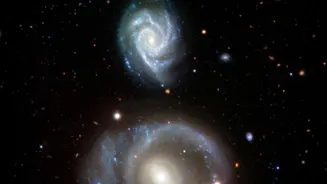
Perched high in the Chilean Andes, the Vera C. Rubin Observatory is home to the world's largest digital camera, the 3.2-gigapixel LSST Camera. This powerhouse instrument, roughly the size of a small car, has produced a breathtakingly detailed image of a patch
of sky known as the COSMOS field. The image itself is a composite, built by stacking hundreds of individual observations to reveal incredibly faint and distant objects. The result is a single frame containing more than half a million galaxies, a number that dwarfs previous deep-field views and offers an unparalleled look into the universe's past. Some of the light in this image has travelled for billions of years to reach us.
The Cosmic Menagerie
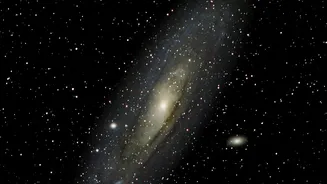
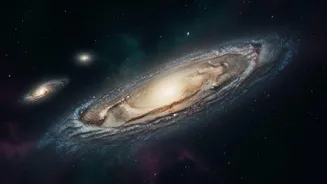
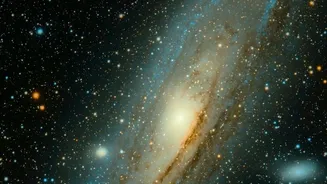
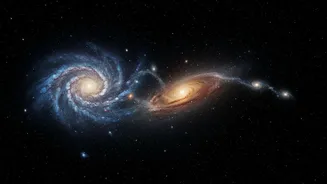
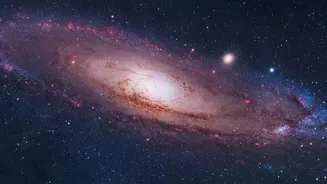
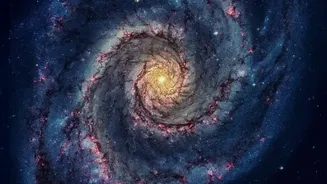
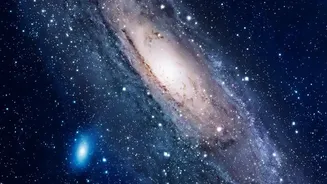
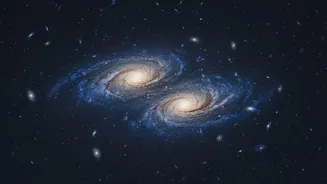
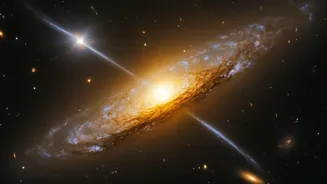
Packed into this single view is a stunning diversity of galactic forms. There are majestic spiral galaxies, with arms swirling like cosmic whirlpools, much like our own Milky Way. Alongside them are smooth, rounded elliptical galaxies, which are massive, fuzzy collections of older stars. The image also captures a chaotic gallery of irregular galaxies and those caught in the act of merging, their structures distorted by gravitational tug-of-wars. It’s a complete zoo of galaxies, showcasing different shapes, sizes, and ages all coexisting in the same frame. Previously, observing such a wide variety required patching together views from different telescopes at different times.
An Unbiased Galactic Census
Herein lies the image's revolutionary power. By capturing so many different types of galaxies in a single, uniform observation, scientists can perform a truly fair comparison. Think of it as conducting a census of an entire, diverse city at once, rather than trying to stitch together biased data from separate towns. The COSMOS field was chosen specifically because it offers a clear line of sight away from the dense, dusty plane of our own galaxy. This allows astronomers to study the properties of spirals, ellipticals, and irregulars under the exact same conditions, eliminating the observational biases that can creep in when using different instruments or pointing at different parts of the sky. This provides a robust dataset for understanding their fundamental properties and the environments they live in.
Clues to Galactic Evolution
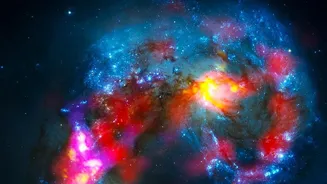
A galaxy's shape tells a story about its life. The ability to see all these shapes together allows scientists to piece together the narrative of galactic evolution. For instance, they can study how a galaxy’s environment—whether it lives in a dense cluster or in relative isolation—affects its form. The image reveals galactic mergers in progress, offering direct visual evidence of how two spiral galaxies might collide and eventually settle into a large elliptical galaxy over billions of years. By cataloging galaxies at various distances, and therefore at different points in cosmic history, this single deep image provides crucial snapshots that help assemble a timeline of how galaxies are born, grow, and change.
Just the Beginning
As astonishing as this half-million-galaxy image is, it's merely a teaser of what's to come. It was produced as an early demonstration of the Rubin Observatory's capabilities before the official start of its main mission: the Legacy Survey of Space and Time (LSST). This ten-year project will repeatedly scan the entire southern sky every few nights, cataloging billions of galaxies and stars. Instead of a static portrait, the LSST will create a time-lapse movie of the cosmos, tracking everything that moves or changes, from nearby asteroids to exploding supernovae in distant galaxies. This single image is the first page of a new chapter in our understanding of the universe.