






More Than Just Punching Air
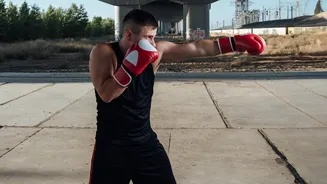
Shadow boxing is the art of practicing boxing movements—punches, defensive moves, and footwork—against an imaginary opponent. While it looks simple, proper technique turns it into a demanding exercise that teaches your body to move as a single, coordinated
unit. The goal isn't just to flail your arms, but to execute precise movements that start from the ground up, engaging your entire body to generate power and maintain balance. It’s a foundational drill for fighters because it builds muscle memory and perfects form without the distraction or impact of hitting a bag.
Upper Body Strength and Stamina
The most obvious benefit of shadow boxing is the work it gives your upper body. Each punch is a complex movement that involves multiple muscle groups. Your shoulders, or deltoids, drive the punches forward, while your triceps extend the arm and your biceps help snap it back to your guard position. Your chest muscles (pectorals) and back muscles (lats) are also heavily engaged; the lats are crucial for retracting your punches quickly, which builds muscular endurance. Unlike lifting weights, shadow boxing focuses on speed and repetition, which is excellent for toning muscles and building stamina rather than sheer bulk.
The Powerhouse: Lower Body and Core
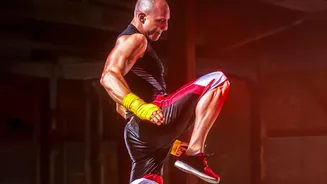
Contrary to what it might look like, a huge part of a punch's power comes from the lower body. Proper shadow boxing requires you to stay light on your feet, constantly moving, pivoting, and changing levels. This footwork is essentially a series of athletic stances, squats, and lunges. Every time you throw a cross, for example, you pivot on your back foot, rotating your hip forward to generate force. This rotational movement heavily engages your glutes, quads, and calves. Simultaneously, your core—including your abs and obliques—acts as the bridge, transferring that energy from your legs to your upper body while keeping you stable.
A Serious Cardiovascular Workout
Don't underestimate shadow boxing as a cardio tool. The constant movement, from footwork to rapid-fire punch combinations, quickly elevates your heart rate. Structured in rounds, typically three minutes of work followed by a minute of rest, it functions as a form of high-intensity interval training (HIIT). This trains your heart to pump blood more efficiently and recover faster. An hour of sustained shadow boxing can burn a significant number of calories, making it an effective and engaging option for weight management and improving overall cardiovascular health.
Enhanced Coordination and Mental Focus
Shadow boxing is as much a mental workout as a physical one. It requires a strong mind-muscle connection to coordinate your hands, feet, and head movements into fluid combinations. Visualizing an opponent forces you to think about your next move, react to imagined attacks, and maintain your form under pressure. This sharpens your balance, agility, and overall body awareness. Over time, these movements become second nature, improving your reflexes not just for boxing but for any athletic activity.
How to Get Started
Getting started is simple, as no equipment is necessary. Begin with a proper stance: feet shoulder-width apart, one foot slightly in front of the other, with your fists up to protect your face. Start slowly by practicing basic punches like the jab (a quick punch with your lead hand) and the cross (a straight punch with your rear hand). Focus on your form in a mirror if possible. As you get comfortable, you can add hooks and uppercuts, and start stringing them together into simple combinations. Remember to stay on the balls of your feet and incorporate defensive movements like slips and rolls.