






The Junkyard in the Sky
Low Earth Orbit (LEO) is becoming dangerously crowded. Decades of space activity have left a trail of more than 36,000 tracked objects larger than 10 centimeters, along with millions of smaller, untraceable fragments. This orbital debris, ranging from
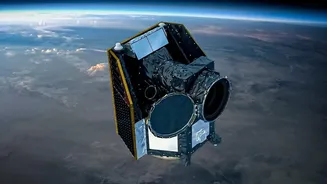
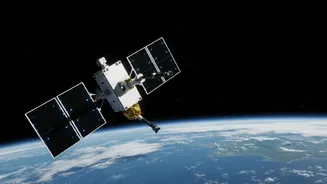
defunct satellites and spent rocket stages to tiny flecks of paint, travels at incredible speeds—fast enough to destroy operational satellites on impact. The fear is a cascading chain reaction of collisions, known as the Kessler Syndrome, that could render certain orbits unusable for generations. To prevent this, the space industry has turned to a seemingly simple solution: making sure old satellites are taken out of the sky by plunging them back into the atmosphere.
Designing for Demise
The primary method for orbital cleanup is atmospheric re-entry. International guidelines have long suggested that satellites in LEO should be deorbited within 25 years of their mission's end. More recently, regulators like the U.S. Federal Communications Commission (FCC) have tightened this to just five years, reflecting the urgency created by mega-constellations. This has fueled a new engineering philosophy called "Design for Demise" (D4D). The goal is to build satellites with materials and structures that ensure they completely disintegrate upon re-entering the atmosphere. This involves using materials with lower melting points, like certain aluminum alloys, and strategically placing components to maximize heat exposure during the fiery descent. The ideal outcome is that the entire spacecraft vaporizes, leaving nothing to fall to the ground.
When Pieces Survive the Plunge
The problem is that complete disintegration is not guaranteed. While most of a satellite burns up in the intense heat of re-entry, which can exceed 1,600°C, certain components are stubbornly resilient. Parts made of titanium, stainless steel, or ceramic composites—such as fuel tanks, engine components, and optical payloads—can survive the fall. NASA estimates that between 10% and 40% of a larger satellite's mass can reach the ground. Incidents of space debris hitting Earth are becoming more frequent. In recent years, fragments from rocket bodies and spacecraft have landed in places like Saskatchewan, Canada; New South Wales, Australia; and a piece of hardware from the International Space Station even struck a home in Florida in 2024. While no serious injuries have been confirmed to date from falling debris, these events highlight that the risk is not merely theoretical.
Calculating the Risk on the Ground
Space agencies and regulators operate on a principle of acceptable risk. For an uncontrolled re-entry, the internationally accepted threshold for the probability of a human casualty is 1 in 10,000. If the risk is higher, a controlled re-entry is required, where the spacecraft uses its final fuel reserves to target a remote stretch of ocean, like the South Pacific Uninhabited Area. However, controlled re-entries are expensive and complex, which is why Design for Demise is the preferred option for many operators. While the chance of any single individual being struck by debris is incredibly low, the collective risk grows with every launch. With tens of thousands of new satellites planned for launch, the number of uncontrolled re-entries is set to increase dramatically, and so does the overall probability of an impact in a populated area.
The Future of Orbital Responsibility
The shift toward atmospheric re-entry is a necessary trade-off. Leaving thousands of dead satellites in orbit is an unsustainable practice that threatens the future of space exploration and the satellite-based services we rely on. However, designing for demise introduces its own set of challenges, including not just ground safety but also the potential for atmospheric pollution from vaporized metals. The industry is responding with innovation, from developing more 'demisable' materials to creating active debris removal systems like nets and harpoons. Ultimately, ensuring a sustainable space environment requires a two-pronged approach: robust engineering to minimize what survives the fall and clear international regulations to hold operators accountable for the entire lifecycle of their hardware, from launch to final disposal.