





A Greener Kind of Maintenance Crew
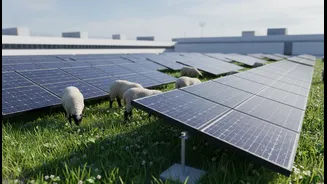
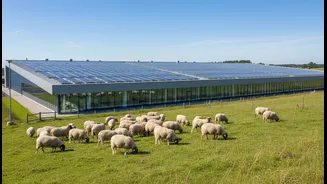
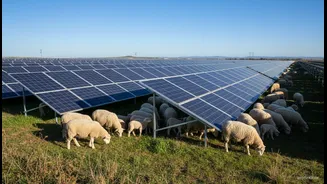
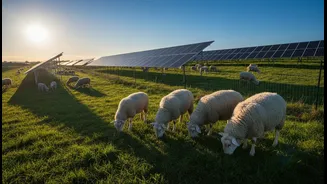
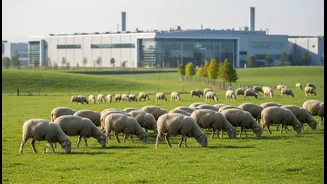
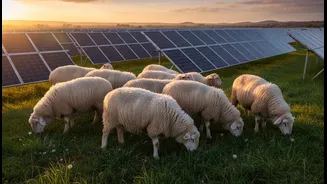
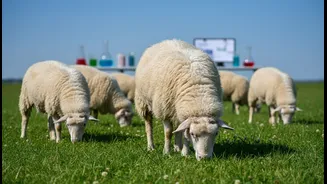
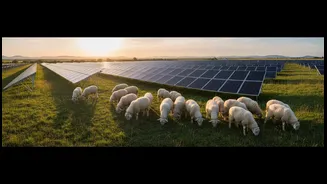
At Volkswagen's manufacturing plant in Poznań, Poland, the familiar buzz of lawnmowers has been replaced by the quiet grazing of 100 sheep. This isn't just a quirky cost-cutting measure; it's a sophisticated solution to a modern industrial challenge.
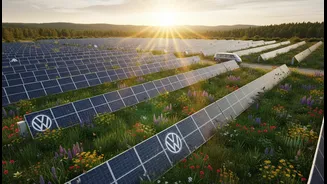
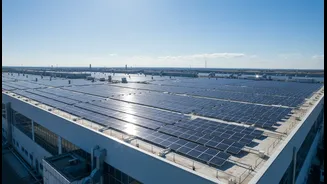
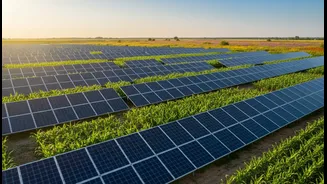
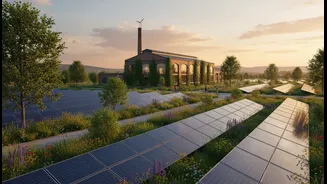
The facility, which helps produce the VW e-Crafter commercial van, is partially powered by a massive 18.3-megawatt solar farm with over 31,000 photovoltaic panels. Keeping the grass beneath these panels from growing too high and casting shadows is crucial for energy production. Instead of relying on fossil fuel-powered machinery, Volkswagen has introduced a flock of sheep to handle the landscaping naturally, eliminating the noise, fuel consumption, and emissions associated with mechanical mowing.
From Factory Floor to Living Laboratory
This initiative is more than just eco-friendly groundskeeping; it's a formal research collaboration with the Poznań University of Life Sciences. The solar farm has become a real-world laboratory for a field known as agrivoltaics, which studies how to combine agricultural activity with solar energy production on the same piece of land. Researchers are closely monitoring the project to gather data on a wide range of environmental and agricultural factors. The study aims to understand how this unique arrangement impacts everything from soil quality and local biodiversity to the welfare of the animals themselves. This partnership provides the university with invaluable data and a unique test bed, while VW gains insights into sustainable industrial practices.
The Science of Solar-Powered Sheep
The scientific questions being explored are both practical and profound. One key area of investigation is whether the shade cast by the solar panels helps reduce heat stress for the grazing sheep, potentially improving their welfare during hot weather. At the same time, scientists are analyzing how the grazing patterns affect the vegetation, the insect populations, and the microclimate of the site. According to Dr. Joanna Składanowska-Baryza of the university, the project allows them to view photovoltaic farms from a much broader perspective than just energy generation. The goal is to develop a model for how large-scale industry and nature can not only coexist but mutually benefit.
A Blueprint for Sustainable Industry?
While the sight of sheep at a high-tech car factory is unusual, the principle behind it is gaining traction globally. Combining agriculture with solar farms is increasingly seen as an efficient way to use land, but Volkswagen's project is considered one of Europe's most advanced industrial examples due to its deep integration with a scientific program. Marzena Pillich-Grońska, director of the Volkswagen Poznań plant, noted that the solar farm now delivers more than just green electricity, calling it a place that supports biodiversity, local agriculture, and scientific research. This project demonstrates that innovation doesn't always come from more complex machinery; sometimes, it comes from integrating natural systems into industrial processes in a thoughtful, data-driven way.