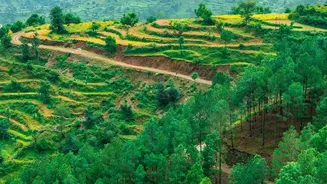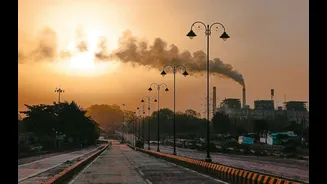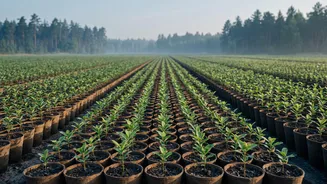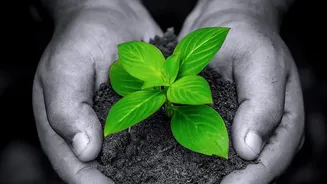









The promise is staggering: restore over a billion hectares of the Earth’s degraded land, an area larger than China. This global goal aims to fight climate change, reverse biodiversity loss, and improve livelihoods for millions. But how is it going?
The Grand Promise
Over
the past decade, a wave of environmental consciousness has led to monumental pledges. Under frameworks like the Bonn Challenge and the UN Decade on Ecosystem Restoration, countries have voluntarily committed to restoring vast swathes of degraded and deforested land. These commitments, totalling more than one billion hectares, are designed to bring damaged forests, farmlands, and wetlands back to health. The logic is compelling: healthy ecosystems capture carbon, support wildlife, ensure clean water, and bolster food security. The economic case is just as strong, with estimates suggesting that every dollar invested in restoration can yield up to $30 in economic benefits. This global effort represents humanity's most ambitious attempt to mend its relationship with the planet, a coordinated push to turn back the clock on decades of environmental damage.
A Troubling Reality Check
Despite the ambitious scale of these pledges, the reality on the ground is sobering. According to a recent analysis by the International Union for Conservation of Nature (IUCN), while progress is being made, it is far from sufficient. Of the more than one billion hectares pledged, only around 124 million hectares—just over 10%—are currently under active restoration or improved management. The world is losing healthy and productive land at an alarming rate, with some reports estimating that at least 100 million hectares were degraded annually between 2015 and 2019. This creates a massive gap between our goals and our actions. While some regions, like East and South Asia, have shown significant progress, others are lagging dramatically. For instance, Sub-Saharan Africa, a region with enormous restoration pledges, has so far only met about 5% of its target. The UN Decade on Ecosystem Restoration (2021-2030) was launched to accelerate these efforts, but the clock is ticking loudly towards the 2030 deadline.
What's Holding Progress Back?
The gap between promise and progress isn't due to a lack of will but a complex web of challenges. A primary barrier is finance. While the long-term returns are high, the upfront costs for large-scale restoration are significant, and funding is often fragmented, inconsistent, and hard to access for the small organisations doing the work on the ground. Politics and governance also play a huge role. Restoration projects can be stalled by inflexible political systems, conflicting government agency priorities (such as agriculture versus environment ministries), and a lack of enforcement of existing laws. Furthermore, insecure land tenure is a major disincentive; communities and farmers are reluctant to invest in restoring land they do not legally own or control. Finally, there's a technical skills gap. Successful restoration is more complex than simply planting trees; it requires expertise in local ecology, seed science, and sustainable land management—skills that are often in short supply.
An Indian Success Story?
In a landscape of limited progress, India stands out as a notable exception. The country made one of the largest pledges to the Bonn Challenge, committing to restore 26 million hectares by 2030. As of mid-2026, reports indicate that India has already brought nearly 22 million hectares under restoration, putting it well on track to meet and even exceed its target. This success is attributed to a combination of government initiatives, such as the Watershed Development Component of the Pradhan Mantri Krishi Sinchayee Yojana, and a focus on agroforestry and mangrove restoration. These efforts have not only revived degraded landscapes but have also reportedly generated over a billion person-days of employment, demonstrating that environmental and socio-economic goals can go hand-in-hand.
The Path Forward
Overcoming the global restoration deficit requires a shift in approach. Experts argue that restoration must be seen not as a niche environmental activity but as a core economic and social strategy. This means moving beyond siloed thinking and integrating restoration into agricultural, economic, and urban planning. Successful projects, from the Great Green Wall in Africa's Sahel region to community-led efforts in Brazil, consistently show that putting local and Indigenous communities at the center is key. Their knowledge, rights, and priorities must shape restoration outcomes. Innovative financing mechanisms, such as green bonds and carbon credits, need to be made more accessible to fund projects on the ground. Ultimately, the goal isn't just to plant trees, but to rebuild functional, resilient landscapes that support both people and nature for the long term.