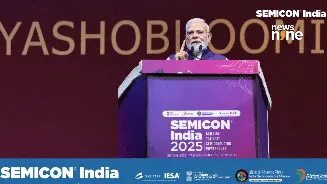








A Global Showcase in New Delhi
This year's event, held from September 17-19 at New Delhi's Yashobhoomi convention centre, is set to be the largest yet. Organized by the India Semiconductor Mission (ISM) and global industry association SEMI, the conference will host over 500 exhibitors,
including nearly 300 international firms, and more than 150 speakers from around 40 countries. The theme, "Silicon to Systems: Building the Ecosystem," reflects a strategic shift in narrative—from whether India can build a chip ecosystem to how global partners can do business with India at scale. A day before the inauguration, the Prime Minister is also scheduled to hold a roundtable meeting with the CEOs of top global semiconductor firms, underscoring the government's high-level commitment to attracting investment.
Why Chips Are the New Frontier
Semiconductors, or chips, are the foundational components of all modern electronics. They power everything from smartphones and laptops to cars, data centres, and advanced military hardware. The recent global chip shortage highlighted the immense strategic and economic vulnerabilities faced by nations dependent on a handful of manufacturing hubs. Currently, the vast majority of advanced chip manufacturing is concentrated in Taiwan and South Korea. For India, which imports nearly 90% of its semiconductors at a significant annual cost, developing domestic capabilities is a matter of economic security and national sovereignty. Establishing a local manufacturing base would not only reduce import dependency but also create high-skilled jobs and position India as a key node in a more resilient global supply chain.
India's Multi-Billion Dollar Gamble
The Indian government is leaving little to chance. Through its comprehensive India Semiconductor Mission, it has rolled out ambitious production-linked incentive (PLI) schemes to attract investment across the value chain. This includes wafer fabrication, assembly and testing, and chip design. The policy framework aims to support every segment, from raw materials to finished electronic systems. The strategy is already showing results, with several approved projects under the first phase of the program expected to begin commercial production by the end of this year. SEMICON India 2026 serves as a crucial platform to showcase this progress and attract the next wave of global investment from industry giants like Micron, Tata Electronics, ASML, and IBM Research, all of whom are expected to be present.
The Long and Winding Road Ahead
Despite the momentum, the path to becoming a semiconductor powerhouse is fraught with challenges. Building a fabrication plant, or 'fab,' is an incredibly complex and capital-intensive endeavour, often costing billions of dollars and requiring uninterrupted power and water supplies, and a highly skilled workforce. India faces stiff competition from established players and other countries also vying for a piece of the chip industry. Furthermore, the technology is constantly evolving, demanding continuous and massive investment in research and development to stay relevant. This year's conference will feature a dedicated workforce development pavilion for the first time, highlighting the critical need to build a talent pipeline to staff these future facilities and close the existing skills gap.