






A Marketing Slogan, Not Science
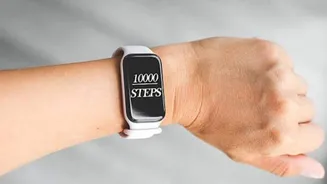
For decades, the goal of 10,000 steps per day has been the undisputed benchmark for a healthy, active lifestyle. It’s the default target on our smartwatches and fitness apps, a simple number to strive for. But this popular fitness rule wasn't born from
a lab or a clinical study. Its origin is far more commercial. The concept dates back to a Japanese marketing campaign in the 1960s. Ahead of the 1964 Tokyo Olympics, a company created a pedometer called the "Manpo-kei," which translates to "10,000 steps meter." The name was catchy and aspirational, not based on scientific evidence. It was a brilliant piece of marketing that has shaped global health consciousness for over half a century.
What the Real Science Says
Fortunately, modern science has caught up, and the findings are both reassuring and empowering. Multiple large-scale studies show that significant health benefits begin far below the 10,000-step mark. Research indicates that the risk of mortality and cardiovascular disease starts to decrease with as few as 2,500 to 4,000 steps a day compared to a sedentary lifestyle. One major analysis found that for adults over 60, the health benefits tend to plateau around 6,000 to 8,000 steps per day. For those under 60, the sweet spot for maximum benefit is between 8,000 and 10,000 steps. The most significant gains are seen when moving from a low activity level (under 4,000 steps) to a moderate one. Adding just 1,000 steps to a sedentary day can make a substantial difference.
Shifting Focus: Intensity Over Volume
While counting steps is an easy way to monitor activity, many experts now argue that focusing on the intensity of the exercise can be more important. The World Health Organization recommends 150 minutes of moderate-intensity physical activity per week. What does ‘moderate intensity’ feel like? It’s activity that raises your heart rate and makes you breathe harder, but you can still hold a conversation. Think of a brisk walk, cycling, or even vigorous house cleaning. Some studies suggest that the pace of your steps can be more beneficial than the total count. Achieving 30 minutes of brisk, purposeful walking, which might equate to around 3,000 to 4,000 steps, can be more effective for your cardiovascular health than 10,000 steps strolled casually throughout the day.
Fitness Hacks for a Busy Urban Life
For those navigating the concrete jungle, hitting a high step count can feel like an impossible task. Long commutes, desk jobs, and a lack of green spaces are common hurdles. But an urban lifestyle also offers unique opportunities to stay active. Experts recommend 'exercise snacking' — incorporating short bursts of activity throughout the day. Take the stairs instead of the lift. Get off the bus or metro one stop early and walk the rest of the way. Use your lunch break for a brisk 15-minute walk around the block. These small, consistent efforts add up and can be more sustainable than trying to carve out a large chunk of time for a single workout. Instead of aiming for a daunting number, focus on sitting less and moving more whenever you get the chance.
The Best Exercise Is the One You Do
Ultimately, the fixation on 10,000 steps can be counterproductive if it feels unattainable and leads to discouragement. The consensus among fitness professionals is that consistency is more important than hitting a specific number. Finding an activity you enjoy, whether it’s walking, dancing, swimming, or joining a weekend sports league, is the key to a long-term active lifestyle. Fitness trackers are great motivational tools, but they should serve your goals, not define them. Rather than being a slave to the step count, use it as a gentle nudge to be more active. A 7,000-step day that includes a flight of stairs and a brisk walk is more beneficial than a stressful 10,000-step day that leaves you feeling defeated.