






The Ground Stations Behind the Satellites
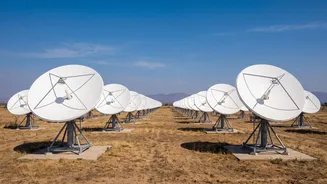
At the India Mobile Congress 2026, a top Starlink executive confirmed a significant milestone: the company has built and prepared 20 gateway sites, also known as earth stations, across India. These aren't just empty plots of land; they are sophisticated
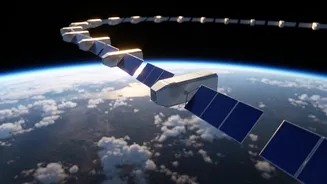
facilities equipped with hundreds of antennas, ready to connect Starlink's satellite constellation in low Earth orbit (LEO) to the global internet. Think of them as the crucial bridge between space and the ground. When you send an email or stream a video using satellite internet, your user terminal sends a signal to an overhead satellite. That satellite then beams the data down to the nearest gateway, which is physically connected to high-speed fiber optic networks. By establishing these 20 sites, Starlink has laid the essential groundwork to handle data traffic for its future Indian user base.
Navigating India's Regulatory Maze
While the physical infrastructure is in place, 'ready' doesn't mean 'launching tomorrow'. The final green light for Starlink's commercial service depends on navigating India's complex regulatory landscape. The company has already secured a Global Mobile Personal Communication by Satellite (GMPCS) license, which is a major step. However, it still awaits final security clearances and, most importantly, spectrum allocation from the government. Speaking at the conference, Starlink's Vice President of Business Operations, Lauren Dreyer, emphasized that the company has worked for five years to align with Indian requirements. This includes creating India-specific security controls and committing to keeping Indian user data within the country, addressing key governmental concerns. The government has stated its framework is fair and non-discriminatory, with all three licensed providers currently undergoing the same security assessment process.
A New Frontier for Connectivity
The promise of satellite internet from players like Starlink is transformative for a country like India. Despite huge advancements in 4G coverage, a significant connectivity gap remains between urban and rural areas. In March 2026, rural internet subscription density was just 48.31 per 100 people, compared to 126.80 in urban India. Satellite broadband offers a direct solution for connecting remote villages, mountainous regions, and islands where laying fiber optic cables is economically or geographically challenging. Starlink believes its network can help accelerate the goal of 100% connectivity across India, a vision shared by the government's Digital India initiatives. The company has already signed letters of intent with states like Maharashtra, Gujarat, and Meghalaya to explore local connectivity needs.
The Coming Satellite Internet Battle
Starlink isn't the only player eyeing India's vast market. The competition is fierce, with major contenders including Eutelsat OneWeb (backed by Bharti Group) and Reliance's Jio, which has a partnership with satellite operator SES. All three have received GMPCS licenses but are awaiting the final regulatory approvals to launch. This sets the stage for a competitive battle to provide satellite communication services. OneWeb has stated it is ready to deploy as soon as it receives spectrum authorization. Meanwhile, reports suggest Amazon's Project Kuiper is also a future contender, though it appears further behind in the Indian market. For consumers, this competition could eventually lead to more choices and potentially competitive pricing, though initial satellite plans are expected to be at a premium compared to existing fiber broadband.