





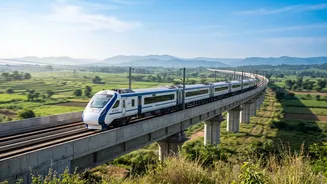

The 'Four-Hour' Dream Explained
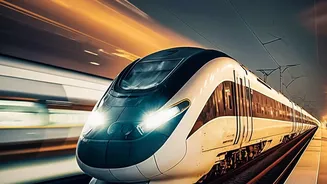
The four-hour travel time mentioned in the headline refers to the proposed Delhi-Varanasi High-Speed Rail (DVHSR) corridor, popularly known as a 'bullet train' project. The plan involves building a dedicated 865-km track that would allow trains to operate
at a maximum speed of 350 km/h. According to the Detailed Project Report (DPR) submitted by the National High Speed Rail Corporation Limited (NHSRCL), this would cut the journey time to approximately 3 hours and 50 minutes. This is a massive leap from the current travel time of eight to twelve hours on the fastest conventional trains. The project aims to connect the national capital with India's spiritual heartland, revolutionising tourism and business travel along the route.
The Reality Check: When Is This Happening?
Here's the important distinction: the bullet train project is a long-term vision. It is still in the planning and pre-construction phase. While it is considered one of the most advanced among the seven new high-speed corridors announced by the government, construction has not yet begun. The process involves extensive work, including finalising the route alignment, acquiring land, and securing funding for the estimated Rs. 1.21 lakh crore cost. So, while the four-hour journey is officially on the drawing board, it is not something passengers can book anytime soon. The focus remains on finalising technical details and getting the necessary clearances before any groundwork can start.
The High-Speed Route and Its Impact
The proposed bullet train route is designed to be an economic artery for Uttar Pradesh. It will have 12 stations, including key stops at Sarai Kale Khan in Delhi, the Noida International Airport at Jewar, Agra, Lucknow, and Prayagraj, before terminating in Varanasi. By connecting these major commercial, religious, and tourism hubs, the project is expected to create a powerful economic corridor. It would bring the Taj Mahal in Agra, the state capital Lucknow, and the holy cities of Prayagraj and Varanasi within a short train ride of Delhi, boosting regional development and making pilgrimage and leisure travel far more accessible.
So, What Is the Immediate 'Train Update'?
The recent buzz is actually about a different, more immediate development: the launch of a new Sleeper Vande Bharat Express on the Delhi-Varanasi route. This is not the bullet train. Instead, it's a modern, semi-high-speed overnight train that will run on the existing railway tracks. This new service is expected to be the second of its kind in the country and is a significant upgrade for overnight travel, offering enhanced comfort and faster speeds than many current options. Unlike the bullet train, this project is very close to becoming a reality, with railway officials reportedly targeting a launch in the near future.
A Faster Journey Soon: The Vande Bharat Sleeper
The Vande Bharat Sleeper will cover the 759-km journey in approximately eight hours. The proposed schedule sees the train departing from both Delhi and Varanasi at night and arriving early the next morning, making it a convenient option for business travellers and pilgrims. The train will run at speeds up to 130 km/h, with potential for 160 km/h in sections where the tracks have been upgraded under 'Mission Raftaar'. With 16 coaches featuring AC First, 2-tier, and 3-tier classes, it aims to provide a comfortable and time-saving alternative to existing overnight trains. While official launch dates are yet to be confirmed, reports suggest it could start operations as early as November 2026.
Two Upgrades: One Vision
It's crucial to see these as two separate but related steps toward modernising Indian Railways. The Vande Bharat Sleeper is an evolutionary upgrade, using existing infrastructure to offer a better and faster service right now. It represents an immediate improvement in passenger experience. The Delhi-Varanasi bullet train, on the other hand, is a revolutionary leap that requires building an entirely new system from scratch. It promises a future where intercity travel is dramatically faster, but its timeline is much longer. Both projects share the same goal: to shrink distances and bring India's major cities closer together.