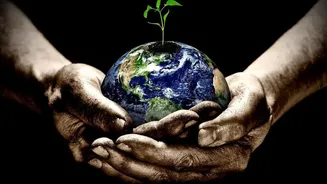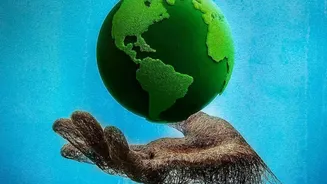





A stark new report from Oxfam draws a direct line between the world’s wealthiest individuals and the accelerating climate crisis. It argues that extreme wealth inequality is not just a social issue, but a primary driver of planetary destruction.
The Core Claim: A Massive Carbon Gap
The central
finding of Oxfam's latest report, titled 'Disaster Divide', is staggering. It claims the world's richest 0.1% — a group of about 8 million people — produce more carbon pollution than the poorest 44% of humanity combined, which amounts to 3.5 billion people. According to the analysis, someone in this top bracket contributes nearly 400 times more to extreme heatwaves than a person in the bottom 50%. This isn't just a marginal difference; it's a profound disparity that reframes the climate crisis as an inequality crisis at its core. The report argues that while climate change is often painted as a shared global challenge, its causes and consequences are anything but equal.
It's Not Just About Private Jets
While luxury lifestyles, including private jets and superyachts, are significant sources of emissions, the report emphasizes a far larger, less visible driver: investments. According to Oxfam's research, for the ultra-rich, between 50% and 70% of their total emissions come not from personal consumption, but from the capital they invest. Analysis of billionaire investment portfolios shows an average of 14% of their funds are in polluting industries like fossil fuels and cement — twice the average for a standard S&P 500 index fund. Through these investments, the report argues, billionaires hold immense power to shape corporate behaviour, often locking in high-carbon infrastructure for decades to come and profiting from the very industries fuelling climate breakdown.
The 'Destroy and Rebuild' Economy
A particularly troubling claim in the report is the emergence of a 'Destroy and Rebuild' economy. Oxfam alleges that the super-rich are positioned to profit from both ends of the climate crisis. First, by investing in the polluting industries that cause climate-related disasters, and second, by investing in the booming 'disaster economy'. This includes corporations involved in recovery and reconstruction services, such as providing cooling devices, food, insurance, and loans in the aftermath of extreme weather events. The global disaster recovery market is projected to grow significantly, creating what one Oxfam official calls a 'double dividend' for the wealthy, who can turn chaos into profit while being insulated from the worst effects.
The Human Cost of Carbon Inequality
The report translates these vast emissions into a tangible human toll. Based on climate attribution models, Oxfam projects that just one year of emissions from the wealthiest 1% will cause an estimated 1.9 million excess deaths due to heat. It's a crisis that disproportionately harms those least responsible. According to the findings, over 75% of these deaths will occur in low- and middle-income countries, the very nations that contribute the least to global emissions. Furthermore, the report notes that deaths from events like flooding are seven times higher in more unequal countries, as poorer communities lack the resources to protect themselves, adapt, or rebuild. The rich, by contrast, can afford to relocate, build resilient homes, and absorb the rising costs of food and water, deepening the global divide.
Oxfam's Proposed Solutions
Beyond highlighting the problem, Oxfam’s report calls for decisive government action. The organization urges policymakers to regulate and compel corporations and their wealthy investors to slash carbon emissions. A key recommendation is the implementation of new taxes on wealth and on investments in polluting industries, which could both deter high-carbon investment and generate revenue for a fair transition to renewable energy. The report argues for a fundamental shift where longterm sustainability and the reduction of inequality are prioritized over delivering everhigher returns to a small group of wealthy shareholders. The central message is clear : addressing the climate crisis effectively requires controlling the power and curbing the emissions of the world most richest polluters.